Home Blog

Hairballs in Dogs – How to Deal With This Cat-Like Problem

Trichobezoars in Dogs

Hairballs in dogs are a rare occurrence but it does not mean that it will not happen to your dog. A lot of the times, we associate this phenomenon with cats especially since they are the ones who love to lick and groom their bodies most of the time.

We rarely see a dog that will continuously lick his fur just to become clean. When they get dirty, most would rub the dirty part on the floor or the walls to get it off. Hence people often think that a dog that seems to be “grooming itself” will only do so if they have a wound, a tick bite, or some skin irritation in a particular area of their body.

Although this is partly true, there are definitely some dogs that will groom their fur especially when they are medium to long in length. This and the fact that there are some dogs which seem to be very conscious of the cleanliness of their fur contribute to the fact that a dog really can cough up some hairballs at any particular time.

Aside from this, you also need to take into consideration that dogs do have that season for shedding and the amount of fur that they shed will also depend upon the state of their health.

Therefore, it is also extremely important to look after the kind of diet that you provide for your pet as a part of an overall dog hairball remedy.

What are dog hairballs?

Hairballs are also known as tricholiths or trichobezoars which means a mass of concentrated hair material that has surrounded a non-digestible item which has become stuck in the stomach, the esophagus, or the intestines. It comes in a variety of shapes ranging from rounded, to tubular, to spherical and depending on how long they had been coughed up by your dog, can be a wet and soggy mass or a dry one.

Just like in cats, they are made of the dog’s fur and may come occasionally with other types of fibers such as grass and other non-soluble materials. Dogs are able to ingest their fur by licking and grooming or it could be on their surroundings.
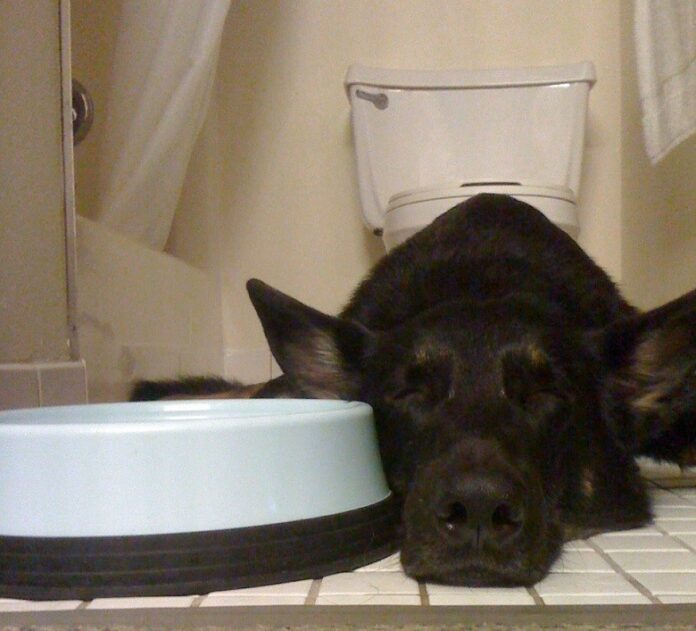
Dog with hairballs loss of appetite

A hairball can pose several levels of risk depending on how many and how long the hair materials had been in their gastrointestinal tract. A dog can usually eliminate a small amount of hair that they ingest if these are really few and the speed of his elimination is normal. But a dog that has a slower rate of elimination can have hairball problems even if he ingests them in small amounts.

As the hair accumulates, they tend to tangle themselves around each other forming an almost solid structure and if he happens to have a weak body, he may have problems vomiting or coughing it out.

Here are some of the symptoms to look out for if you want to know if your dog has gotten some hairballs:

  • Repeated attempts to cough or vomit something out of their mouths
  • Constipation
  • Lethargy
  • Loss of appetite
  • Gagging
  • Diarrhea
  • A bloated stomach, in more serious cases

Hairballs can pose a huge risk to the life of your pet if it had grown hard inside your pet’s stomach. This is often due to a poor state of health as well as large amounts of ingested fur. As they become larger in size, they will somewhat harden and prevent the passage of food down the stomach.

Aside from this, it can also pierce your pet’s stomach as the hairs become much stiffer and harder as time goes on. It is therefore extremely important to have your pet healthy and regularly checked up by their vet in order to detect this condition early on and prevent it from getting more serious.

How do dogs get them?

Although dogs are not really known to be as dedicated to grooming as cats are, there can be instances when they do this rather obsessively leading them to ingest large amounts of fur.
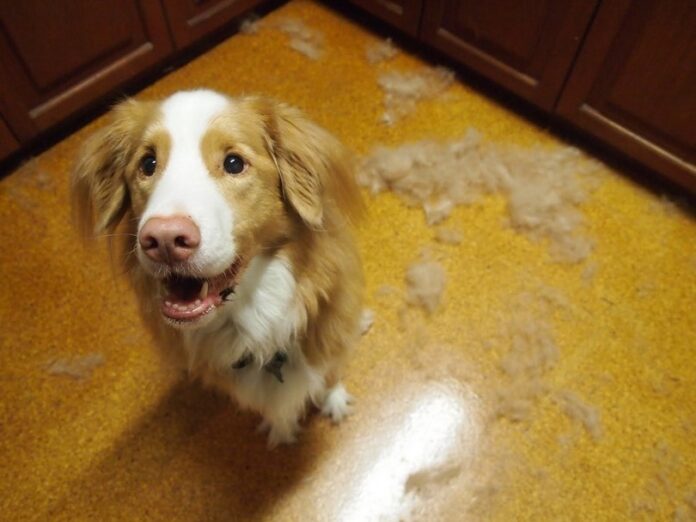
Dog shedding

Here are some causes or reasons on how a dog can get a hairball:

  • Shedding. Dogs, especially those with two layers or coats of fur and those with longer fur, are prone to shedding and it can be one of their greatest problems if not dealt with properly. A dog will often begin to shed their fur during spring when their winter coats will begin to fall as the warmer seasons begin. If they are not properly groomed by their owners, they will end up doing it themselves and with the large amount of fur that they are shedding, it definitely poses a large opportunity for them to swallow those furs and develop a hairball.
  • Eating prey. We all know dogs which have that prey instinct and which tend to eat them whole including feathers and furs. Since animal hair is indigestible, it will remain inside their stomach and if they are lucky, they will eliminate it together with other materials. But, if their digestive system is not that strong, it will end up staying on their digestive tract or large intestines where it will trap or block other decaying feces. This poses a great health risk since toxic gases and substances from the rotting materials will be reabsorbed by the bloodstream.
  • Excessive licking. When a dog licks their fur, some of them will often be swallowed by your pet. Here are some reasons why your dog may be excessively licking themselves:
    • This is one if the main reasons why a dog can lick themselves to the point that they do not get a good night’s sleep. A dog that is constantly feeling itchy will of course, try to alleviate their itchy by chewing and licking it. But since allergy cannot be easily cured by biting it, it will of course continue to itch. As the area becomes too much exposed to saliva, the furs will begin to fall off and when this happens, your dog can ingest some of them.
    • If a dog does not have sufficient physical or mental stimulation, they will try to do just anything to occupy their time and licking can be one of them. A dog that is bored will find a way to get rid of all the energies that they have and so you can expect them to do it incessantly until they get tired.
    • Flea and tick bites. If your dog has a problem with flea and tick infestations, chances are they will be biting and licking their fur a lot more often. Tick bites can be really itchy and can cause your dog to chew on their fur. When they do so, they also pull some of their fur out and swallow them as they try to get rid of these parasites.

What are the available treatments for dog hairballs?

You will find a lot of commercial products in the market which promise to eliminate your dog’s hairballs but not all of them can treat your specific case.

This is because of the fact that dog hairballs come in different stages: there are those which are yet on their early stages that are still quite soft and easy to eliminate and there are those which have been in your dog’s stomach for a significant amount of time that they have already hardened.

Dog-eating-petroleum-jelly

Aside from that, dog hairballs can also be stuck in different areas in your pet’s gastrointestinal tract – in the esophagus, the stomach, or the small intestines.

Here are some of solutions that you can apply if you ever encounter this problem:

  • Petroleum jelly. Giving your dog petroleum jelly will help to “smoothen” out the passage of the hairball either through their throat or through their stomach. It will also help soften up the hairball in case it has gotten a large quantity of hair.
  • Pumpkin. Pumpkin is known to contain a large amount of fiber which can help “pull out” the hairball as they pass through the gastrointestinal tract. Aside from this, it will help support the mucus membranes of the tract giving it a smoother travel time in the stomach.
  • Laxatives. Since laxatives can pose a significant effect on your dog’s body, you should only use it under a vet’s supervision. The type and dosage will depend upon your pet’s age and health condition. Any underlying medical condition especially those related to the gastrointestinal area and other major organs will have to be taken into consideration before giving this treatment.
  • Surgery. If the hairball is already stiff and hard or is too large to be eliminated through the anus, a surgery will be required in order to remove it.

How do you prevent hairballs from developing?

Since prevention is still better than treating any illness, it would be much better if you as a pet owner can help prevent your dog from getting it in the first place. This way, you would not have to face the prospect of a possible surgery in case your dog is unable to eliminate it in a natural way.

Akita grooming

Here are some steps that you can take in order to keep your dog from getting a hairball:

Groom your pet regularly

Constantly cleaning and brushing your pet’s hair will help them get rid of lose and dead hair more effectively. If your dog has a medium hair you need to brush them at least once a day before they go to bed. A dog with a longer hair will need to be brushed twice a day especially during the shedding season. Make sure to throw the hairs in a bin that they will not be able to reach or open.

Provide a diet healthy in essential oils

Essential oils are those which help to maintain the shine, luster and strength of your pet’s fur and they include fish, meats, and some vegetables. Make sure that they are getting a sufficient amount of these through natural foods or by giving them Omega 3 and Omega 6 fatty acid supplements.

Treat their allergies if they have any

If your dog is biting and chewing his skin constantly, chances are he may be suffering from an allergy and is manifesting itself through skin conditions. Have him checked upon by your vet for any type of allergy and make sure to avoid any situation in which they will be exposed to allergens such as pollen, plastics, and certain types of foods.

Give your pet sufficient water

A healthy gut needs sufficient hydration and this can come only if you are giving your dog enough water. Water in the stomach will also help assure a smoother elimination for your pet. The amount that your pet needs will vary from case to case and will depend on their activity level, weather, age, breed, etc. Make sure to ask your vet about this.

Provide your pet with sufficient stimulation

Since boredom can cause your dog to lick his fur incessantly, it is therefore important to provide him with enough physical or mental activity to keep his mind occupied. Give him a chew toy and make sure that you spend enough time playing or going on walks with him to prevent boredom or even anxiety. Bonding with your dog is just as important as giving him a place to stay and food to eat.

Hairballs are not an exclusive phenomenon to cats only, even dogs can get them and they can pose a serious risk to their health if left unattended.

A dog can get hairballs by excessively licking and chewing their skin and which in turn, can be caused by allergies, boredom, or flea and tick problems. Your dog is also prone to having hairballs during the shedding season especially if they are left to groom on their own.

Hairballs can develop into stiff and hard masses in your dog’s gastrointestinal tract and can puncture or rupture their stomach. Make sure that you look well after your dog in order to avoid this situation and lose your pet forever.

Dog Eye Allergies – Symptoms, Reasons and Basic Remedies

Allergic Conjunctivitis in Pets

Allergies are caused by a variety of things. There are airborne causes that are inhaled, contact irritants, allergies caused by flea bites, seasonal allergies to items like rapeseed or ragwort, or food allergies. The same allergies affect different animals in different ways. For instance, an allergy to pollen might cause one dog to have itchy feet and another to have watery eyes. Each case is individual and may have other causes as well.

The most common effect of allergy is itching but this usually is on the skin. The skin around the eyes can be itchy and may actually disappear. The animal may rub the face along furniture or on the carpet and use the paws to scratch the face. The most obvious effect of eye allergy is watery or discharging eyes but the muzzle and skin around the eyes may also be reddened and show hair loss.

Types of allergens – contact, inhaled or ingested

Allergens that are inhaled or contact the skin are called atopy. Flea bite allergies are flea dermatitis and of course, food allergies are ingested. Common inhalation culprits are molds, dust mites and pollens.

Obviously, if your pet is allergic to tree pollen then the problem will occur and be worse in the spring. Dust mites may cause more problems in the winter when you spend more time indoors with heating switched on. Allergies to rapeseed or ragwort will be worse in the autumn.

Contact allergies can be caused by almost anything- carpet fiber, dog beds washed in certain laundry powders, even grass and contact with cats.

Food allergies are always the ones people think of first and these should not be confused with food intolerances. Intolerance cause upset tummies and there are certain foods that will upset the tummy but not cause an allergic reaction. If your pet is sick or has diarrhea after certain foods then you would avoid the same food in the future. Certain dog treats that contain dyes are another culprit that tend to cause colitis and upset rather than actual allergies.

The immune system reacts to a potential allergen like grass pollen by developing antibodies and the next time the allergen appears the antibodies go into overdrive and send signals to the immune system to produce histamines. Each time the exposure happens the reaction is worse and the animal ends up scratching to relieve the itch.

Prevention – better than cure

When you look at your dog’s eyes the pupils should be the same size and there should be a little white around the iris. There should be very little in the way of tears, no crustiness and he should be bright eyed.

If you see discharge, tears, the third eyelid showing, cloudiness or squinting there could be something wrong and the best thing to do is consult your vet. Lightly trim hair away from the eyes and avoid that area when shampooing.

Dog allergies infographic

Unfortunately there is no real cure for allergies but there are things you can do to lessen the chances of them taking effect. Using air filters and keeping windows closed is a start against air allergens and using a vacuum frequently helps reduce dust miters. When you wash dog’s beds use only hot water and no detergents.

Cotton is better than wool for throws or bedding and the animal should be kept out of damp or dusty places. Strangely enough wooden chips in the garden can cause trouble with cedar being a culprit and the dog should be kept off freshly mown lawns. A stainless steel food bowl is best as plastic can cause reactions and any dry dog food should not be used if it has gone crumbly or dusty.

What food you need to avoid?

Many people nowadays are turning to diets that do not contain the main culprits of allergy. These are beef or red meat, wheat, gluten, grains, soya, eggs, dairy products and additives. A natural diet is now made by many worldwide manufacturers.

Completely grain free dog foods are meat based and have no grain at all whilst others use whole grains like brown rice or oats that do not contain gluten. With more meat and less grain you would probably see a greater amount of energy, less hair shedding and less allergies. The fiber to replace the grain would probably be potato or green pea.

There are firms out there making whole food for dogs that are all natural and made from human standard ingredients. With no colors and additives or flavorings you are definitely cutting down on possible allergens. You should avoid giving snacks to the dog or pieces of human food from your own plate.

Super-Pure-Omega-3-Soft-Chews-Cats-Small-Dogs

There are some natural treatments on offer that may well help in some cases.

  • Yucca extract is totally safe for both dogs and cats and can be added to the food. It is a natural anti inflammatory that does not seem to have any side effects.
  • Omega 3 Fatty Acid is the other treatment often suggested and it has to be used without Omega 6 acids as this seems to lessen the effect.
  • EZCHEW Omega3 Fatty Acid can be added to the dog’s food or there are EZCHEW Omega3 Fatty Acid that the pet may enjoy at the same time as helping against allergies.

bark store

There is another firm called Bionic Biotic and they have the Omega 3 along with other ingredients like zinc. This powder is added to food and claims to stop scratching in three weeks or your money back- quite a claim. Tibetan Herbs advertise a supplement with Angelica and other natural herbs to support the immune system.

Best treatments you can use

A veterinary surgeon will normally treat an allergy with anti histamines and may well take blood samples for testing. A blood sample will normally show antibodies that prove the presence of allergens. Antihistamines will normally soothe the irritants called histamines which are produced in an allergic reaction. Two weeks will normally show an improvement in the situation.

Option #1 – appropriate food diet

If the allergic is to food then a change of diet until you find one to which the dog is not allergic is required. This can take a very long time as the animal needs to be on the new diet for about two or three weeks to become used to the new regime. Then if there is still a reaction, the change has to be made again.

Treatments

If the allergy is flea or parasite related then the vet will prescribe the right application to rid the dog of the culprit. The house should also be treated to make sure that reinfection cannot occur.

The dog’s eyes may need to gently washed with lukewarm water and the vet may decide to administer corticosteroids to thieve the itching and these would normally be given as eye drops.

Option #2 – steroids

The vet may well prescribe steroids either by injection or tablet and these will significantly reduce symptoms for about six weeks or so in many cases. They usually are less effective when the treatment is repeated again and again and can have side effects of increased appetite, more urination and vomiting. Spray steroids would be unlikely to be prescribed for eye conditions and with all steroids the dose is usually started high and gradually reduced rather than being suddenly stopped. The veterinary surgeon would give instructions for this.

Prednisone is the most commonly prescribed steroids.

Option #3 – immune modulators

These stop the immune system from producing histamine and because they work on this system are called modulators. This treatment can be very effective in about half of all animals treated and in some cases appears like a miracle cure. There may be some side effects like an upset tummy but it can vastly reduce the steroid intake. It is used for other conditions as well as allergies. The long title is ‘Cyclosporine(modified) generic to atopic’ but the tablets are usually just called Atopica.

Vets Best Seasonal Allergy Support

There is another immune treatment that injects what your dog is allergic to under the skin. The dog is first tested extensively to find out what the culprit allergens are and then suitable injections provided. The skin test is done by injecting small amounts of possible allergens under the skin and waiting to see if there is a reaction. Blood tests are more accurate for airborne allergies. It is a very lengthy and expensive process that has a limited amount of success.

Your vet may well prescribe antibiotic as along with other treatment if he thinks there is a skin infection as well.

Other reasons for itchy eyes

A watery discharge from the eyes may well be an allergy but could also simply be caused by dust, a foreign body like an eyelash or a yellowish discharge could well be an infection. If the problem is in one eye only it is less likely to be an allergy.

Another reason for a yellowish discharge can be conjunctivitis and this inflammation can be caused by allergy, injury or tear duct problems. It can be a sign of many things and is best seen by the vet.

Excessive tears can also be the result of many causes, one of which is allergy. It can stain the fur and have a crusty effect.

Dry Eye is the opposite of too much water around the eye. It can be a very serious problem and very painful. It should be treated by experts immediately.

Itchy eye

Some flat faced breeds of dogs have trouble with entropies or interned eyelid which again is painful and needs to be treated but might present the same symptom as an allergy. Entropies can occur in any breed.

Breeds with loose skin around the eyes like Bloodhounds or Cocker Spaniels may have ectropian which is an outward turning eyelid and may also present discharging eyes as a symptom. Some of these conditions may be treated with steroids or antibiotics but in some cases surgery might be the answer.

In fact if the watery, itchy or discharging eyes occurs for more than a few days you would be well advised to see the veterinary surgeon and discover the cause. An infection may well just require antibiotics and all will be well.

It may be that a combination of methods will deal with the problem and working along with the vet’s advice will be effective.

12 Best Preventic Tick Collar for Dogs 2022 – A Worry-Free and Highly Effective Product

Best Dogs Preventic Tick Collar

Ticks and fleas are considered to be among the many aspects of pet parenting that any pet owner will encounter. These parasites are everywhere, and they truly make up one of the concerns that pet owners have to deal with.

However, the methods and different approaches to address flea and tick infestation have significantly improved over the years. Some involve medicated shampoos or powders, and some are administered through a dog’s system.

Notably, there are also worry-free yet highly effective methods and these include flea and tick collars. As you search for the best preventic flea or tick collars, let’s start with the basics on how fleas and ticks can be hazardous, not only to dogs and cats, but to humans as well.

The Hazards of Fleas and Ticks

Ticks and fleas are the most common ectoparasites or parasites that thrive on the body surface of the host. These parasites are often found in domesticated animals, such as cats, dogs, and even exotic mammals.

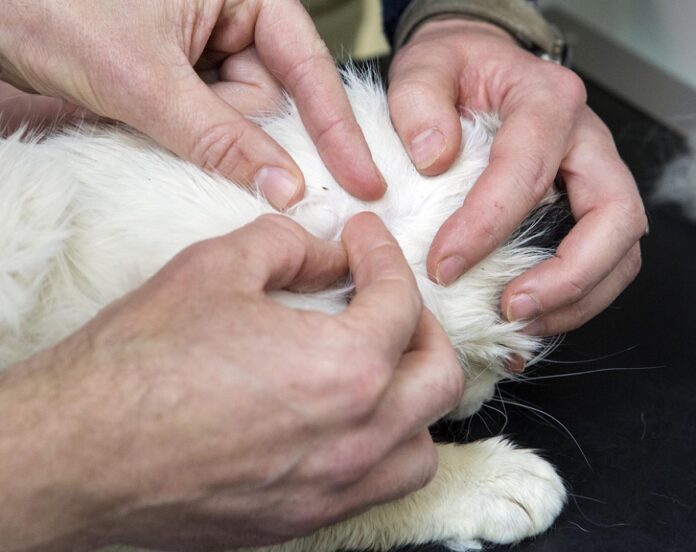
Fleas and ticks are small, and they blend well with the surrounding coat. They cling to the skin of your pet to feed on the host’s blood. While they can attach themselves anywhere in the body, fleas and ticks can most commonly be found on the earlobes, paws, neck, or tail area.

In general, fleas and ticks are found outdoors, although indoor areas that are not properly cleaned and maintained can also be a location in which these parasites are found. When a dog walks around the park or some grassy suburban area where other dogs roam around, there is a good chance that this dog can get a flea or tick.

Ticks are known to perform questing, which literally means questing for a new host for them to feed on. They stay on grass blades or sturdy shrubs and wait until a dog walks towards them so they can latch themselves onto it and thrive.

Fleas and ticks can survive for more than a year without food. This means that if you live in a community that was previously populated by dogs, chances are that this place is still infested with fleas and ticks after several months to more than a year.

In the United States, ticks and fleas can be more prevalent in some areas depending on the season. The infestation of these parasites may also vary from year to year. The most commonly found tick in North America is the Ctenocephalides felis.

Because this flea is very prone to dehydration, it is highly likely to be found in warm but humid states, such as Florida. This means that the drier the state, the less likely it is to have fleas.

In the Plains or Western region, fleas are not much of a problem because the environment is too dry for the fleas to thrive. However, the Gulf Coast region is considered the most infested area because of the environment, which is generally favorable for fleas. To sum it up, the flea problem decreases as you go inland and as the environment becomes drier.

On the other hand, ticks exhibit certain behavior and have biological requirements. There are also particular places where tick problems occur more frequently compared to others. The extreme Northeast and the upper Midwest are experiencing serious existing problems when it comes to tick infestations – Lyme disease tick in particular.

However, being away from these places doesn’t save you from the trouble because the south-central United States also has a bad tick infestation issue. You can only find very few places in North America with little to no tick problems as of now, for the main reason that there are a lot of different types of ticks.

Fleas and ticks inject saliva into the host’s skin whenever they feed. Their saliva contains proteins and compounds and is heavily filled with allergens or irritants that trigger irritation like itching or rash formation.

One of the most common skin problems when dealing with parasite infestation is allergic dermatitis, which is made worse when the dog scratches the injection site. Fleas and ticks don’t need to have a large population for their presence to be felt and to do damage and discomfort because they multiply really fast.

Effectiveness of Tick and Flea Collars

Tick and flea collars are potent, non-invasive, and long-lasting solution to tick and flea infestation. It can last up to several months, thus helping your dog live an itch-free and tick-free life. It gives you peace of mind as well, especially if you prefer more outdoor activities with your dog.

Dog-flea-collars

Because of its practical placement as a collar, there is very minimal discomfort and no possibility of intoxication due to ingested ingredients.

Best Tick and Flea Collars in the Market

These are the most recommended tick and flea collars available in the market today.

Their main purpose is to prevent parasite infestation, but these collars vary in terms of potency, the coverage of its protection, and other additional features.

1. Adams Plus Flea and Tick Collar

Adams Plus Flea and Tick Collar


This collar is highly recommended for pet parents that love long walks or outdoor activities because this flea and tick collar is water-resistant which means it can be used in wet weather or rainy seasons. The Adams Plus Tick and Flea can eliminate flea eggs, flea larva, adult fleas, and ticks. It also prevents possible re-infestation and has guaranteed protection duration of approximately 5 months.

If you think that this product could be useful for you, then you can purchase it on Amazon.

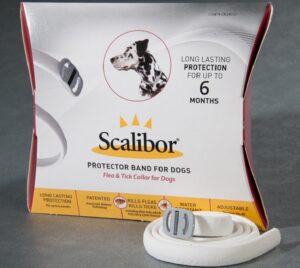
2. Scalibor Protector Band for Dogs

Scalibor Protector Band for Dogs


The Protector Band from Scalibor is a reasonably-priced collar that can be worn by dogs older than three months. It is an adjustable collar that can be used by dogs of varying breeds and sizes. Scalibor Protector Band comes with Deltamethrin which is a compound that is highly proven to quickly eliminate existing fleas and ticks in the dog’s body. Another water-resistant collar, this can be used for swimming and other activities that heavily involves the dog to get wet.

3. Flea and Tick Treatment by Seresto (Small Breeds)

FLEA AND TICK TREATMENT BY SERESTO (SMALL BREEDS)


For dogs that are older than seven weeks, we have the Flea and Tick Treatment designed for small breeds made by Seresto. This odorless solution to ticks and fleas can provide up to eight months of continuous protection.

Incorporated with two active ingredients that further prevents re-infestation and promotes eradication of existing parasites, the Seresto Flea and Tick Treatment for dogs is an economical solution for your flea and tick problems that is easy on the pocket.

4. Power Band Flea and Tick Collar by Vet Kem

Power Band Flea and Tick Collar


The Vet Kem Power Band is perhaps the most adjustable collar in our list. It promises to protect your fur babies for up to five months across all life cycle stages of fleas and ticks. Vet Kem Power Band is another odorless variant and has a unique buckle that makes the collar fit to almost every dog size.

5. Tick and Flea Active Care Collar by Biospot

Tick and Flea Active Care Collar by Biospot


The BioSpot Collar can be used by puppies and dogs more than six weeks old. Featuring an adjustable size collar in a stylish blue color, the Tick and Flea Active Care Collar by BioSpot effectively kills eggs, larvae, fleas, and ticks.

6. Scalibor Collar Protector Band for Dogs 3 Pack

Scalibor Collar Protector Band for Dogs 3 Pack


The Scalibor Collar Protector Band offers the same features of the previous Scalibor Collar, but this is strongly recommended for families with multiple dogs. Odorless and water-resistant, this bundle saves you from all the trouble and a lot of money because you protect all your fur babies simultaneously.

7. Ultra Guard Flea and Tick Large Dog Collar 26” by Hartz

Ultra Guard Flea and Tick Large Dog Collar


Another alternative for pet parents with several dogs in the house is the Ultra Guard Flea and Tick by Hartz. This dog collar comes in a two-piece pack, which is very economical considering the benefits it can provide. The Ultra Guard has a fresh and clean scent, which is something to be considered if you prefer your collars to be odorless.

The Hartz Ultra Guard Flea and Tick Dog Collar have a guaranteed protection period of up to five months.

8. Preventic Tick Collar for Dogs Over 60 Lbs, 25″

Preventic Tick Collar for Dogs Over 60 Lbs, 25″


If your dog beats the weighing scale, the Preventic Tick Collar effectively kills fleas and ticks fast. With Amitraz, the active ingredient that potently kills ticks within ninety days, and has a guaranteed effective kill rate of 97%, which is something that is truly remarkable. Safe for both indoor and outdoor use, this durable dog collar is tried and tested to endure even the most playful gentle giants of a breed.

9. Seresto Tick and Flea Collar for Large Dogs

Seresto Tick and Flea Collar for Large Dogs


The Seresto collar that is intended for large breed eliminates pests for dogs as young as seven weeks and has an effective potency of up to eight months.

Why It Is Important to Pick the Right Collar

It is extremely important to ensure that your dogs are wearing the right collar size. Too small dog collars can cause agitation and considerable discomfort, while dog collars that are too large can lead to choking or even chewing especially if the collar latches into something.

A comfortable fit ensures effective pest control and less agitation for the dog.

In Conclusion

You will always encounter flea and ticks in your life as a pet parent. Fortunately, you have a choice on how soon you will act once fleas and ticks start showing up. Regardless of whether you are very particular about cleanliness, preventive measures will always be considered as a welcome addition to your convenience as a responsible pet owner.

If you are considering the use of flea and tick dog collars, always consult your veterinarian for expert advice and recommendation to ensure a perfect fit, and an effective flea and tick intervention. When we get rid of the pests, we are not only getting rid of potential health hazards, but we are also promoting peace of mind and worry-free pet parenting.

Twisted Stomach in Dogs – Symptoms and Treatment

Twisted Stomach in Dogs

Twisted stomach in dogs is a serious health condition that can threaten the life of your pet. Though the level of risk is incredibly high there are only a few dog owners who are aware of the symptoms and know how to act when they spot them. Studies show that big breeds are more prone to suffer from bloat because they are deep-chested dogs.

As this health issue can lead to death, it is important to be aware of the signs, methods of prevention and treatment in order to keep your four-legged friend away from potential risks. In this article, you will find useful data that can aid you to approach this issue in a responsible manner.

Definition of Twisted Stomach

Definition of Twisted Stomach

The twisted stomach is a disease called gastric dilatation-volvulus. It is incredibly serious and it must be approached accordingly. Unfortunately, this is something that must be treated by specialists, thus pet owners can do nothing else for their dogs but to take them to the nearest hospital. As it is life-threatening, the situation can get from bad to worse if the pet does not receive the right treatment. Bloat can be triggered by various things, and some reasons are still unknown. To read up more on this condition, check out our article on bloat in dogs.

When this occurs, the stomach is filled with air and starts to put pressure on the diaphragm. As a result, the dog tends to choke. Furthermore, the stomach becomes lightweight and can easily twist, cutting off the blood supply and slowly dying. At this stage, the dog’s condition gets worse by the minute. In order to be able to treat it in the initial phase, pet owners must be aware of the symptoms.

Symptoms

There are various symptoms that can indicate a distended stomach in dogs. You do not need to wait until you spot all of them, but to act immediately and call your veterinary to receive further assistance. Its physical condition can deteriorate within minutes, thus you must not panic. In order to be able to save your pet you need to be able to identify certain signs:

  • it tries to vomit but does not succeed and this occurs at regular intervals — every 5 minutes to half an hour;
  • acts in a strange manner, and does something that it never did before, like asking to be taken out in the middle of the night;
  • it is anxious and cannot stay in one place;
  • it sits in a hunched position;
  • you cannot hear the normal digestive sounds made by the stomach;
  • the abdomen is visibly bloated;
  • the gums turn white or blue;
  • it coughs and seems to be breathless;
  • it drools heavily and can even eliminate mucus;
  • it whines and tries to find a hiding place;
  • it does not obey the commands and refuses to sit;
  • it adopts a crouched position;
  • it drinks water almost continuously;
  • it loses its control and is unable to stand on its paws;
  • its heart beats really fast;
  • the pulse starts to feel weak until it collapses.

Factors

Twisted Stomach in Dogs
Source: dogsmonthly.co.uk

There are various factors that can lead to bloating. The major ones are the breed, genetics, age, gender, temperament and eating habits. In order to be able to look after your pet you need to consider all of them in order to identify eventual symptoms. It is also important to try to find out as much information as you can about the puppy you intend to purchase.

If you are aware of a potential illness, it can be prevented or cured before it becomes life threatening. As it was mentioned above, big dogs are more prone to twisted stomach than smaller ones. The list presented in this table reveals the breeds that are most likely to deal with this problem.

  BREED CHANCES OF DEALING WITH BLOAT (%)
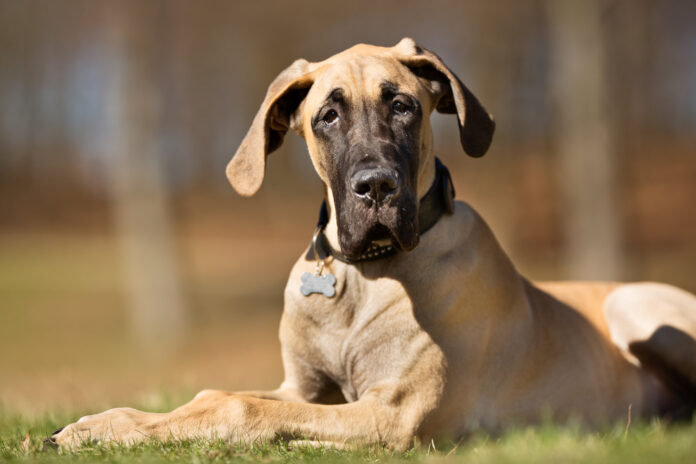
1 Great Dane 40%
2 Saint Bernard 22%
3 Weimaraner 19%
4 Irish Setter 14%
5 Gordon Setter 12%
6 Standard Poodle 9%
7 Basset Hound 6%
8 Doberman Pinscher 6%
9 Old English Sheepdog 5%
10 German Shorthaired Pointer 5%


Genetics also plays a major role in the likelihood of dealing with this tremendous disease. To be more exact, the genes can determine the width and depth of the chest, which is directly linked to it. If the chest conformation is too narrow, it can lead to this problem, regardless if the parents had it or not. Dogs that are older (over 7 years) are predisposed to this illness twice as much as younger ones.

The age of your dog should lead to periodical checks in order to avoid it. Males are also more likely to develop bloat and neutering has absolutely no impact on it. Furthermore, the eating habits can increase the risk. This means that it is better to feed your dog twice a day rather than once. At the same time, a temperamental dog can develop bloat easier.

Causes

Twisted Stomach in Dogs Causes
Source: vmccny.com

Though veterinarians cannot tell for sure what are the precise causes that lead to twisted stomach, as this sometimes occurs without prior notice, there are certain things that can contribute to it. First of all, stress, just like in the case of humans, can be destructive for the dog’s organism.

There were cases when bringing a new pet in the house let to bloat because the older one felt that the pack order was disturbed. If you feel that your dog tends to become agitated easily, it is best to treat it with care and to make it feel confident and trust you.

The way a dog eats is crucial for its health. To be more precise, pets that tend to eat fast are prone to face bloat. However, you are responsible for your dog’s life, and this means that you should alternate dry food with a homemade one (we have a great article containing great recipes for homemade dog food that you should definitely check out). The quality is crucial. Dry food contains preservatives and citric acid, thus you must never moisture it because you just increase the risk.

At the same time, you need to avoid brands that list fat in the first six ingredients. You also need to make sure that your pet does not drink too much water before, and after it finishes eating because this leads to the dilution of the gastric juices. It is also necessary to avoid food like alfalfa and soybean because they lead to gas production.

Another common cause that can lead to this health problem is the physical effort after or before the dog eats. If your pet gains extra pounds, it is more than clear that it needs running and long walks, but make sure that you schedule them several hours after the meal.

Though heredity is not something that can be changed, and if you know that the first-degree relatives suffered from this illness, you can talk to the veterinarian and take precautions. This is also valid for pets with Exocrine Pancreatic Insufficiency.

An aggressive temperament is a disposition that can trigger this disease, thus you need to do your best to train your dog calmly and teach it to be submissive. There are some great methods you can use in this article on learning how to calm your dog that would help to minimize bloat from occurring.

Treating Bloat

Bloat at dog

If you feel that your dog displays symptoms that are similar to bloat you need to take it to the first veterinary hospital as soon as possible. You can confirm them by calling the veterinarian, but this should not stop you from getting your pet ready for a car ride. The only way this condition can be improved is by passing a plastic tube into the stomach through the mouth.

As it can be seen, this is not something that you can do at home. This procedure clears the air from the stomach, and it is followed by a wash. You also need o know that the pet must remain in the hospital for the next 36 hours as it is not allowed to drink or eat, thus it will be supported with intravenous liquids.

If the diagnostic is not confirmed by the symptoms, the veterinarian will make an abdominal X-ray. The volume of gas will be clearly exposed, and also the twisted tissues. If the situation is life-threatening, emergency surgery is needed.

However, if the symptoms are really bad, it is necessary to stabilize the dog first, and only after to use anesthesia. At this stage, the stomach is repositioned and parts of it or other adjacent organs like the spleen can be removed. Though it sounds scary, it is important to be aware of all the risks in order to treat this aspect in a responsible manner. You can prevent surgery if you manage to spot the first signs of bloat.

Prevention

Though responsible pet owners would do anything to protect their four-legged friend from this terrible disease, sometimes genetics plays a major role, and this can lead to unfavorable results. However, this should not be turned into an obsession, but to be handled with care. To be more exact, when you adopt or purchase a puppy, you need to pay attention to its medical history.

The more you know about the parents, the better you can look after the little one. If this is not possible, or there is no such information available, you must understand the symptoms, causes and risks in order to be able to identify this illness and save your pet.

A great way to prevent complications is to check if your dog is on the list of susceptible breeds. Talk to the veterinarian and find out where to go and what to do in case you spot any symptoms that can be indicators of a twisted stomach. It is also a wise idea to ask for a phone number to call in case of an emergency because in the crisis situation, you may panic and talking to a specialist can calm you and also guide you through the whole process. Furthermore, your pet will feel safer in the hands of a familiar person, rather than in an unknown hospital.

As eating too fast is a cause of bloating, it is a wise idea to feed your dog twice a day. This will make the pet feel less hungry, and it will always have something in the stomach to digest. You must allow permanent access to water, but make sure it does not drink too much after it finishes eating. In order to prevent this from happening, make sure that you leave the bowl more than half empty.

Extra care of your dog

Exercises and eating should never be combined. Before and after the dog eats it needs to rest, for at least an hour. This is why it is a good idea to follow a strict training and feeding schedule. Furthermore, if you want to make a change in the everyday diet, make sure you do it gradually. Remove or add an ingredient through a period of five to seven days.

If you have more than a dog in the house and one of them is susceptible to stress, make sure you feed it in a quiet location, away from the others. If it feels a constant fear that someone will steal its food it will eat too fast, and this can cause bloating. A dog that has relatives that suffered from this illness needs to follow a strict diet.

To be more exact, it is important to avoid food with rich fat content or citric acid. You can also opt for bigger particle sizes rather than for the small ones to prevent excessive swallowing without chewing. Bloating is an illness that can happen again and again, thus you need to handle it with extra care.

Though twisted stomach is a very serious disease, it is good to know that it can be treated as long as you are aware of the symptoms and act promptly. All that you need to do in order to be able to save your dog is to be well informed. If you know the causes, you can avoid dangerous situations. At the same time, you can rely on the prevention methods listed in the article.

No matter how serious the situation may be, you need to remain calm and to call the veterinarian as soon as possible. With the appropriate care, your dog will be safe and happy.

Scariest Dogs – Dangerous and Aggressive Dog Breeds

Scariest Dogs

Considered man’s best friend, a dog can become as precious as any other member of the family or it can turn into a fearsome foe. Aggression characterizes some dog breeds more than others and it usually becomes visible in the presence of strangers and other animals, but it can also manifest towards owners. The fact that any dog can bite is not a novelty.

However, the scariest dogs tend to do it more often than others. Although domestication and training have a great impact on any type of dog, some of their tendencies cannot be fully eliminated from their behavior.

Top 5 Fearsome Dog Breeds

Aggresive rot

The most dangerous and aggressive dogs in the world are undoubtedly the fighting dogs. They were conceived through a crossbreeding process. Man wanted to obtain dogs that were characterized by cold-bloodedness and strength in order to use them in dog fights or for killing people. Since dog fights became illegal, the scariest dog breeds didn’t just disappear. They were not involved in a purposeless slaughter, but trained to become gentler and serve as companion dogs.

Many people bring representatives from these dog breeds in their homes without realizing that they become a risk for the entire family. Although most of them make remarkable pets, they could return to their innate tendencies in a matter of seconds if they are determined to do so by circumstances.

In general, the dogs belonging to these 5 dog breeds should not be taken in by inexperienced people who never had a dog before. This is because they wouldn’t know how to handle them and act imposing.

Dog breeds such as Doberman, Rottweiler, Pit Bull, Bull Terrier and the American Amstaff are extremely effective as guards. They attack everything that is not in place, regardless of what they are, humans or other animals. However, it is assumed that their aggression can be tempered if they are introduced to other people and animals when they are really young.

Other remedies are, of course, castration and sessions of training performed by experienced persons who must show both firmness and patience. Most often, these types of dogs are dangerous for other people, not for their owners or other people they are familiar with.

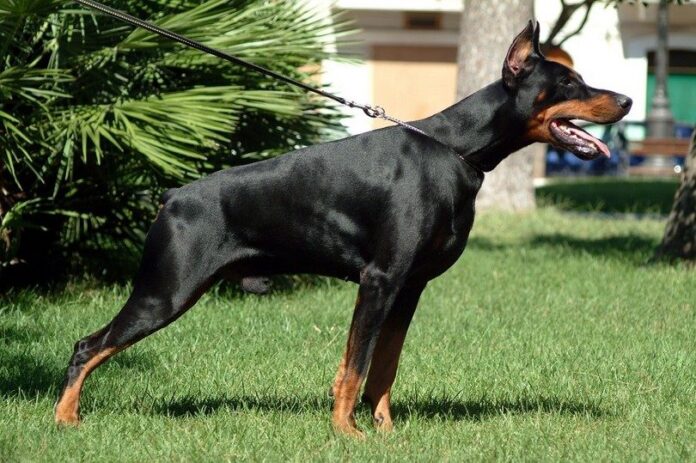
1. Doberman

The first place in this top 5 of dangerous dogs is occupied by the Doberman. This aggressive dog breed has appeared long before others. The representatives of the Doberman breed are impressively intelligent when it comes to attacking a prey.

Whether they do it on their own initiative or someone commands them to, they don’t give up until they succeed or die trying. Moreover, they are excellent guards. It is said that in order to break in or steal something from a place guarded by a Doberman, one has to tranquilize it or worse. This is because a Doberman punishes those who don’t belong on its territory harshly.

The DobermanAs a pet, a Doberman needs a strong and firm owner. Preferably, it should be afraid of this person in order to respect him or her enough and obey. In case it doesn’t have such an owner, it tends to act bossy and it doesn’t hesitate to attack its owner if it doesn’t get what it wants.

A Doberman makes its own rules if its owner is not imposing enough. This aspect could make it a terrible pet to have and almost impossible to enjoy as far as affection or companionship go. Not recommended for children to play with.

2. Rottweiler

The Rottweiler is in second place. This is a breed created for attacking humans, but also for fighting with other dogs. These canine specimens don’t hesitate to attack a person they consider suspicious even if their owners tell them not to. They tend to not take their owners’ commands in consideration especially if they don’t react in time or firmly enough.

RottweilerIf a Rottweiler puppy is not properly trained, it can easily return to the old habits characteristic for this breed. Just as a Doberman, a Rottweiler enforces its own rules in a household if its owner is not a challenging figure or an imposing figure. Only an experienced dog owner can handle a Rottweiler and teach it what obedience means.
3. Pitbull

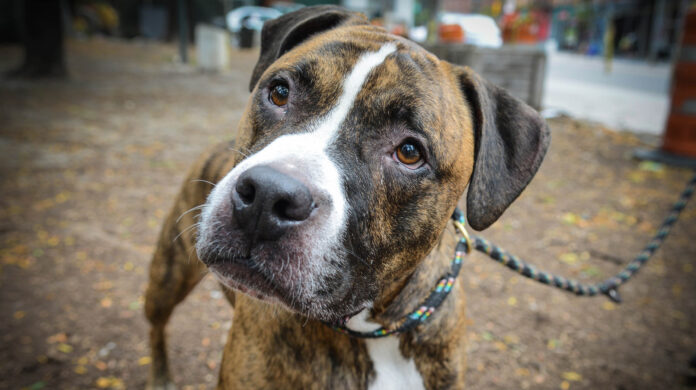
Pit Bull is a dog breed that is forbidden in several countries. It is considered extremely dangerous, but unlike the Rottweiler, it was raised to attack other dogs, not people.

However, it doesn’t hesitate to attack humans if they represent a danger or if they are attacking its owner. A Pit Bull is particularly loyal, being ready to give up on its own life in order to save its owner. It carries strong love feelings for the person who takes care of it, but that person has to be firm and know how to tame it.

Such canine specimen tries to behave itself because it knows that would please its owner. In case of aggression towards it, a Pit Bull will always react violently. Those people who are not experienced enough to know what a dog is about to do just by looking at it, should not get a Pit Bull. Although it is intelligent and loving, it is born with a high level of aggressiveness that can only be controlled up to one point.

Interested to know about what it takes to keep this breed fed? Check out our wonderful article on the best dog food for pit bulls.

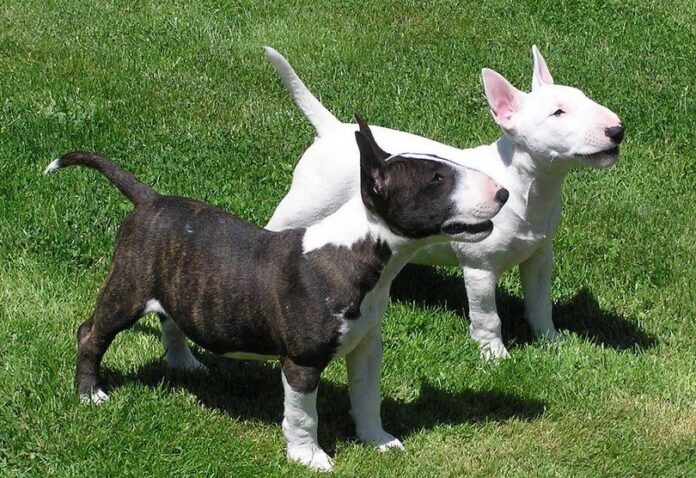
4. Bull Terrier

The Bull Terrier is situated on the fourth place in this top. These dog types are more obedient than Pit Bulls are. They love their owners enormously and they would never hurt them. However, when it comes to getting in contact with strangers or other dogs, they cannot control themselves.

Bull Terrier puppiesIt is up to their owners to train them properly, to have patience until they get comfortable around other people and animals or to keep them away from humans and other living beings for the rest of their lives. Even if they seem to behave nicely around visitors, they can react in an unforeseen way in case they misinterpret a certain action that is, in fact, harmless.

You can find more info about this breed in our article dedicated to the Bull Terrier.

5. American Amstaff

The American Amstaff is classified as the fifth most dangerous and aggressive dog type. This breed is very much like Pit Bulls, but as far as their aggressiveness goes, they are far from similar. They are only alike in terms of physical appearance. A dog belonging to the American Amstaff breed is easy to train and it can get familiarized with strangers and different pets in no time.

American AmstaffIn addition, they are excellent guard dogs that attack on command. If they are taught to be aggressive, they will be aggressive. If not, they have the ability to keep their temper under control.
Aggressiveness Factors in Dogs

As mentioned before, these 5 canine specimens were raised to represent a danger and to be aggressive. They are prone to act in this way because of their origins. However, there are other factors that can determine a dog to become scary to both its owner and strangers.

Some dogs can become dangerous because they live in a sort of environment that determines them to develop in that way, while others become like that because they are kept isolated for too long before they have contact with other living creatures that are inoffensive and powerless. This list can continue.

Unsociable dogs tend to transform in unpredictable and potentially dangerous dogs. Socialization is something that should be introduced in a pup’s life from its earliest stage of life. A socialized dog is repeatedly exposed to people it doesn’t know or to animals it has never encountered before. Despite appearances, the small sized dogs are the unhappiest dogs from this point of view. This is because their owners tend to protect them beyond measure.

Therefore, they have 2 options when they feel threatened, namely to run or attack. Since sometimes there is not enough space for them to run, they tend to attack.

Pit Bull infographic

Tethered dogs tend to develop a higher potential to become aggressive compared with the ones kept in apartments, gardens or pens. Even the dogs that are held in extremely small spaces are less aggressive than the tethered ones. This happens because a dog gets frustrated when its freedom of movement is limited.

In a small space, a dog can move as much as it wants, because it is not bound to a part of that space, fact which is not possible in case of tethered dogs. Studies have shown that a perfectly well behaved and trained dog has become aggressive after it was tied up.

Dangerous Dogs Have Special Needs

Before you get a dog, you should ask yourself some questions. This is because all dogs have certain needs that must be met for as long as they live. A dog depends on its owner, who must care for it and love it unconditionally. In turn, it offers enormous affection and devotion, but only if it considers its owner to be firm and imposing enough. If not, such dog can turn its owner’s life in a nightmare. An owner of a scary dog might become too afraid to hang around with it or give it any type of command, thinking it will not listen.

People with a choleric temperament should not purchase or adopt dangerous or aggressive dogs. Their aggressive impulses might be kept under control, but a dog feels them and they can influence its actions. A dog that is agitated because it has an owner who is always in a cranky mood could attack people or animals out of the blue.

Moreover, regardless of how well a person takes care of a scary dog, he or she has to choose a sleeping spot for it that is far from the fence or the gate. Conversely, it will always be nervous and ready to attack anyone that comes within its range of action.

In order to have a vigorous, strong and balanced dog, it is necessary to conduct its physical development as well. Such training must be progressive, according to age and breed. Also, you cannot skip over physical training sessions because that would only make your dog even more aggressive. It goes without saying that you should not train your dog to be aggressive, regardless of how much protection you think you need or how confident you are that you can control it.
In addition, you should avoid conflicts with these types of dogs and not give them the opportunity to impose their own will.

Caring Conclusions for Scary Dogs

Caring Conclusions for Scary Dogs
Source: sheknows.com

Dogs belonging to these 5 dog breeds and other ones that are considered dangerous and aggressive should not be left out. However, it is very important for their future owner to understand their special needs and to make sure that he or she can handle them.

When it comes to dogs and owners, compatibility is an aspect that comes up often. Your particular personality might not be the right type needed to tame a Doberman or a Pit Bull, so disregarding this aspect is not recommended. These dogs need to be loved and cared for as well because they are not to blame for their origins, however, not anyone can do that for them. Feeling pitiful or in a mood for an experiment are not good enough reasons to take such an important responsibility.

On the other hand, if you just want to know which dogs to avoid, but you are not a dog owner yourself, you should keep in mind the dog breeds listed above. Don’t even try to get close or talk with these types of dogs. They might think you are somehow threatening, so try to mind your own business and get as far away from them as you possibly can.

Stressing them and making them bark a lot is not a good idea. In addition, hearing them bark and seeing them ready to attack you will definitely not make you feel good. Dogs are wonderful creatures, but they must be treated in particular ways according to their breed, size and personality.

Dog Skin Yeast Infection – List of Best Treatments

Dog Skin Yeast Infection

A dog skin yeast infection can easily be detected by simply looking at your pet’s behavior. Had he or she been scratching like mad for the past few days or had you noticed any black spots or markings in their belly or other parts of the skin which were not there previously? Had they been smelling a bit pungent and musty over the past few days?

If so, then chances are your pet is suffering from a yeast infection which can also be an indication that they are suffering from an underlying medical condition. It is important to address it early on so as to avoid any further complications.

Yeast infections are one of the most prevalent yet often neglected skin conditions that a dog can have especially during the early stages. They are often treated as mild skin infections that will just clear up after a matter of days. The problem though lies in the fact that yeast infections can spread very easily if not treated early on and when this happens, it can damage your dog’s skin and health in a way which cannot be reversed by future treatments.Curing this condition at the outset will help not only to stop the spread of the fungus but will also greatly improve your pet’s health as well.

What is skin yeast infection?

To better understand what this condition is, we first need to know what causes it. A skin yeast infection in dogs is often caused by a fungus known as Malassezia pachydermatis. Under normal conditions, this fungus does not present any problem for the dog and it remains in its yeast form as its growth is checked by the natural acidity of the dog’s skin.

When an underlying medical condition or when external conditions have changed the dog’s skin pH level making it more alkaline, it spreads by producing spores that penetrate the skin where it obtains its nutrition. At this stage, the yeast had become a pathogen which is capable of destroying the skin and producing toxins which can affect your dog’s health.

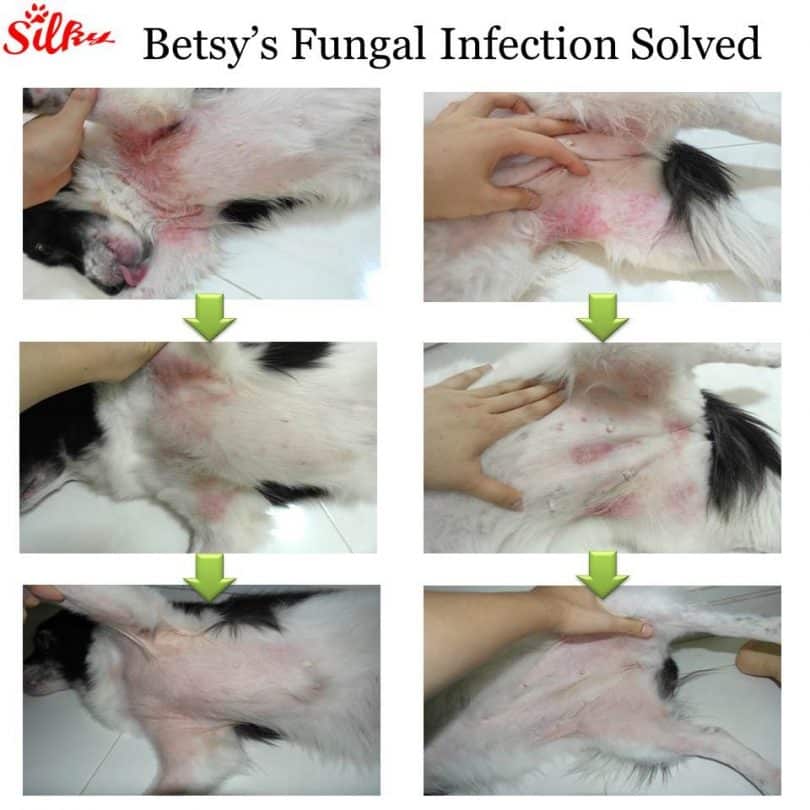
Fungal infection solved

Another possible cause of a skin yeast infection is Candida Albicans which is a type of fungus normally found in the dog’s gut. When the internal balance of good and bad bacteria in the gut is thrown into disorder, it can reproduce and spread throughout the body by entering the bloodstream.

One of the ways in which this is manifested is through skin infections and it can be a very serious condition since this can only mean that the fungus may also have spread to the various organs in the body. Since an average person cannot easily tell which of the two is the cause of the infection it is always a good idea to bring your pet to a veterinarian.

How do you spot a yeast skin infection?

As a general rule, taking your pet to a vet is always the best way to determine if your dog has a yeast infection but there are also ways in which you, as the owner, can tell if they are having a bout of this infection or not.

Itchy dog ear with infection

Remember though that you always have to get professional advice before trying to treat your dog for this type of infection. Here are some of its common symptoms:

  • Redness and itching in the ears accompanied by a foul smell – One of the areas where Malassezia is commonly found in dogs is inside their ears so when you see your pet persistently scratching them, then it may be infected by yeast. You will also be able to see some sort of whitish to yellowish discharge which has a musty smell. This does not mean though that all skin itchiness is brought about by yeast. Foreign objects, insects, and insect bites can also trigger this type of reaction.
  • Oily skin and “dandruff” – If your dog does not naturally have oily skin and he presently has developed one, then chances are that they are already infected with yeast. When the skin becomes overpopulated with yeast, one of the skin’s immediate reactions is to produce oil in excessive amounts. The overproduction of sebaceous oils in turn, causes the yeast to thrive and produce some sort of “dandruff.”
  • Thick, dark and scaly skin – A dog that has been seriously infected with skin yeast will have a dark or pigmented patch of skin which can either be scaly or thick. This is due to the actions of the mycelial forms of the fungus which had spread and produced root-like spores on the skin. The skin will also give off an unpleasant smell which is yeast-like or pungent and musty.
  • Infection of skin folds – Since yeast thrives on humid areas, they can most likely be found on skin folds where moisture can gather and be retained. Some of these areas include the areas between the toes, the rectal area, the neck, the snout in some breeds, and the vagina. If you see your dog is often butt-scooting, chances are they are yeast infected in the rectal area. You may also see abnormal vaginal discharges if your dog is a female.
  • Changes in your pet’s behavior – If the yeast has gone into the bloodstream, your dog may also exhibit some behavioral symptoms. These include loss of appetite, aggression, anxiety, and depression.

What causes this type of infection?

As we have already learned, skin yeast infection is brought about by the uncontrolled growth of fungus in your dog’s skin. What we are going to discuss here are the circumstances which allows for this “uncontrolled growth” which is unhealthy for your dog.

There are different reasons why fungus can multiply without warning and sometimes, the owner can unwittingly trigger those actions. It is therefore important to learn how you can also contribute to your pet’s skin infection so you can avoid them.

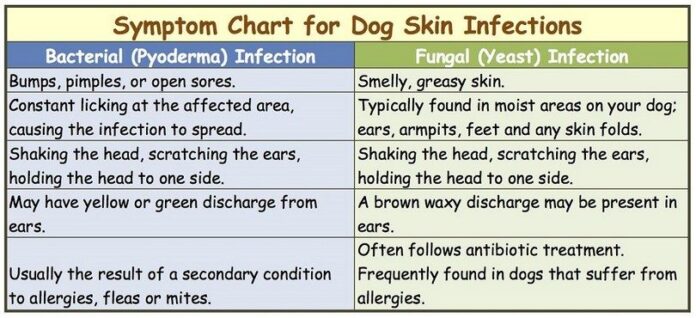
Dog skin infection chart

Here are some reasons why Malassezia and Candida can easily spread and infect your pet’s skin:

  • Too much carbohydrate in the diet. Carbohydrates are a fungus’ source of nourishment and so, over-feeding your dog with them will help the yeast to thrive and grow. Not only that, a diet rich in carbohydrates can also alter your dog’s skin pH level by alkalinizing it and thus lessening their resistance to yeast.
  • Insufficient nutrition. Your dog’s immune system is what keeps yeast in check and in order to function normally they need specific nutrients to be present in your dog’s diet. This includes protein, vitamins, and minerals without which your dog would be unable to produce the antibodies that they need.
  • Frequent bathing and shampooing that lower their skin’s pH level. Although it is good to have your dog smelling fresh and clean, it is not a good idea to strip them of their natural pH levels by giving them a dog bath every day. Water is more alkaline than acidic and there are also dog shampoos which lower the natural acidity of a dog’s skin.
  • Antibiotics kill the good or beneficial bacteria in your dog’s gut which keeps yeast growth in check. Antibiotics also weaken or even totally eradicate the phagocytic actions of the white blood cells which guard the body against infections. More often than not, treating a dog bacterial skin infection with antibiotics will lead to a yeast infestation.
  • Steroids and hormonal changes. Steroids which are used to treat allergies shut down the immune system and this can give free-rein for the yeast to multiply. A study had also shown that yeasts actually thrive or get their nourishment from steroids. Changes in hormonal levels can also trigger yeast infections and this is why you can easily spot them on pregnant, lactating, or older female dogs.
  • Just like in humans, prolonged stress in dogs can lower their immunity as the body is sent into emergency mode and release hormones that turn off the immune system. Stress also releases a lot of blood sugar into the body which the yeast can then take up and help them spread.
  • Heavy metals and toxic chemicals. Heavy metals can be found in a variety of food and water sources and these can affect various metabolic processes in the body. For example, oxygen intake by the cells can be blocked by heavy metals and they in turn, can be metabolized by yeasts and release them as toxic compounds which interfere with the immune system. Toxic chemicals are known to affect various aspects of health which includes lowered immunity to diseases.

How is skin yeast infection treated?

A yeast infection on the surface of the skin can be treated by topical solutions, proper diet, and the use of medications. Remember that even though it seems to only affect the surface of the skin, the reality is that it may have progressed to affecting the internal organs as well. Thus, it is important to keep in mind that a holistic approach to treating this condition is often the best way to address it.

Not only will it help prevent the spread of the disease towards other areas on the surface of the skin but it will also strengthen your dog’s overall immunity against the growth of any type of yeast as well.

View your dog as a whole, as an organism which survives through different parts that work in harmony together. When one of these parts is not working properly, then the others will not as well.

yeast infection dogs

External or topical treatments for skin yeast infection include the removal of the oily layer in the skin. This is done either by wipes containing acetic acids; by shampoos containing sulfur, salicylate, or benzoyl peroxide; or by giving your dog an astringent rinse made by combining a gallon of water, a cup of hydrogen peroxide, and a cup of apple cider vinegar.

After the oil has been removed, topical application of ointments containing anti-fungal medications such as Ketoconazole, miconazole, and Nizoral will be done.

If you prefer a more natural approach, you can try herbs that are known to have anti-fungal properties such as aloe vera, taheebo, tea, tea tree oil, garlic, coconut oil, olive leaf extract, calendula, chamomile, and oregano. Another good alternative is colloidal silver which starves the yeast of a specific enzyme and eventually kills the fungus.

A proper diet is also important when it comes to treating yeast infection. One of the best approaches to treating this condition is by starving the yeast of its source of nourishment which is sugar. As much as possible, avoid giving your pet any food which contains simple carbohydrates. These include processed foods, fruits, breads, dog biscuits, kibbles and sweet treats. Since the sugar is readily available, the yeast can easily feed on them and provide them with what they need to propagate.

The next step is to give your dog probiotics to promote the growth of good bacteria. These can come in yogurts or through food supplements. Studies have shown that Lactobacillus acidophilus is the best probiotic that can inhibit yeast growth. Biotin had also been shown to control the development of spores in yeast. Adding digestive enzymes and essential fatty acids to their diet will also aid to control yeast.

When all else fails, giving your dog an anti-fungal oral medication would be the best. The dosage and the type of medication to be used, however, can only be determined by your vet. Do not try to medicate your dog by yourself as an underlying condition can be aggravated by an improper dosage or type of drug used.

Some of the more commonly prescribed medications for yeast infections are Fluconazole, Itraconazole, and oral Ketoconazole. Giving oral medication should also be supplemented by a proper diet and hygiene in order to gain the best results.

How do you keep your dog from getting a yeast infection?

The best way to prevent your dog from acquiring a yeast infection is by removing all the factors that will contribute to its development. Take a look at their immediate environment: what areas in your house are prone to getting molds and mildew?

Check their diet. See if they are consuming large amounts of carbohydrates. By looking at the possible triggers of this condition we will be able to see what you can do to prevent yeast overgrowth from occurring:

  • Maintain a clean and dry environment inside your home or where your dog sleeps.
  • Restrict the type and amount of carbohydrates that they eat.
  • Provide a diet that is sufficient in protein, vitamins, and minerals to develop a strong immune system.
  • Avoid antibiotics as much as possible. Use natural methods of treating bacterial infections.
  • Lower the amount of stressors in their environments such as excessive noise, chemicals, and uncomfortable living quarters.
  • Provide a steady supply of fresh water to help flush out toxic chemicals and bacteria.
  • Avoid too frequent bathing. Bath your dog about once a month to help maintain their natural acidic skin pH level.

Your dog can develop skin yeast infections if they also come into contact with objects that are infected with the fungus. Avoid having them play in areas where there is a constant amount of moisture that will provide a good breeding ground for the yeast. Clean their feeding and drinking bowls to eliminate any chances of infestation and always keep your dog on good hygiene.

Clean their paws by soaking them in an astringent rinse and then dry them thoroughly afterward. Keeping your trash out of their reach is also very important since it is in these places where fungi are also known to grow predominantly due to decaying matter.

Cleaning dog environment

A yeast infection on your dog’s skin can occur in two ways: an overgrowth of either the skin yeast Malassezia or the spread of the Candida Albicans fungus from their gut to the skin. Either way, it means that your pet’s natural resistance which keeps these yeasts in check has already been compromised and is not functioning effectively.

What is needed then is to address the overgrowth of yeast by applying anti-fungal natural and synthetic medications and by building-up their immune system. This means involves a lot of steps which will include maintaining your dog’s cleanliness as well as providing him with the right type of diet and living environment.

One of the key ideas that you need to remember regarding yeast skin infections is a healthy immune system. Yeast is a normal part of your dog’s body and they do have some specific role in maintaining it as well. The problem begins when the immune system malfunctions and fails to regulate yeast growth inside and on the surface of your dog’s body.

To treat it therefore, you must get back to the root cause of the problem and help build up what was broken. Any other method which only tries to address the superficial symptoms will only be temporary and the infection can come back again and again.

Why Is My Dog Limping? – Causes and Treatments

Why is my dog limping

It is not unusual for pets to start limping all of a sudden, however, sometimes such sudden lameness can go away within a week, but sometimes it can be a sign that something is seriously wrong with your dog’s health.

That is why it is important to visit the vet as soon as possible and determine the cause of the lameness. If your dog starts avoiding putting his weight on a limb or you notice that he is not moving as much as before, that means that it is probably because of the limping.

The reason for such lameness can be because of a paw injury which is the most common cause; however, it could even be because of urinary incontinence or spinal cord injury. In any case, you should be prepared beforehand to notice the difference in the behavior because some dogs tend to endure pain which can result in even worse conditions later on.

You know your dog’s habits and behavior the best and it is up to you to see and prevent any pain caused to your beloved furry friend.

Dog limping right front leg

This article will provide you with some basic guidance to some of the most common causes and treatments for a dog’s limping and lameness.

Determine the Injured Limb

The first thing that you need to do when you notice your dog limping is to determine how bad it is. That means that you should determine which limb is injured and whether the cause for limping is the injury or it is more serious. Firstly, after noticing something suspicious, watch your dog walk or move around. In that case, a dog would put his weight on the healthy limb while avoiding standing on its injured limb.

You can also identify this by looking at your dog’s head – if his head and neck are more upward, it means that one of the front limbs is injured. But if it is one of the hind limbs, then his hips will drop when he moves and walks.

After you determine the injured limb(s), you must examine it. Check out the toes and the paw. This kind of examination will tell you how the dog responds when applying pressure. Hip injury can be debilitating, so read our article on how to help your pooch with joint impairment to ease his pain.

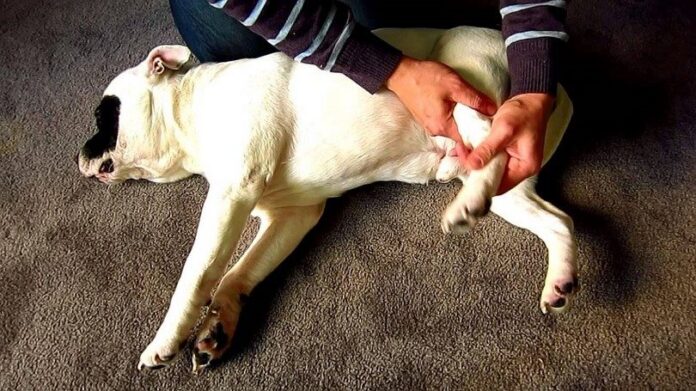
Dog leg checking

1. Toes

First you must check the dog’s toenails, because the reason for pain could be a cracking or splitting. Just like with humans, if a nail is split, the exposed sensitive tissue and blood vessels can be very painful.

These cracks or splits usually do not require a vet’s intervention, however, if a toe is broken or if the wound has got infected, then that means that you must go to the vet immediately. You should examine each toe individually and touch or squeeze it so you can see the dog’s reaction.

2. Webbing

Secondly, you must examine the soft skin which connects each toe. That space between toes can stretch and it comes in handy when it comes to swimming, for example.

But it can also get easily sliced up by various sharp objects on the surface such as rocks, thorns etc. A limp should resolve after removing these objects, however, if the cause for limping is some kind of mass, cyst or infection, then going to the vet is a must, because only the vet can inspect it properly.

3. Pads

Each dog has six protective pads on his front paws and five pads on his hind paws. They are usually thicker than the usual dog’s skin; however, they can be easily sliced up and injured, just like the webbing.

Even though these pads are hardened and they consist of keratin, they can easily become too dry; develop warts, get irritated or too hard etc. This means that you should not skip checking them because they can be also a cause for limping.

4. Joints

Healty joint

There are many joints in a dog’s body, however, there are three major joints in the front limb (the wrist, the elbow and the shoulder). The ankle, knee and hip are in the hind legs.

You can check each of these joints by applying a light pressure on them and watching for your dog’s reaction. Increase the pressure to make sure that the joint is okay. You can also examine the joint by lifting the limb and moving it slowly.

5. Bones

Your dog’s body consists of 321 bones. If your dog has got one of them bruised or fractures, that is enough for him to start limping. Look for any signs of swelling, bleeding or deformity. You can examine them in the same way as joints. If you notice anything suspicious, visiting the vet is a must!

If you have not found a cut, sprained ankle, injured paw or anything else that you can treat by yourself, then you are probably dealing with a more serious injury, disease or trauma. This is the point when taking your dog to the vet is a priority.

Other Possible Causes

If there is no sign of minor injuries such as the ones mentioned above, then the cause may be related to your dog’s age. It is not unusual for younger dogs (the ones of less than 18 months of age) to develop sudden lameness due to the congenital conditions. It is also important to make a distinction between an immediate and gradual lameness.

The immediate lameness happens suddenly, and it can range from very simple causes such as the ones mentioned above (cuts, splits, fractures, wounds, splinters etc) or they can happen due to dangerous conditions such as the decay of the discs in the spine. Other causes can be ticks, genetic diseases, allergies, etc.

If your dog develops lameness gradually, that means that the cause is a progressive disease, which is the most dangerous condition. That includes arthritis and cancer. That means that you should react the very first moment you notice something wrong with your pet.

Why Is My Dog Limping

Injury Causes

1. Sprains and strains:

These kinds of injuries are the most common, especially when it comes to active dogs that run and move a lot. As we mentioned before, you can notice the change in behavior when you examine the joints and bones and the way your dog movies his head or hip.

In that case you should apply a wild cloth to the injury, but carefully watch it, and if the dog keeps showing signs of pain, take him to the vet.

2. Paw injuries:

These injuries, also called lacerations, can be very painful and you will know that it is this kind of injury if your dog keeps licking the wound.

If it is not treated, it can become infected which will result in the wound becoming red, warm, and tender. In severe cases, you can notice even pus coming out from the wound. The pain in the paw and limb will worsen too.

3. Bone fractures:

Your doggie can badly hurt his limbs if he gets into an accident, so you should always take care of him and walk him on a leash in urban areas.

Bone fractures are also very common causes in dog limping cases. A bone fracture should be treated only by the vet.

4. Dislocations:

If your dog falls from somewhere or gets hit by a car, a dislocation can happen which results in severe pain that your pet will barely handle.

He probably won’t put any weight on the injured limb and you can even notice a slight deformity caused by the injury. Just like with broken bones, only a vet can treat it, so take you dog immediately to the vet.

5. Ruptured ligament:

A ruptured ligament in the stifle joint or a knee joint is also a common injury that results in a dog limping. This can often happen to young and very active and energetic dogs that jump and move a lot.

A ruptured ligament usually heals after a couple of days of rest; however, it can come back if not treated properly or if the dog starts moving a lot without a rest. Just like humans, it can cause trouble later, so it should not be taken lightly.

6. Spinal cord injuries:

Car accidents, falls or gunshot wounds are the most common causes for a dog limping. Your dog would probably suffer from a lot of pain in his neck and back, and he can even develop urinary problems.

Taking your pet to the vet is a must in this case, because the severity of the injury can turn into something even worse. And you would not want your dog to become paralyzed.

Non-injury Causes

When it comes to non-injury cases, the causes can be various diseases, and most of them are either genetic or too severe, so treatments are needed.

However, it is important to know that the sooner you find out the cause, it will be easier for your dog and you and there is always more hope.

1. Inherited bone and joint diseases:

Young and middle-aged dogs are usually the ones affected by these diseased. They are accompanied by the swelling on the legs and some of the examples of inherited bone and joint diseases are hip dysplasia (which is a common cause of front leg lameness), elbow dysplasia (a common cause of front-leg lameness), and panosteitis («pano» or commonly called wandering lameness because of the pain and lameness shift from one limb to another over the course of several weeks or months.)

2. Degenerative joint disease:

is also called arthritis or osteoarthritis, and this type of joint disease is common in older dogs.

Nowadays there are special medications and drugs that can help dogs and relieve them of pain, but the limping usually gets worse when the dog improves or walks around. Arthritic pain is burdensome, so read our article on this agonizing illness to find out more.

3. Bone tumors:

or osteosarcomas tend to occur more often in large-breed dogs. These tumors are accompanied by firm masses or swelling with or without signs of inflammation. If you press on them, they can cause varying degrees of pain.

Depending on the condition, surgery can save your dog’s life, but sometimes chemotherapy and other treatments are needed. Our complete information on canine bone cancer can add more insight to this condition.

4. Hypothyroidism:

This kind of condition can cause rather severe pain in joints. If your dog is limping, and is also showing some other symptoms typical in hypothyroidism (e.g. skin problems, hair loss, weight gain), ask your vet to check the dog’s thyroid hormone level.

5. Lyme disease:

is transmitted through the bite of a tick infected by the bacteria Borrelia burgdorferi and it can cause your dog to start limping. One or more joints can become swollen and become very painful to your touch. This kind of lameness may last for a few days.

However, sometimes the limping will become chronic and will last for months. Some of the other symptoms of Lyme disease include fever, appetite loss, weight loss and lethargy. Our guide on Lyme disease can be an eye-opener for you, so take time to read it.

Treatments

Depending on the severity of your dog’s injury or condition, you should first check for the cause, but if you are unsure or when you finally find out what is causing pain, take your pet immediately to the vet. If you are not sure what to do if your dog is limping even in mild cases, then you should know that you can apply a wet cloth to the joint to reduce the inflammation.

However, if the inflamed area does not go away, then you should switch to the warm cloth and take the dog to the vet. In other cases, if a dog is large, you should carry him to the car or cradle him while carrying him.

If the cause of the limping is an allergy or a bite by some animal or insect, you should also take your dog to the vet, because applying the medication on your own can worsen the symptoms. The same goes for ticks – you should not try to get them out by yourself, especially if you are not experienced. Flea control is key, so our article on tick and parasite prevention is a must read.

Treating dog limp

After you take the dog to the vet, he or she will then proceed with a diagnosis which can be determined by a simple physical examination, or in more complicated cases, by the use of X-rays, MRI or CT scans or surgery.

Other tests include: taking a history (asking questions about the history of the limping), doing a dermatologic (check for the presence of lesions on the dog’s skin), musculoskeletal (test the muscle mass), neurologic (to test whether the nervous system is functioning properly) and laboratory tests (blood and urine tests).

When you finally leave the pet hospital, your vet will prescribe the medication for you to give to your dog so he can get better.

That means that you need to pay more attention than before and make your dog stop chewing or scratching at the cast or bandages. This also includes monitoring your dog’s behavior – whether he eats, drinks, or whether there is anything suspicious in his behavior.

If you notice anything awkward, you should contact your vet immediately because that may be a sign that the medications do not work. You should also avoid stairs and slippery floors, and keep your pet on the leash when you take him out to relieve himself.

You should contact the vet immediately if you notice:

  • Any unusual swelling of the dog’s limb or surgical site;
  • Any skin rashes or sores caused by the pressure (blistered or raw areas);
  • Any unusual smells or leakages from the surgical site;

All of these are signs that something is really wrong so you should not ignore them.

Additionally, the vets usually recommend the so-called “cage rest”. This means that you should keep your dog in an appropriately sized box or cage to restrict his activity so he would not injure himself more.

This can be very difficult for both you and your pet; however, you should know that if the vet recommends it, then it is of utmost importance to do so. Otherwise, your dog can injure himself more and end up in a worse condition than before. Crate training your adult dog is possible by following some simple guidelines that we’ve listed in the previous article.

If you want to make this easier for him, then you should keep him occupied with the toys he likes and an occasional treat that he adores. You can also pamper your doggie by giving him daily grooming and cuddling and you should not forget to turn on the radio or TV when nobody is at home so he does not feel lonely.

Putting his cage or box in a high-traffic area of the house/apartment so he can be part of the household’s activities is another option. Choosing the right toy to keep your dog busy is one of our popular articles that you must read.

Injured dog in crate

To sum up, it is never a good sign if your beloved furry friend is limping. However, you do not have to panic because the cause can be as simple as a cut or irritation, but you must always be careful and check your dog’s body carefully.

This article provided you with a simple guide to the most common causes and diseases that can result in dog lameness. Some of them are not serious, but some of them are very severe and can result in your dog losing his life.  Keeping your pooch healthy is possible and you can do so by reading our past article on the subject.

That is why it is up to you, as your dog’s master and his closest friend, to always watch him and take care of him.

Habits of a Sleeping Puppy – How Much Should a Puppy Sleep

Puppies are extremely cute. They are very active and eager to learn things each day. Bringing a new family member is always a moment of joy, but it also implies responsibility. Just like children, they need several hours of rest days for proper brain development. A sleeping puppy is always a nice view, but at the same time, you must be aware of the signs it transmits.

The first night with the little one can be stressful and hearing it cry can make you feel guilty. In this post, you can find valuable information that can help you look after your puppy and raise it in the best way possible.

The Need for Sleep

Habits of a Sleeping Puppy

The first thing that you need to understand is that sleeping, or taking a nap is completely normal for dogs, regardless of their age. If you are wondering if puppies sleep a lot, the answer is yes.

While an adult requires about 14 hours of rest daily, puppies need 18 to 20 hours. This is part of the growing system and healthy evolution. They develop physically incredibly fast, and this requires an impressive amount of energy.

At the same time, there are many places they must get familiar with and countless things to learn, including commands. This means that they discover new rooms, people, or even other pets when they are awake. You must take advantage of this time to model the behavior in a constructive manner.

Just like children, puppies are extremely energetic when they are awake. Furthermore, they cannot perceive tiredness, and this makes them fall asleep in the most hilarious positions and places. Short naps are completely normal and can occur any time during the day.

Energetic puppy

It is advisable to schedule as much as you can its bedtime routine, so it will not keep you awake during night time when it becomes an adult. The best way to do it is to keep the puppy active during the evening.

It’s also important to know when to feed your puppy throughout the day so that he’s getting all the nutrients he needs. You can do that by utilizing this great article to learn how to set up a puppy eating schedule.

Play games and even try some training tricks. In order to prevent potty breaks, it is a good idea to give it food and water four hours before going to sleep. If you need to take it out, make sure it is quick, and you go straight to bed after.

It is also important to set the alarm and be the one who wakes up the puppy and not vice versa. This will teach it that it is not all right to wake you up in the morning, but to wait patiently until you get out of bed.

Sleeping Routine

Sleeping puppies

The sleeping routine of dogs develops as they get older. Puppies are known to be extremely energetic until they shut down almost instantaneously. The breed plays a major role in the sleeping habit of your puppy.

It can be more or less active during the day, compared to others, but this is not something that needs to concern you. What you need to be aware of, is that the sleep is incredibly deep. This means that you can pick them up, cuddle them or move their paws, and they will not feel a thing.

However, it is not a good idea to wake them up on purpose, simply to play with them. Resting is extremely important for proper development, even if it falls asleep while eating.

If you are wondering how much a puppy should sleep, you need to know that they require a minimum of 17 hours per day. The rest of 7 hours can be used to set up a schedule. You can use it for walks and easy-to-learn commands, like their name, sit, and come here. It is also a good idea to teach your puppy to calm down after playing with it, as part of the future discipline.

At the same time, you must provide a safe environment for the little one. This means that you can allow it to sleep in the same room with you, but make sure you avoid cuddling it when it cries, as this can turn into a habit that you will most likely not appreciate when the dog becomes an adult.

In order to enjoy a well-structured sleeping routine, you need to teach your puppy to use its bed. Take it there when you feel that it falls asleep. This will teach it that there are places where it is allowed to rest and places that are not for it. In a brief time, it will go by itself to its bed as it will associate it with tiredness.

It is also important to know that the time it spends sleeping depends on the breed and on how active it is on a particular day. The only way you can monitor it is by taking notes. However, this is not a must. You must not be concerned if your dog spends more time sleeping than playing. Furthermore, all dogs (no matter the age) have a daily activity — sleeping routine, as can be seen in the table below.

Percentage Activity
50% Sleep
30% Rest = awake, but not active
20% Active = playing, running, chewing, etc.


Though you must not be concerned if your puppy sleeps a lot, you do need to worry when its habits change suddenly. There are certain things that can lead to a changed schedule:

  • a diet low in nutrients — it is important to avoid pet food that is based on ingredients that require too much time to digest because this will make it use its energy on digesting the food and less to play with you (you can learn more in this article about avoiding feeding puppies adult food);
  • aging — you will notice that once the puppy grows, it requires less sleep; however, the situations changes once it gets old, as senior dogs tend to sleep more during the day and move from a corner to another at night;
  • Health problems — your puppy can either be agitated during sleep or stay inactive for a longer period of time; if you notice crying, barking, lack of appetite or intense scratching, it is time to pay the veterinarian a visit.

The First Night With Your Puppy

Black Russian Terrier puppy

Dogs, just like humans, feel the need to be as close as possible to the family members. They feel comfortable and safe when they are around, and feel disoriented when they are left alone. The feeling is more intense for puppies, as they are taken away from their siblings and mother. It is completely normal to feel it anxious and to hear it cry.

Once it gets used to your arms, it will feel abandoned when you put it in its bed to sleep. This vulnerability makes the puppy feel uncertain about its new house. It may take a while until it feels confident enough to sleep by itself with no worries. This means that it is up to you to ensure an environment that inspires confidence rather than fear.

The first night is crucial because this is when the puppy realizes that it is away from its canine family. Some people decide to take it as far as possible from the bedroom in order to avoid hearing it cry. Others put it in a cage to prevent it from scratching the furniture or the doors. The truth is that none of these solutions are recommended. They only manage to increase the insecurity of the puppy, and as a result, it will whine all night.

Furthermore, this can be trauma with long-term effects, and the dog can develop behavioral problems when it reaches adulthood. This means that you need to be prepared and set up a space for the new family member where he does not feel alone or isolated. A solution would be to purchase a doggy bed or a special blanket and to place it close to your bed. Though it is acceptable, not all people feel eager to bring the pet inside.

If you do not want your dog to be this close to you each night, it is advisable to avoid bringing it inside the bedroom. It can get accustomed to this cozy place pretty fast and you will find it impossible to teach it to sleep somewhere else when it grows up.

Litlle puppy sleeping routine

A great alternative for both of you would be to purchase a crate and to place it close to the bedroom door. It is advisable to leave the door open, so the little one can hear you move in bed. If you hear it cry, you can talk to it and comfort it.

Another thing that you need to teach your puppy is to go for a walk before going to sleep. This will get it so tired that it will sleep well during the night. It is not unusual for the puppy to feel alone in the crate. In order to make it feel more comfortable, you can give it a toy to make the space feel more familiar. Though it may be hard to ignore it, you need to stay strong and to avoid running towards it immediately.

If it whines continuously, you can take it up by the back of its neck and tell it in a calm voice that it is not allowed. This is a good opportunity to introduce it to the sleep command. In brief time you will see that it is enough to say the words without coming close to the puppy and it will obey you.

The night routine needs to end with a morning walk. Your puppy will be eager to see you get up and will do anything to receive attention. While you walk, you can give it treats to encourage the good things it does. Praises also do wonders, so remember to congratulate it verbally when it obeys the commands. By doing all these, you will make it feel comfortable and protected.

As a result, it will trust you, and it will not develop any sorts of anxieties that could lead to an aggressive behavior. This initial relationship also has a direct impact on how the dog responds and learns the commands, but also on how it shows its affection.

Pre-bedtime Rules

There are four rules that all puppy owners need to consider before taking their dog to bed:

  1. Physical exercises can help the puppy relieve the stress and sleep better. You can opt for a long walk, or running around the house, depending on how cold it is outside. It is best to take it out, as it gets tired easier and puts all its muscles to work.
  2. It is important to avoid a quick nap before the bedtime hour. The only way you can keep it awake is by encouraging the puppy to do the things it likes. This is also helpful to prevent it leave the crate.
  3. It is not a good idea to deny access to water, as the puppy can get thirsty after playing with it, especially if it is hot outside. However, you need to limit its drink and only allow it a few sips to prevent midnight accidents.
  4. You need to feed your puppy the dinner 4 hours before bedtime. It will keep it active, and you will not need to worry about taking it for a walk after you go to bed. At the same time, this is a great habit that is good for its health.

It can be concluded that sleeping plays a major role in the puppy’s life. It helps it grow beautifully and develop mentally. As a result, it is up to you to help it feel loved and a part of your family.

Though not all pet lovers are eager to share the bedroom with the puppy, having it as close as possible can prevent anxiety and the dog will feel confident and trust you.

If you’re still new to having a puppy, be sure to check out our wonderful article on how to take care of a puppy.

It is also advisable to follow a daily routine and to focus on a good night sleep rather than on naps. All puppies are active and curious, no matter the breed, so remember that the space designated for them must be clear of objects or substances that could harm the little ones.

Wolf Like Dog Breeds – Pursuing Your Canine’s Ancestral Heritage

Wolf Like Dog Breeds

Why do we love wolves? There are many reasons that could explain our mysterious love for these feral beasts, from their looks to their temperament, from the way in which they walk to the way in which they hunt, from how they stand tall above most other animals to what they stand for. Indeed this is not a short list by any stretch of the imagination, and it just keeps on writing itself, and with each passing day our love for these animals grows.

The vast majority of dog owners and dog lovers have fantasized about owning a wolf, as well as the way in which it would impact their lives, and some of these people actually stepped up and acquired an actual wolf.

Wolf Alike Dog Breeds

Either as a young pup or a domesticated adult, there are wolves that are running around people’s yards playing, howling at the moon and terrorizing the neighbors, but we don’t all have the internal fortitude and the nerves to take this step, so we can easily settle for the next best thing: wolf like dog breeds.

These are the dog breeds that strongly resemble wolves, and can easily be mistaken for one while in the wilderness; however they have the temperament, skills, affection, and loyalty that only a dog can bring to the table.

They share some common characteristics with their wolf ancestors, like very sharp senses (even for dog standards), increased intellect, an aggressive temperament and above all else a strange love for mischief.

Picking the Right Dog

Wolf-like-dogs

This one is slightly trickier than simply selecting a dog off of a list. Wolf looking dog breeds are a lot more special than regular dog breeds, and when it comes down to picking the dog you want to own, at the same time it also comes down to the dog himself picking the master that he or she wants.

It’s easy to select the breed and picture the ultimate individual of that breed and desire it, and even though this works perfectly well for normal dog breeds, the dogs that resemble their feral cousins are a lot more pretentious.

First thing’s first, you will have to pick your favorite wolf. This is actually the simplest step, simply log on to your computer, surf the net looking at wolves and reading a bit about them, and in a couple of hours you will have a general idea of and about the wolf that you are looking for.

Second thing you will have to do is look for the dog breeds that match the descriptions of that wolf, the ones that comes the closest at least. As an example, for the white arctic wolf you can choose the Samoyed dog, which is a little fluffier and sports a slightly rounder nose.

Or for a more traditional approach, and for the people that fancy the timber or black wolf, the Tamaskan dog is the perfect choice, in either timber or black.

Last thing you have to do is acquire the dog. This is where the fun part begins because chances are you will not find them in pet stores, you will have to go to breeders. Once there, forget the mental image that you have created for yourself, you have already accepted the dog, now it is the dog’s turn to accept you.

Simply walk half way towards the puppy and wait, or call the puppy towards you. If the puppy comes and sits down next to you, or makes himself or herself comfortable around you, then that is the dog for you.

The reason behind this is the fact that these breeds have a lot of loyalty and love to give, these dogs will literally take a bullet for you without hesitation, and they will watch over you constantly while at the same time giving you all the love and affection they can give.

However they are also very smart and stubborn. These are the kind of dogs that you will literally fight with in a battle of wits and will. If they accept you as the master, the leader of the pack, from a young age they will see you as the leader of the pack by default throughout their lives.

Yes they will challenge you every now and again and you will put him or her in his or her place easily, but overall it will be a lot better, smoother and more pleasant if you chose a dog that chooses you as well over choosing a dog regardless of his or her say in this matter.

The Official Wolf Looking Dog Breeds

There are quite a few breeds out there that resemble the dog’s ancestor, the wolf. Due to the popularity of the wolf and its dominant presence in a respectable number of cultures, it’s no wonder that people tried to cross breed dogs in order to make them look like wolves, however roughly 11 of these breeds are recognized as being official dog breeds.

1. Saarloos Wolfhound

This is the result of breeding German shepherd males with brown wolf females, and it does not fall short. Indeed this dog looks remarkably like the wolf that it is supposed to portray, however it carries a little too much of its feral heritage.

This wolf hound is recommended for experienced dog owners that love a challenge because it is strong willed, dominant, and will challenge the owner constantly.

2. The German Shepherd

The German Shepherd is by far the most recognizable dog breed in to world, however it bears a lot of resemblance to wolves. The coat colors don’t help the dog in this regard, however the shape of the head, the body, the bone structure, the muscular layout, the extremely sharp senses and the strong will all point towards one thing, the wolf.

This breed is known throughout Eastern Europe as being “The Wolf Dog” because of its wolf like attitude. Gain more insight by reading our piece on this magnificent German Shepherd and see if it is the right dog for you.

3. The Utonagan

This is a breed that is recognized as being a wolf look-alike, without any actual wolves being involved in the creation of the breed. These dogs were and are still being bred in England, and they are a mix between the Alaskan Malamute, the Siberian Husky and the German Shepherd.

Unlike the rest of the wolf lookalikes, the Utonogan are a more laid back, relaxed, gentle, friendly, sociable, and all around great dogs to have. The only thing that drives us to think of wolves when it comes to the Utonagan is the coloring of the coat and the nose of the dog.

4. The Northern Inuit Dog

These dogs are a wolf lookalike breed however just like the Utonagan, no wolves were involved in the making of the breed. They have been developed in the UK and are still being bred to this day, and they have often been mistaken for real wolves when left to run about.

Despite its feral appearance, this dog is completely pacified. He is friendly, non-aggressive, and loves to play with people, however, it has a massive drawback. These dogs must be trained from an early age and the training never stops with them. This is due to their incredibly stubborn nature and strong personalities. These are determined dogs and they will challenge you every step of the way.

With proper and continuous training, these dogs will obey you, respect you and desire to work with you. To help you, here are some dog training methods to make your pet obey you.

5. The Canadian Eskimo Dog

Canadian Eskimo Dog

Also known as the Canadian Huskies, or Canadian Inuit Dogs, the Canadian Eskimo Dog is a bigger, stronger, and fluffier version of the wolf. Indeed it has been recognized as being a wolf lookalike breed, however, at the same time, it has been declared an endangered breed because of infection and canine diseases.

This breed is extremely rare, only 300 were counted in 2008 and the numbers have been struggling to maintain themselves over the last few years. Other than that, they are very energetic, full of life and stamina, very strong, friendly towards humans, and always willing to work with their masters.

This breed is, however very problematic and aggressive when it comes to other dogs, especially the ones that are not in their pack. These dogs will not welcome another pet in the pack or household easily, they will become increasingly aggressive towards other dogs and will not miss a chance to get into a fight with other dogs.

They are also notorious for chewing things, digging, and mischievous behavior, but these things are balanced out by the fact that they are loyal, upbeat, and loving dogs.

6. The Tamaskan

When it comes to wolf lookalike breeds, this breed is a clear cut above the rest.

First off, it looks incredibly like the wolves that it portrays. Yes, wolves, as in more than one. The Tamaskan comes in 2 pelt colors, all black like the wild and vicious black wolf, or white and charcoal gray like the timber wolf.

This breed was created in Finland, and sadly it is not recognized by kennel clubs around the world because of its very low numbers, just a few over 400. These dogs are large, they are taller than a German Shepherd, larger than a husky, and stronger than them as well.

They are friendly, obedient, and loyal to the entire family and all its members. They are great with kids and other pets, however, they must be trained from an early age.

7. The Samoyed

The Samoyed emulates a rarer and at the same time more prestigious wolf breed: the arctic white wolf. They were originally bred in Russia, in the Siberian Tundra to be more precise, and these fluffy dogs are indeed wolf lookalikes.

They are calm, devoted, eager to please and have fun with their masters, very pleasant, friendly, and loving. These dogs were initially bred to hunt, which is where their fixation of pleasing the master comes from.

One other thing that the Samoyed is notorious for, is sleeping on his master in order to keep him or her warm, and always wrapping himself around small kids in order to keep them warm as well. Here’s our comprehensive information on the Samoyed to help you get to know this wonderful animal.

8. Kugsha

The Kugsha is one of the wolf lookalike breeds that encompass all the traits that the wolf possesses and has everything down to a T. This is mostly due to the fact that the Kugsha is not exactly a dog but an actual wolf.

Indeed Kugshas has just recently been domesticated, earning the title of dog instead of a wolf, however, they managed to become loving, always willing to please their masters and intelligent dogs.

Unlike other wolf lookalikes and wolfhounds, the Kugsha tends to work with his master rather than against them. That being said, these are still highly intelligent and strong-willed dogs, and they will challenge their master if they find an opening for it.

These dogs currently exist only in the United States, and the only true drawbacks that they have is the fact that they shed heavily, and the fact that they cannot survive a warm climate.

9. Czechoslovakian Wolf Dog

Ironically, this was not initially designed to be a dog breed, but things have a weird way of turning out great for our 4 legged canine friends. These dogs were initially an experiment involving a German Shepherd and Carpathian wolves, and its aim was to try and obtain a dog breed that had the best of both worlds, the trainability, intelligence, temperament and mentality of the German Shepherd, while at the same time sporting the speed, strength, agility, stamina and relentlessness of the Carpathian wolf.

The experiment was declared successful, even though the results fell a little short of the target. Indeed this wolfhound has all the characteristics of a German Shepherd plus the positive characteristics of the Carpathian wolf, but at the same time, it possesses some of the basic negative instincts that the Carpathian wolf brought to the table.

Even though this dog will never bite without being provoked and without warning, it still has a tendency to growl like a wolf most of the time.

Another drawback is that, just like a wolf, this dog is very shy, especially towards new people. This shyness can lead to problems, especially if the person in question pursues the dog. The dog might feel cornered at one point, and it will start to growl and even bark at the person.

10. The Siberian Husky

We simply cannot have a list of wolf lookalike breeds without including the Husky.

This dog resembles a wolf in many different ways. It’s built like a wolf, it’s molded like a wolf, it’s as strong as a wolf, it’s as enduring as a wolf, but most importantly, it has the pack mentality of the wolf.

The Husky is a pack dog, born and bred to pull sleds along with other dogs across the Siberian tundra, and when the sled stops, the husky guards it from wolves. Huskies are beautiful and majestic dogs, and everything about them screams wolf, from their shape to their muscular build, to their strong backs and incredibly powerful legs.

There are a couple of drawbacks to owning a husky though. First off these dogs are smart but not in a funny pet way. No these dogs are intelligent dogs, and these dogs were bred for intense physical activity. Pulling sleds across the frozen wasteland is not exactly easy, which is why these dogs were bred and developed over the ages into the perfect pulling machines.

That being said, they are not the perfect dogs to keep around an apartment or a small house because they have a lot of energy and they tend to get bored really fast. When these dogs get bored they will do all that is in their power to have fun, at your expense.

Make no mistake about it, they will prank you and their mischievous nature will kick in strong, making them do the most hilarious things only to get their kicks from watching you get pranked time and time again.

11. The Alaskan Malamute

Every family has that one cousin, the one that does not quite fit in with everyone else but is generally a nice guy and laughs on occasions so he still gets invited to family dinners and events.

This is what the Alaskan Malamute is for this family of wolf lookalike breeds. The Alaskan Malamute is a distant cousin of the Husky. They both have the same temperament, they both are incredibly smart and very mischievous, they have the same pelt color and they were both bred to pull sleds across the frozen wastes, but this is where the similarities end because the malamute is a husky on steroids.

Indeed this dog is a lot taller, a lot larger, and a lot stronger than the husky, and wolves in general.

These dogs are loyal, loving, quiet, and eager to please their master, but the malamute is also strong willed, stubborn, has a strong personality, and requires a lot of training.

It is not recommended for people to have a malamute in an apartment because they require a lot of exercises and they are a lot more comfortable and a lot more at home in nature than in an apartment.

The malamute also sports a 2-inch thick coat that causes him or her to shed at an alarming rate when kept inside a warm apartment, so this dog is better suited in a colder environment, Alaska and Siberia being the 2 favorite locations of the Malamute.

Get to know this breed by reading our article on the amazing Alaskan Malamute.

Things to Look Out for When Dealing With These Breeds

There are some things that you should watch out for as the owner of wolf looking dog breeds. First off, there are a few health issues that might arise, especially in males, like sterility, dangerous stomach infections, and hip problems. Another thing to keep an eye on is the food that your dog ingests. Normal dog food usually does not cut it for these specimens, and special meals can be cooked with minimal effort, for a minimal cost, and in a very short time.

Exercise is a must for these dogs, their athletic bodies are there for a reason other than to be admired, and their muscular development is incredibly important. These dogs are extremely close to wolves and they must burn the fat and the energy as often as they can in order to prevent health problems later on and in order to keep them submissive and in a relatively calm state.

Human interaction is also crucial for these dogs because some of the breeds look incredibly similar to actual wolves, and as such people tend to be either frightened or aggressive towards them. With persistent social interaction, you will see not only the people begin to grow more relaxed around your dog, but more importantly, you will see your dog starting to grow more relaxed around other people and even come to expect weird reactions without acting out in self-defense.

Socializing your dog with other dogs is also important. These are pack dogs at their cores, and even though it will take a while for them to grow acceptance of other dogs, especially if they were not socialized while they were puppies, they will start to socialize with other dogs and they will grow less aggressive and less dangerous around other dogs. Check out our piece on how to teach your dog socialization skills to help you.

The wolf looking dog breeds are indeed a sight to behold. They are beautiful, athletic, devoted, loving, and hardworking dogs. Some of them have graced the silver screens, some of them are still being mistaken for wolves, and some are a bit more feral than usual.

We all love these breeds because they remind us of how beautiful they are as well as how smart, how loyal, and how devoted dogs can really be.

It does take a special kind of person to understand these breeds and help them reach their true potential, however, if you think you have what it takes, and you are both willing and able to change a few things around in order to accommodate such a dog, then, by all means, go for it.

Yorkshire Terrier – Small Sized Dog Breed

Yorkshire Terrier

Although the Yorkshire Terrier is quite small in size, they make up for it with a large personality. They can be a feisty and very loving companion, and quickly became one of the most popular toy breeds in the United States.

He displays devotion to his owners and is very suitable for apartment living, so he can be taken just about anywhere.

Breed Characteristics:

Yorkshire Terrier


Dog Breed Group: Companion dogs
Height: Eight to nine inches at the shoulder
Weight: Four to six pounds
Life Span: 12 to 15 years


Also known as the Yorkie, the Yorkshire Terrier can seem quite standoffish and full of himself, and who wouldn’t blame him. He has a long silky coat and a perky hairstyle, and he knows how to carry all of it quite well.

He is considered one of the most glamorous dog breeds in the world, and definitely attracts attention wherever he goes. He does enjoy traveling in style, given his small size, so don’t be surprised when you see one being carried around in a purse.

They’re known for their long steel-blue and tan coats, and it is considered to be his crowning glory. However, it’s his personality that truly endears him to his family. He’s completely ignorant of his small size and is always on the lookout for adventure on the grandest of scales.

His mischievous nature can oftentimes get him into trouble if he isn’t being supervised. To put it more simply: the Yorkshire Terrier is a big dog trapped in a small dog body.

They are extremely affectionate towards anyone who shows them a modicum of attention. Although they are expected to be a companion dogs, they were bred to be a terrier, and that means being suspicious of strangers and barking at large sounds or intruders. Being mindful of their happiness requires that there be lessons on knowing when and when not to speak.

They can also be quite aggressive towards strange dogs and small animals; their terrier instinct will have them chasing squirrels and other small creatures that they find in your yard. Despite this sense of bravado, the Yorkshire Terrier also has a soft side that they display with their owners. They require a lot of attention. Being left alone for long periods of time is not best for their dispositions.

Yorkshire Terrier
Source: be.chewy.com

Being overprotective of your Yorkie is also not a good idea, as they can pick up on your emotions very quickly. If your actions tell them that the world is a dangerous place, then they’re going to pick up on that very quickly and may even become neurotic.

This is why it is best not to display nervousness when you are introducing your Yorkie to the other residents in your home, whether they are human or animals. In this regard, they can become quite possessive of their owners, and may even challenge them. On the off chance that a fight does break out, the Yorkshire Terrier’s tenacity will have him fighting to the death.

Yorkies are better suited for playing with older children, due to their size. Children should be taught to be careful and respectful of the dog, especially when he is eating. Otherwise, he can become snappish if they are startled or teased.

One wouldn’t think that a dog of this size would require much exercise, but they do need some every day. A good session of play indoors or going for a quick walk around the block is enough to satisfy him. Take care in not overworking him too much.

Main Highlights:

  • Yorkshire Terriers have earned the reputation of being a bit difficult to house train. Having a crate can help to make this process easier.
  • Yorkies do not like the cold and are quite prone to having the chills. If they get damp, dry and warm them up immediately.
  • Yorkshire Terriers are not fit for homes that have very young children, as they can become injured quite easily due to their small size and delicate structure.
  • They can be yappy at times, barking at any sound that they hear. Training from a young age can curtail this, and provide you with a more peaceful household.
  • Yorkshire Terriers can have very delicate digestive systems and can be a bit picky with their foods. Eating problems can become worse if they have problems with their teeth and/or gums. If your dog starts showing signs of discomfort, such as rubbing at their mouth or not eating, then you should take him to a vet immediately.
  • They will try to pick a fight with any dog, even those that are much bigger than them. Providing training and maintaining control over your dog can prevent confrontations from happening. Early socialization is key in order to help your dog understand what is expected of him.
  • Yorkies have a tendency to retain their puppy teeth, especially their canines. Checking his teeth on a regular basis can help you to prevent a problem from occurring. If you notice that an adult tooth is trying to grow while a baby tooth is still there, he should be taken to the vet in order to have the tooth removed. Retained baby teeth can cause the adult ones to grow improperly, and that can lead to tooth decay.

Breed History

Yorkshire Terrier
Source: hundeo.com

During the Industrial Revolution in England, Scottish workers were going to Yorkshire to work in the coal mines, fabric mills, and factories. They would take dogs with them which were, at the time, known as Clydesdale Terriers or Paisley Terriers.

They were much larger than the Yorkshire Terriers and were primarily used for catching rats. These dogs were crossed with other kinds of terriers in order to develop the Yorkshire Terrier. Many believe that the Skye Terriers and English Black and Tan Toy Terriers played a role in creating the Yorkie that we know today.

In 1861, the Yorkie was brought to a dog show, and was referred to as a «broken-haired Scotch Terrier.» The breed was first registered in the British Kennel Club in 1874, two years after they were born in the United States. They began competing in shows as early as 1878, and slowly gained popularity. Yorkshire Terriers back then were divided by their weight: under five pounds and five pounds and over. Eventually, this was reduced to one class, where the average weight for the breed was three to seven pounds.

Size

Yorkshire Terrier - Size
Source: dogs.lovetoknow.com

Yorkshire Terriers are quite small and are usually no more than eight to nine inches at the shoulder. They can weigh as much as seven pounds, but somewhere between four to six pounds is preferable.

They can sometimes be quite inconsistent with size. It’s not unusual for a litter of puppies to grow up to be several different sizes. What should be looked out for, however, are breeders who advertise «teacup» variations of the Yorkshire Terrier. They’re bred to be even smaller, but they are prone to a wide variety of genetic disorders and have higher health risks than the standard breed.

Personality and Character

Personality and Character
Source: royalcanin.com

The Yorkshire Terrier is known for being quite smart and self-assured. He is a combination of small size and an adventurous spirit.  The breed itself displays quite a range of personalities, from cuddly and perky, to mischievous and outgoing. The Yorkie wants nothing more than to follow his owner around and engage in anything that piques his interest.

However, limits must be set for your Yorkshire Terrier, or he may start to have a run of the household. Spoiling him is never a good idea. Training and socialization should be done early in order to round out his personality and ensures that he does not become fearful of people.

Health and Potential Problems

Yorkshire Terrier - Health and Potential Problems
Source: pixabay.com

Yorkshire Terriers can be generally healthy, but there are certain physical conditions and diseases that they are prone to.

1. Patellar Luxation:

Also known as «slipped stifles,» this is a common problem in small dogs. It is caused when the patella, which consists of three parts: the femur, patella, and tibia. This condition occurs when these three bones are not properly lined up. This causes lameness in the leg or an abnormal gait in the dog. It is a disease that is present at birth although the actual misalignment or luxation does not always occur until much later.

The rubbing caused by patellar luxation can lead to arthritis, which is a degenerative joint disease. There are four grades of Patellar Luxation ranging from grade I, which is an occasional luxation causing temporary lameness in the joint, to grade IV, in which the turning of the tibia is severe and the patella cannot be realigned manually. This gives the dog a bowlegged appearance. Severe grades of patellar luxation may require surgical repair.

2. Progressive Retinal Atrophy:

A degenerative eye disorder. Blindness caused by PRA is a slow process resulting from the loss of photoreceptors at the back of the eye. P

RA is detectable years before the dog shows any signs of blindness. Reputable breeders have their dogs’ eyes certified annually by a veterinary ophthalmologist.

3. Portosystemic Shunt:

portosystemic shunt is an abnormal flow of blood between the liver and the body. That’s a problem because the liver is responsible for detoxifying the body, metabolizing nutrients, and eliminating drugs.

Signs can include but are not limited to neurobehavioral abnormalities, lack of appetite, hypoglycemia (low blood sugar), intermittent gastrointestinal issues, urinary tract problems, drug intolerance, and stunted growth. Signs usually appear before two years of age. Corrective surgery can be helpful in long-term management, as can a special diet.

4. Hypoglycemia:

Like many toy and small breed dogs, Yorkies can suffer from hypoglycemia when stressed, especially when they are puppies.

Hypoglycemia is caused by low blood sugar. Some of the signs may include weakness, confusion, a wobbly gait, and seizure-like episodes. If your dog is susceptible to this, talk to your vet about prevention and treatment options.

5. Collapsed trachea:

The trachea, which carries air to the lungs, tends to collapse easily. The most common sign of a collapsed trachea is a chronic, dry, harsh cough that many describe as being similar to a «goose honk. The collapsed trachea can be treated medically or surgically.

6. Reverse sneezing:

This condition is sometimes confused with a collapsed trachea. This is a far less serious condition and lasts only a few minutes. Reverse sneezing primarily occurs when your dog is excited or tries to eat or drink too fast. It also can occur when there are pollens or other irritants in the air.

Secretions from the dog’s nose drop onto their soft palate, causing it to close over the windpipe in an automatic reaction. This can be very frightening to your Yorkie, but as soon as he calms down, the reverse sneezing stops. Gently stroke his throat to help him relax.

  • Eye infections, teeth, and gum problems also can occur.

Care Features

It does not take a lot of effort to keep a Yorkshire Terrier well exercised. If you have enough space in your apartment, some playtime throughout the day is enough to get any Yorkie tired. They’re extremely receptive to training, especially if it garners attention from other human beings. Teaching them to perform tricks and putting them through obedience trials can provide him with the mental stimulation that he needs.

Be prepared for your Yorkie to have small accidents in the home before he is fully house trained. Showing them where to go from the beginning and rewarding them when they do so is the best start to getting them to understand what they need to do. With patience, you can end up with a very well-trained Yorkie.

This paper training method is especially useful when it is hot outside, as such small dogs don’t do very well in the heat. They are definitely house dogs, and should not be left outside ot be exposed to extreme temperatures for extended periods of time.

Check your Yorkie’s toys on a regular basis to ensure that they have not been chewed open. Yorkies are drawn to squeaky toys in particular and may chew through it to get to the noisemaker inside. What he does love best, however, is playing fetch with any toys that you throw for him.

Feeding Schedule

Due to their small size, they don’t require a lot of calories to get them through the day. It is best to provide no more than 1/2 to 3/4 cup of food in a day. Feeding any more can lead your dog to become obese quite quickly.

This breed does not look good with a big belly, and he will quickly lose his charm. If you are worried that your Yorkshire Terrier is becoming a bit too chubby, cut back on his food and increase his exercise activities.

Coat, Color, and Grooming

Coat, Color, and Grooming
Source: dogtime.com

The Yorkshire Terrier’s coat is quite long and silky, and very straight. As show dogs, their coats are allowed to grow to the floor so that it looks like they’re floating when they walk. They have a single coat that sheds very little, making them the perfect breed for those who are prone to allergies.

The puppies are usually born black, and the blue and tan coat develops gradually. After turning a year old, they start to lighten and turn grey rather than blue. These are due to hormonal changes that affect the color of their hair. Females, who are in heat, become lighter and then turn dark again after their season is over.

Grooming is not something an amateur should attempt. Their soft coat can tangle quite easily and should be brushed on a daily basis, even if his coat has been trimmed. A lack of care can ruin this breed’s reputation for good lucks, as his hair will quickly become matted and tangled, and ruin his appearance. His perky ears should also be checked on a regular basis to ensure that they’re free from any dirt or signs of infection.

Your Yorkie should be bathed on a weekly basis in order to keep his hair smooth and shiny. Simply apply the shampoo and run your fingers through his hair in order to remove any dirt. Rubbing is not necessary. Afterwards, spray your dog’s coat with a light conditioner and then brush. Brushing a dry coat can lead to breaking.

Small dogs are prone to dental and gum problems, so it’s important that you consider checking his mouth on a regular basis.

They tend to form a lot of tartar on their teeth and can lose them at a very young age if they’re not properly maintained. Brushing their teeth regularly and scheduling a trip to the vet for a dental procedure once a year will help to save their teeth.

Children And Other Pets Compatibility

Yorkshire Terrier - Children And Other Pets Compatibility
Source: newsweek.com

Yorkies are not very suitable for families with very young children. This is because they can be injured quite easily.

Teach children how to handle and play with Yorkshire Terriers, and always supervise interactions. Being treated too roughly can lead to a Yorkie biting back, and can make both dog and child fearful of each other.

Conclusion

A Yorkshire Terrier can be quite cute to look at and soft to the touch, but that doesn’t mean that they’re not a lot of work. This breed is a little more active than people expect, but it isn’t too much that demands a lot of time to be set aside.

Keeping him physically and mentally active will bring out the best in your Yorkshire Terrier, and you’ll certainly have a fun time finding new ways to keep him entertained.