SUPERFICIAL AND DEEP ACNE TYPES
Just as humans get acne, so do dogs. Dog acne is a benign disorder that, in most cases, lasts for a very short period of time. It appears when their hair follicles get irritated and it is most common in dogs with short furs. When their hair follicles are irritated, pups feel a sensation of discomfort and they want to scratch the affected areas. Usually, a dog has acne during its puberty phase, more specifically around the age of 5 to 8 months, depending on its breed. There are rare cases when it occurs in dogs that are older than one year. If it persists, the intervention with special shampoos and drugs is necessary, as well as the administration of estrogens and tetracycline when the cause is hormonal. Just like other medical issues, this one has multiple causes and multiple treatments that don’t fit for every cause. Therefore, the advice of a specialist is not optional, but mandatory. Acne is a skin condition. It is produced by staphylococci and streptococci after a dog’s skin is injured because of mechanical factors, chemical factors or pathological disorders with diverse etiologies, which lead to a decreased immunity system and favor the occurrence of acne.
It affects a dog’s hair follicles and sebaceous glands and it manifests locally, on a dog’s head, limbs, but also throughout its body. It can be superficial or deep.
A pup’s chin is the most frequent place where acne begins to form. Its snout and genital area are also prone to the appearance of acne. The pimples that dogs have look very similar with the ones humans have.
They look like small bumps filled with pus. Draining them is not recommended because doing so the acne might spread on wider areas.
Remember that what is good for humans is not always good for your dog. The areas with acne from a doggy’s body might redden, get swollen and, often, the skin around the pimples exfoliates and looks like dandruff.
Acne is a skin condition. It is produced by staphylococci and streptococci after a dog’s skin is injured because of mechanical factors, chemical factors or pathological disorders with diverse etiologies, which lead to a decreased immunity system and favor the occurrence of acne.
It affects a dog’s hair follicles and sebaceous glands and it manifests locally, on a dog’s head, limbs, but also throughout its body. It can be superficial or deep.
A pup’s chin is the most frequent place where acne begins to form. Its snout and genital area are also prone to the appearance of acne. The pimples that dogs have look very similar with the ones humans have.
They look like small bumps filled with pus. Draining them is not recommended because doing so the acne might spread on wider areas.
Remember that what is good for humans is not always good for your dog. The areas with acne from a doggy’s body might redden, get swollen and, often, the skin around the pimples exfoliates and looks like dandruff.
 In most cases, the acne forms that occur in dogs are not severe and disappear until they celebrate their first birthday.
However, this problem can return several times until it is cured for good. The complications include fungal infections or infections with other types of microorganisms, which can generate the appearance of boils in the already affected areas.
Your pup’s anniversary can be pimple-free if you attend to this issue as soon as it appears. Having lovely pictures of your dog from its first birthday is a memory to value.
If you would have to look at them and always remember that you pup had a skin condition back then, you might not be too pleased.
In most cases, the acne forms that occur in dogs are not severe and disappear until they celebrate their first birthday.
However, this problem can return several times until it is cured for good. The complications include fungal infections or infections with other types of microorganisms, which can generate the appearance of boils in the already affected areas.
Your pup’s anniversary can be pimple-free if you attend to this issue as soon as it appears. Having lovely pictures of your dog from its first birthday is a memory to value.
If you would have to look at them and always remember that you pup had a skin condition back then, you might not be too pleased.
SYMPTOMS FOR BOTH TYPES OF ACNE
Canine acne begins with the appearance of erythematous follicular papules in common areas, such as chin and the skin around a pup’s lower lip. An erythematous tissue is characterized by redness, inflammation and it is often a sign of infection. The primary lesions evolve quickly with the appearance of follicular pustules, dry skin and pimples filled with a dark liquid that is surrounded by a layer of erythematous cells. As a reaction to lesions, the hair follicles break, fact which leads to the appearance of lumps that have firm consistency. They can remain intact or they can spontaneously open towards the exterior of the skin. In severe cases, the clinical symptoms include the expansion of the lesions around the dog’s upper lip. In these situations, erosions and ulcers are most likely to appear too. A form of chronic acne in dogs is accompanied by skin lichenification (the skin gets thicker) and hyperpigmentation (the skin gets a darker color). In addition, a pup can feel pain if its acne has a serious development. Otherwise, there is just a mild sensation of itchiness that can be handled by any doggy. You need to know that only the topography of the pup’s skin’s lesions and a complete clinical examination will allow the establishment of a diagnosis by a vet.CAUSES OF SUPERFICIAL ACNE IN PUPS
The causes of superficial acne in pups are not known in depth and they are varied. The veterinarians think that bacterial infections and trauma are both factors that can trigger acne eruptions. Also, a pup’s hormones play an important role because this affection is common in dogs during their growth phase. While a person lives years until he/she gets acne, pups only live for about half a year until they must face this uncomfortable skin condition. However, just like helping a kid, a dog’s owner can help his/her best canine friend in ways that are accessible and easy to apply. The treatment options are not very different from man to dog. They have different ingredients and sometimes similar ones, such as the salicylic acid. Regardless of the cause, the combination of oily sebum and dead skin cells is always bad because it causes the inflammation of the hair follicles. This is exactly what leads to acne. The sebaceous glands continue to produce and secrete sebum even after the hair follicles start to get inflamed. The inflammatory process worsens in this particular case. The skin becomes red, the fur begins to fall and the infections start to produce serious skin lesions. As you can see, except the fur falling off, the process is similar to what happens to humans. However, dogs have no problem with the aesthetic aspect of this medical issue, but no power over it either.TYPES OF DEEP ACNE IN DOGS
Acne in dogs can be superficial or deep. Before becoming a deep type of acne, it always begins with a mild form. A deep type of acne is usually the result of an infection with staphylococci. The lesions produced by these affect deeper layers from a pup’s skin. Depending on the area where it spreads, deep acne can be classified as it follows:- Juvenile acne. In case of pups younger than one year and in short-haired breeds, the lesions appear on lips, ears and eyes. Their skin is inflamed, painful and filled with pus. The formation of crusts and scars is most probable as well.
- Nasal acne. A dog that is digging into the ground with its nose or it is rubbing its nose on different hard objects can infect itself. The lesions from a dog’s nose level can turn into fistulas because of the destruction of the hair follicles. Your dog must be observed and stopped from hurting itself if this is its case.
- Interdigital acne. The lesions are located on the interdigital space of short-haired dog breeds. The clinical signs are reddened skin, lack of hair and fistulas. This is not a common type of acne.
- Hyperkeratosis acne. Hyperkeratosis means thickened skin. This type of acne is present in large dogs on their elbows and hocks. It manifests by forming fistulas and ulcers if it is combined with fluid retention caused by a mechanical injury and staphylococci.
TREATMENT OPTIONS FOR PUPS’ ACNE
Before the vet establishes a treatment, he/she must first consult the pup and determine whether or not it has acne or other medical issues that have similar manifestations, such as scabies, ringworms or allergies. The skin cytology is performed in order to evaluate skin infections, detect fungal cultures and bacterial cultures, as well as the pup’s sensitivity level. The tests for skin cytology are based on acetate bands, so they are not at all intrusive for your beloved canine friend.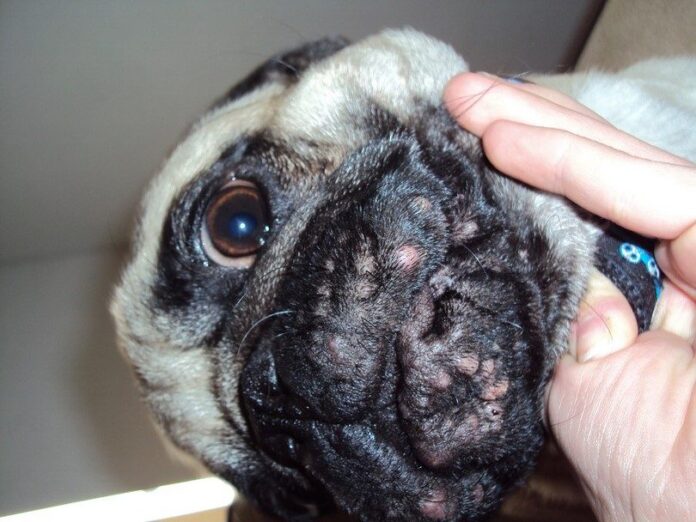
If the results to this test are not conclusive, the vet might recommend other tests in order to evaluate the affections that might generate acne.
 Other local treatments consist of skin asepsis (cleaning the wound with disinfectants), rigorous grooming, the application of solutions and ointments that contain antibiotics, anti-inflammatory medicine and antiseptics too. The antibiotics based on penicillin are only administered in severe cases.
Usually, the recommended anti-inflammatory medicine is based on glucocorticoids.
Since a dog with acne might scratch itself a little too much and cause further damage to its skin, one can relieve its itching sensation and irritation with a common warm compress applied on the affected areas.
Other local treatments consist of skin asepsis (cleaning the wound with disinfectants), rigorous grooming, the application of solutions and ointments that contain antibiotics, anti-inflammatory medicine and antiseptics too. The antibiotics based on penicillin are only administered in severe cases.
Usually, the recommended anti-inflammatory medicine is based on glucocorticoids.
Since a dog with acne might scratch itself a little too much and cause further damage to its skin, one can relieve its itching sensation and irritation with a common warm compress applied on the affected areas.
This compress must be changed as soon as it gets cold.
THREE EFFECTIVE DOG SHAMPOOS FOR ACNE
If the vet doesn’t recommend a specific shampoo or he/she just tells you what it is supposed to contain, you can find three of the most utilized shampoos for dogs that have acne by other dog owners described below. These have guidance purposes only.
- DermaPet Benzoyl Peroxide plus shampoo. This one is produced by Dermapet. It contains sulfur, salicylic acid, moisturizers, antioxidants, Vitamin E and fragrances extracted from herbs. It is efficient for removing microbes and it can be used as adjuvant in acne therapy. It does not contain soap and it is not only meant to be used on dogs, but also on cats and horses. However, the most positive reviews are from dog owners who used it and have seen in improvement in their dog’s acne condition.
- Sebolux shampoo for dogs & cats. This product is recommended for dogs with active seborrhea glands. It is produced by Virbac. Since stuffed skin pores can lead to the development of acne, removing the excess sebum is recommended. It contains solubilized sulfur and salicylic acid. Among its actions are the fight against bacteria and fungus. It is also an antiseptic product, so it disinfects the areas with lesions. The ultimate result of using it is having a pup with clean skin.
- Davis Benzoyl Peroxide pet shampoo. Produced by Davis, this shampoo is suited for dogs with acne because it contains benzoyl peroxide. Also, among its characteristics are its ability to degrease a pup’s skin and fur and it helps remove the exfoliated skin as well. One thing you must know if using this product is that you should wear rubber gloves while washing your pup. The benzoyl peroxide is not good for your hands to come in direct contact with.
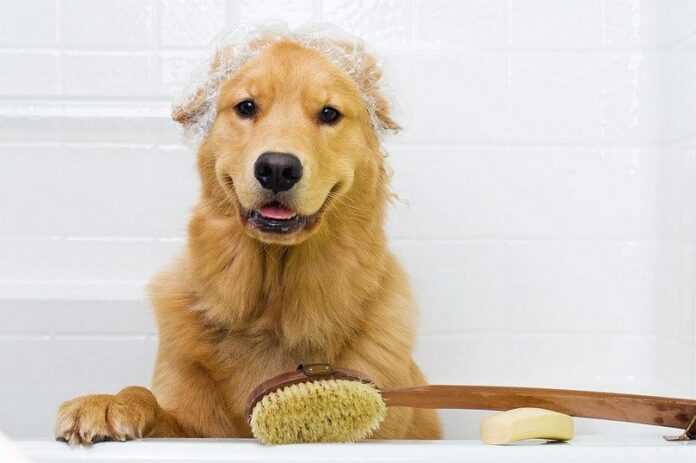 A dog with acne should not have intense activity while it is suffering from this skin condition. This is a self-limiting condition that will not last for a long time, so sacrificing for a short while is necessary.
Its health should be controlled from home. Following the vet’s instructions should be easy enough especially if your pup doesn’t get dirty and stays disinfected inside the house.
Washing it and applying ointments on its pimples are steps you should get used to until it gets rid of acne. In this way only you will be able to keep it away from complications and ensure it will not have scars when this puberty nightmare will be gone.
A dog with acne should not have intense activity while it is suffering from this skin condition. This is a self-limiting condition that will not last for a long time, so sacrificing for a short while is necessary.
Its health should be controlled from home. Following the vet’s instructions should be easy enough especially if your pup doesn’t get dirty and stays disinfected inside the house.
Washing it and applying ointments on its pimples are steps you should get used to until it gets rid of acne. In this way only you will be able to keep it away from complications and ensure it will not have scars when this puberty nightmare will be gone. 
 Touch is not the only way poison ivy can affect your dog’s health, if ingested it can lead to death.
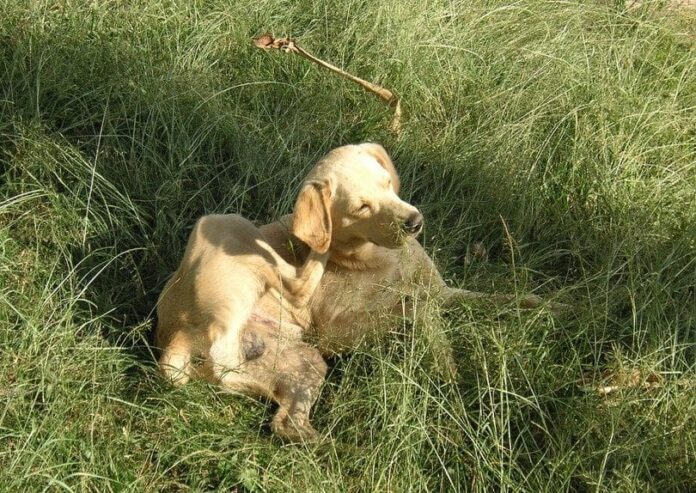 Symptoms they may show include:
 If your dog has been in contact with poison ivy you should follow these instructions:
 If your dog begins to show signs they have been affected by poison ivy there are some things you can do to reduce the itching, swelling and any discomfort your dog may be feeling.
Giving them Benadryl is one way if you have not already done so. Rubbing alcohol is another way to soothe your dog but must be rinsed off after leaving on your dogs coat for ten minutes.
If your dog begins to show signs they have been affected by poison ivy there are some things you can do to reduce the itching, swelling and any discomfort your dog may be feeling.
Giving them Benadryl is one way if you have not already done so. Rubbing alcohol is another way to soothe your dog but must be rinsed off after leaving on your dogs coat for ten minutes.
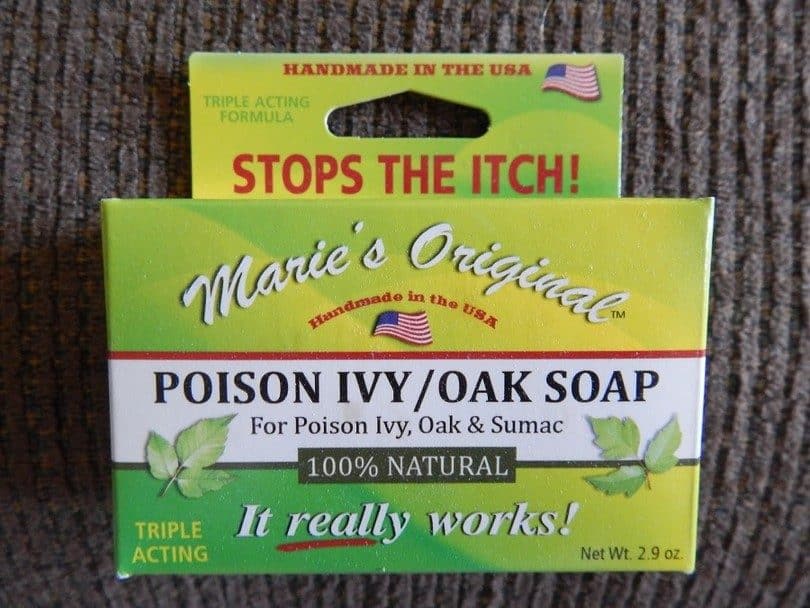 The final conclusion is that, even some veterinarians will keep saying that dogs are not sensitive to this plant, they actually can get it pretty bad. Even a dog with a thick, long coat can get poisoned either by ingestion or by rubbing his discovered area to the plant.
The best way to keep your dog and yourself safe from this plant is to make sure you know it. If you can recognize it from distance then you can avoid going in the close vicinity.
The final conclusion is that, even some veterinarians will keep saying that dogs are not sensitive to this plant, they actually can get it pretty bad. Even a dog with a thick, long coat can get poisoned either by ingestion or by rubbing his discovered area to the plant.
The best way to keep your dog and yourself safe from this plant is to make sure you know it. If you can recognize it from distance then you can avoid going in the close vicinity. 
 Look for any sharp edges or splinters that are present on your ramp. These could result in the injury of your pet, so it’s a good idea to sand them away. The last thing you want is to remove a large splinter from
 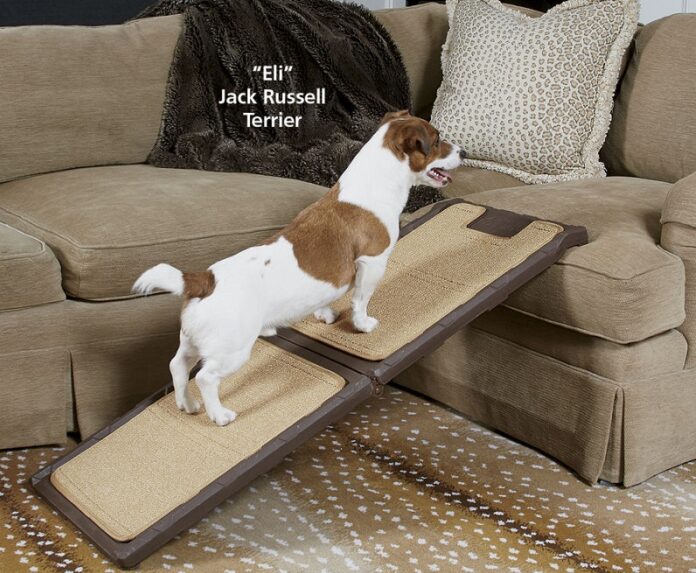 This version of the ramp may require a different set of materials, as there is no need to build steps. The most important first step is determining the right measurements for your ramp. You can choose a simple ramp that leads right up to the couch or bed, or you can choose to add a platform to the end so that your dog has a smoother transition from the floor to the surface he wants to get on.
Get a pen, paper and some measuring tape for you to start. To determine the height, measure from the floor to the top of the surface you want your dog to get on. In measuring the length, you have to determine how steep you want the ramp to be. Older dogs may not be able to handle steep ramps, but you also have to take the amount of space you have into consideration as well.
A good estimate is to make the ramp length twice as long as the height measurement, and then adjust it accordingly to the needs of your dog. A longer length means a less steep slope. The width should be as wide as your dog needs it, according to his size.
The best estimates are 6-10 inches for small dogs, 10-14 inches for medium dogs, and 14-18 inches for large dogs. If you are adding a platform, then the ramp and platform should be the same width. It’s best to make the platform as square as possible.
In preparation for building your ramp, you’ll need to plan out several parts of the ramp. You’re going to need solid, triangular supports for the sides, rails that attach to the sides and provide support to the top, the braces that provide added strength underneath the ramp, and the material being used to cover the top.
Carpet, felt or non-skin paint are popular options, as they last a long time and are inexpensive to purchase. There’s also the choice as to whether you should add a platform or not.
What you’ll need:
This version of the ramp may require a different set of materials, as there is no need to build steps. The most important first step is determining the right measurements for your ramp. You can choose a simple ramp that leads right up to the couch or bed, or you can choose to add a platform to the end so that your dog has a smoother transition from the floor to the surface he wants to get on.
Get a pen, paper and some measuring tape for you to start. To determine the height, measure from the floor to the top of the surface you want your dog to get on. In measuring the length, you have to determine how steep you want the ramp to be. Older dogs may not be able to handle steep ramps, but you also have to take the amount of space you have into consideration as well.
A good estimate is to make the ramp length twice as long as the height measurement, and then adjust it accordingly to the needs of your dog. A longer length means a less steep slope. The width should be as wide as your dog needs it, according to his size.
The best estimates are 6-10 inches for small dogs, 10-14 inches for medium dogs, and 14-18 inches for large dogs. If you are adding a platform, then the ramp and platform should be the same width. It’s best to make the platform as square as possible.
In preparation for building your ramp, you’ll need to plan out several parts of the ramp. You’re going to need solid, triangular supports for the sides, rails that attach to the sides and provide support to the top, the braces that provide added strength underneath the ramp, and the material being used to cover the top.
Carpet, felt or non-skin paint are popular options, as they last a long time and are inexpensive to purchase. There’s also the choice as to whether you should add a platform or not.
What you’ll need:
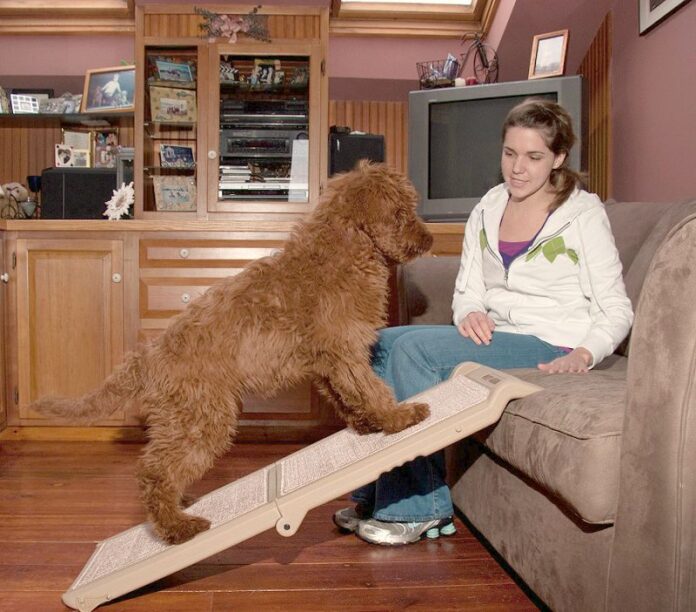 Cut out support railing that goes along the slope length of the ramp. They should not meet the top and bottom corners of the slope. You can duct tape these in place so that you can start drilling. Turn the pieces over and provide some support to them with a book or another piece of wood so that it stays level.
Then, mark screw holes in five-inch intervals. Drill and insert screws at the marks and add a small dabble of glue to each to provide a little more hold to the overall piece. Do the same for the other piece.
To add the ramp top, stand the triangles upright – you’re going to need help from someone else to do this – and place the ramp flush with the plywood. Drill holes at four-inch intervals along each side of the top, and then insert the screws.
To add the braces, turn the ramp over onto its back and cut out about eight beams according to your measurements. If you do include a platform, you’re going to need four legs that match the height of the ramp to serve as support.
Cut out support railing that goes along the slope length of the ramp. They should not meet the top and bottom corners of the slope. You can duct tape these in place so that you can start drilling. Turn the pieces over and provide some support to them with a book or another piece of wood so that it stays level.
Then, mark screw holes in five-inch intervals. Drill and insert screws at the marks and add a small dabble of glue to each to provide a little more hold to the overall piece. Do the same for the other piece.
To add the ramp top, stand the triangles upright – you’re going to need help from someone else to do this – and place the ramp flush with the plywood. Drill holes at four-inch intervals along each side of the top, and then insert the screws.
To add the braces, turn the ramp over onto its back and cut out about eight beams according to your measurements. If you do include a platform, you’re going to need four legs that match the height of the ramp to serve as support.
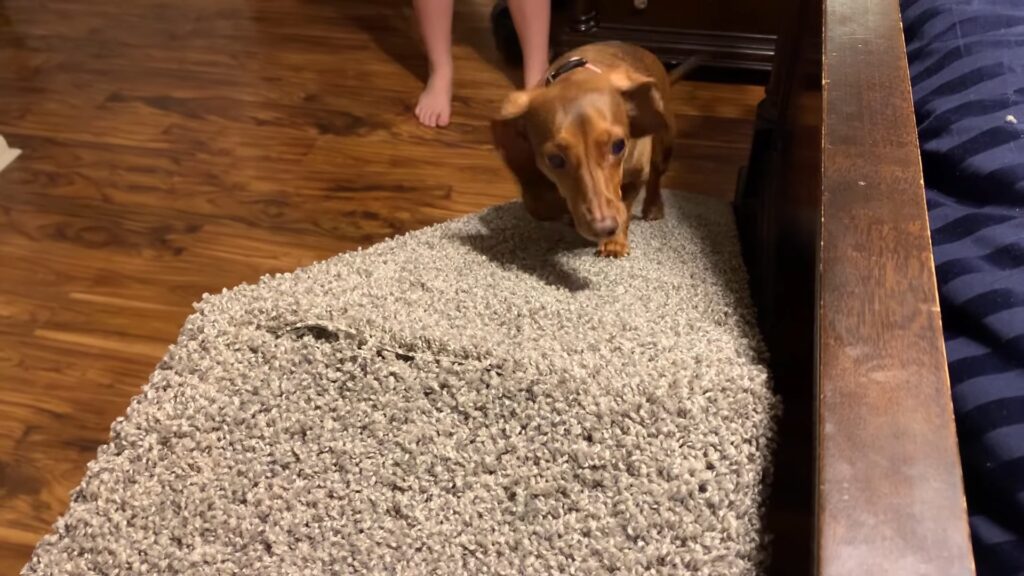 The other braces should be the width of the ramp and should be placed at the top and bottom of the ramp, and along the slope length to provide some added support. Add the ramp top, the platform top, and the backing, and then screw everything together with a power drill, or use a hammer and nails.
Once the body of your ramp is complete, then you have to add the finishing touches. You can use a spare scrap of carpet, some Astroturf, or non-slip paint to complete the look. If you can’t find non-slip pain, you can add some sand to a bucket of paint to achieve the same effect.
If you choose to add carpeting, you can staple along the edges, and then hammer the staples in to avoid any harm coming to your dog. Some owners choose to use rubber sheeting, as it’s cheap and non-slippery and can be replaced quite easily when it starts to wear down.
The other braces should be the width of the ramp and should be placed at the top and bottom of the ramp, and along the slope length to provide some added support. Add the ramp top, the platform top, and the backing, and then screw everything together with a power drill, or use a hammer and nails.
Once the body of your ramp is complete, then you have to add the finishing touches. You can use a spare scrap of carpet, some Astroturf, or non-slip paint to complete the look. If you can’t find non-slip pain, you can add some sand to a bucket of paint to achieve the same effect.
If you choose to add carpeting, you can staple along the edges, and then hammer the staples in to avoid any harm coming to your dog. Some owners choose to use rubber sheeting, as it’s cheap and non-slippery and can be replaced quite easily when it starts to wear down.
 These portable ramps can help your dog get into cars, pickup trucks, boats, semi-trucks, and even golf carts. They can be used for rear entry into a vehicle, or side entry through car doors. It’s all dependent on where you need your dog to be during the right. The size and sturdiness of the ramp are dependent upon the size of the dog that you need to build it for.
The materials you’re going to need are:
These portable ramps can help your dog get into cars, pickup trucks, boats, semi-trucks, and even golf carts. They can be used for rear entry into a vehicle, or side entry through car doors. It’s all dependent on where you need your dog to be during the right. The size and sturdiness of the ramp are dependent upon the size of the dog that you need to build it for.
The materials you’re going to need are:
 In-ground pools can be easy for your dog to get out of since they come with built-in stairs. But above-ground pools can be a bit more problematic.
The plastic stairs may be too steep for your dog to use, and without any way to get out your dog can succumb to exhaustion quite easily. Instead of risking your
In-ground pools can be easy for your dog to get out of since they come with built-in stairs. But above-ground pools can be a bit more problematic.
The plastic stairs may be too steep for your dog to use, and without any way to get out your dog can succumb to exhaustion quite easily. Instead of risking your  To place the chair in the pool, you’re going to want the backrest to be in the water and for the seat to be against the wall. This way, your dog has more surface area to work with when getting out of the pool.
You don’t need to worry about the legs of the chair damaging the wall of your pool, as the paint-covered aluminum won’t perforate it or remove the lining. To anchor the chair to the side of the pool, you can use a strong plastic rope and attach it to one of the carrying handles of the chair. The rope can then be secured by tying one or two loops to a screw.
In getting your dog to use the ramp, you can use treats to coax him over to the location of the ramp a few times, and then he will learn where it is. Keep in mind that this ramp is most suitable for small to medium-sized dogs. For larger dogs, you’re going to have to build something different in order to accommodate their weight.
What you’ll need are some pool noodles, zip ties, and some industrial rubber mat material, preferably with holes so that your dog has something to grip onto. The more material you get, the better. You can find the instructions for building your own floating dog ramp in the video link below:
Both of these solutions are cost-effective and can be replaced as necessary without too much of a cost. With the price of dog pool ramps at the pet stores, many of them costing more than $100, these plans are easy-to-make and cheaper solutions for your needs.
The best way to encourage your dog to use any of the ramps mentioned here is the use of treats. For normal ramps outside of the pool, laying a trail of treats along the length of the ramp can help to acclimate him to the feel of it, so that he’ll realize that it doesn’t pose a danger to him. Over time, he’ll become more used to it.
Making a DIY dog ramp doesn’t take a lot of ingenuity, once you’re familiar with how they’re made. You’re free to customize as many of the materials as you need to make a sturdier ramp for your dog to use.
It’s the structure and the support that’s most important, as you don’t want the ramp to break, for your dog to slip off, or for him to be injured on any of the components of your ramp.
Making your ramp as safe as possible for your dog will make it easier for him to use it in the future, so that he can be more mobile and you’ll no longer have to strain your back helping him where he needs to go.
To place the chair in the pool, you’re going to want the backrest to be in the water and for the seat to be against the wall. This way, your dog has more surface area to work with when getting out of the pool.
You don’t need to worry about the legs of the chair damaging the wall of your pool, as the paint-covered aluminum won’t perforate it or remove the lining. To anchor the chair to the side of the pool, you can use a strong plastic rope and attach it to one of the carrying handles of the chair. The rope can then be secured by tying one or two loops to a screw.
In getting your dog to use the ramp, you can use treats to coax him over to the location of the ramp a few times, and then he will learn where it is. Keep in mind that this ramp is most suitable for small to medium-sized dogs. For larger dogs, you’re going to have to build something different in order to accommodate their weight.
What you’ll need are some pool noodles, zip ties, and some industrial rubber mat material, preferably with holes so that your dog has something to grip onto. The more material you get, the better. You can find the instructions for building your own floating dog ramp in the video link below:
Both of these solutions are cost-effective and can be replaced as necessary without too much of a cost. With the price of dog pool ramps at the pet stores, many of them costing more than $100, these plans are easy-to-make and cheaper solutions for your needs.
The best way to encourage your dog to use any of the ramps mentioned here is the use of treats. For normal ramps outside of the pool, laying a trail of treats along the length of the ramp can help to acclimate him to the feel of it, so that he’ll realize that it doesn’t pose a danger to him. Over time, he’ll become more used to it.
Making a DIY dog ramp doesn’t take a lot of ingenuity, once you’re familiar with how they’re made. You’re free to customize as many of the materials as you need to make a sturdier ramp for your dog to use.
It’s the structure and the support that’s most important, as you don’t want the ramp to break, for your dog to slip off, or for him to be injured on any of the components of your ramp.
Making your ramp as safe as possible for your dog will make it easier for him to use it in the future, so that he can be more mobile and you’ll no longer have to strain your back helping him where he needs to go. 
 The best way to prevent your dog from being stung by bees is to steer away from areas where bees normally live. Unfortunately, accidents can happen even if you take great care when walking or exercising your dog outside.
In such cases, it is very important to know what are the immediate danger of bee stings as well as what first aid is necessary. Both topics, including what to do if your dog eats a bee, are discussed in the following lines.
The best way to prevent your dog from being stung by bees is to steer away from areas where bees normally live. Unfortunately, accidents can happen even if you take great care when walking or exercising your dog outside.
In such cases, it is very important to know what are the immediate danger of bee stings as well as what first aid is necessary. Both topics, including what to do if your dog eats a bee, are discussed in the following lines.
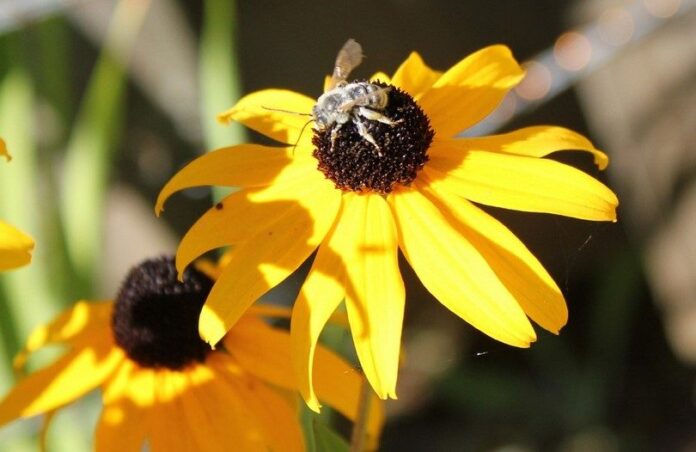 When discussing the danger that bee stings present to dogs, we need to mention one other issue. Normally, when a bee stings, its stinger as well as the venom sac detaches from the body of the bee – the bee dies and the stinger along with the venom sac remain lodged under the skin of the victim.
Rarely, the stinger just penetrates the skin but doesn’t remain lodged under it. So, if your dog got stung by a bee, you should check whether the bee stinger is still under the skin of your dog and try to remove it.
When discussing the danger that bee stings present to dogs, we need to mention one other issue. Normally, when a bee stings, its stinger as well as the venom sac detaches from the body of the bee – the bee dies and the stinger along with the venom sac remain lodged under the skin of the victim.
Rarely, the stinger just penetrates the skin but doesn’t remain lodged under it. So, if your dog got stung by a bee, you should check whether the bee stinger is still under the skin of your dog and try to remove it.
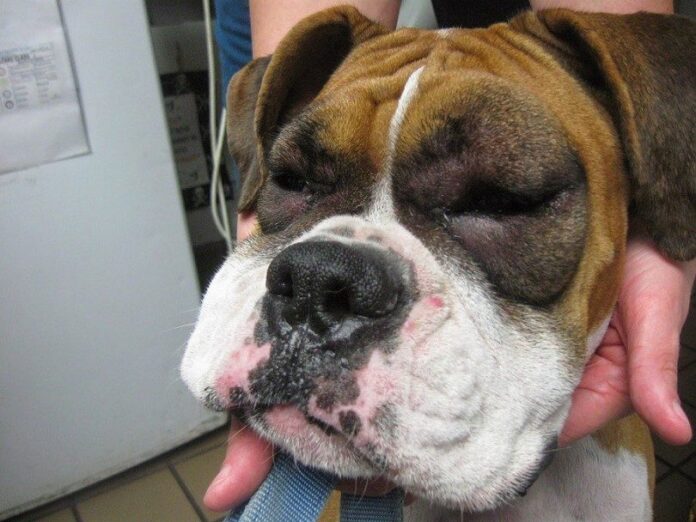 So, to determine the risk that a bee sting poses to your dog’s health, you should be able to assess the severity of the reaction: slight itchiness and burning sensation with minimum swelling are indicative of a very mild reaction; apparent swelling around the stinger, redness, pain and constant attempts of the dog to lick or chew the place are signs of a serious reaction and extreme swelling extending away from the sting place, difficulty breathing and fainting point to the severe reaction that requires urgent medical help.
 As mentioned above, a bee sting presents a serious health risk only if your dog is allergic and if your dog got stung by a bee on a particular spot of his or her body. Here are several first aid tips:
 The greatest danger of bee stings comes from potential allergic reactions. An allergic reaction can be very sudden, acute, and lethal for your dog. Monitor your pet very carefully and watch out for any excessive swelling, difficulty breathing, disorientation, and weakness – these are the symptoms of an allergic reaction.
It is important to know that these symptoms may not manifest at the same time and not right after your dog got stung by a bee – an anaphylactic shock may occur within 24 hours of the incident. Remember that acute allergic reactions present medical urgency, so if you notice any sign of an allergic reaction, take your dog to a vet immediately.
The greatest danger of bee stings comes from potential allergic reactions. An allergic reaction can be very sudden, acute, and lethal for your dog. Monitor your pet very carefully and watch out for any excessive swelling, difficulty breathing, disorientation, and weakness – these are the symptoms of an allergic reaction.
It is important to know that these symptoms may not manifest at the same time and not right after your dog got stung by a bee – an anaphylactic shock may occur within 24 hours of the incident. Remember that acute allergic reactions present medical urgency, so if you notice any sign of an allergic reaction, take your dog to a vet immediately.
 Even if your pet is not allergic, there will be some swelling around the area of the sting. The best way to alleviate the pain and itchiness is to apply ice over the swollen area. Use an ice pack or ice cubes wrapped in a clean towel and place them over the stung place. Keep for as long as your dog can tolerate, changing the ice every 5 minutes.
Clearly, swelling poses a huge risk if your dog got stung by a bee in the mouth or throat – it is not only extremely painful but swelling in the mouth and throat can block your dog’s airways and cause suffocation. In such cases, it is best to take your pet to a vet immediately. A vet will give your pet some allergy and pain medications and will be able to locate and safely remove the stinger from your pet’s mouth or throat.
Even if your pet is not allergic, there will be some swelling around the area of the sting. The best way to alleviate the pain and itchiness is to apply ice over the swollen area. Use an ice pack or ice cubes wrapped in a clean towel and place them over the stung place. Keep for as long as your dog can tolerate, changing the ice every 5 minutes.
Clearly, swelling poses a huge risk if your dog got stung by a bee in the mouth or throat – it is not only extremely painful but swelling in the mouth and throat can block your dog’s airways and cause suffocation. In such cases, it is best to take your pet to a vet immediately. A vet will give your pet some allergy and pain medications and will be able to locate and safely remove the stinger from your pet’s mouth or throat.

 Bee stings are dangerous because of the allergic response associated with them. That’s why antihistamines (anti-allergy) medications are typically the preferred first aid choice when it comes to dealing with bee stings in dogs. Benadryl (Diphenhydramine) is an over-the-counter antihistamine drug that is well tolerated by dogs.
You can use pills or injections in case your dog got stung by a bee and starts showing an allergic reaction. The dose of Benadryl is calculated according to the weight of your pet – normally, you will need to administer 1 mg per 1 pound of body weight. Other antihistamines and steroids may also be used to take care of allergic reactions but it is recommended to call a vet first.
It is essential to take your dog to a vet even if you have given him or her a dose of Benadryl. Your pet will need follow-up care and only a qualified professional can recommend the appropriate dosage and frequency. Epinephrine (adrenaline) is required in case of anaphylactic shock – if you know you have an allergic dog, always carry an epinephrine pen with you.
Bee stings are dangerous because of the allergic response associated with them. That’s why antihistamines (anti-allergy) medications are typically the preferred first aid choice when it comes to dealing with bee stings in dogs. Benadryl (Diphenhydramine) is an over-the-counter antihistamine drug that is well tolerated by dogs.
You can use pills or injections in case your dog got stung by a bee and starts showing an allergic reaction. The dose of Benadryl is calculated according to the weight of your pet – normally, you will need to administer 1 mg per 1 pound of body weight. Other antihistamines and steroids may also be used to take care of allergic reactions but it is recommended to call a vet first.
It is essential to take your dog to a vet even if you have given him or her a dose of Benadryl. Your pet will need follow-up care and only a qualified professional can recommend the appropriate dosage and frequency. Epinephrine (adrenaline) is required in case of anaphylactic shock – if you know you have an allergic dog, always carry an epinephrine pen with you.
 Dog owners should pay extra attention when taking their dogs outside, especially if they live close to known bee habitats – blossoming trees and bushes, flower beds, trees with bee nests, man-made beehives, etc. The best way to protect your pet from being stung by a bee is to always keep an eye on your four-legged friend when exercising or playing outside.
Bee accidents can happen even in your own yard and that is why you should never leave your dog unattended outside.
If you know that your dog is sensitive to bee stings, always carry a first aid medication kit with you – at least one dose of antihistamine and an epinephrine pen (in case your dog is extremely allergic), as well as your vet’s phone number. And one final piece of advice: if this happens, remain calm – this will let you handle the situation in the best possible manner and offer the best help to your dog.
Dog owners should pay extra attention when taking their dogs outside, especially if they live close to known bee habitats – blossoming trees and bushes, flower beds, trees with bee nests, man-made beehives, etc. The best way to protect your pet from being stung by a bee is to always keep an eye on your four-legged friend when exercising or playing outside.
Bee accidents can happen even in your own yard and that is why you should never leave your dog unattended outside.
If you know that your dog is sensitive to bee stings, always carry a first aid medication kit with you – at least one dose of antihistamine and an epinephrine pen (in case your dog is extremely allergic), as well as your vet’s phone number. And one final piece of advice: if this happens, remain calm – this will let you handle the situation in the best possible manner and offer the best help to your dog. 
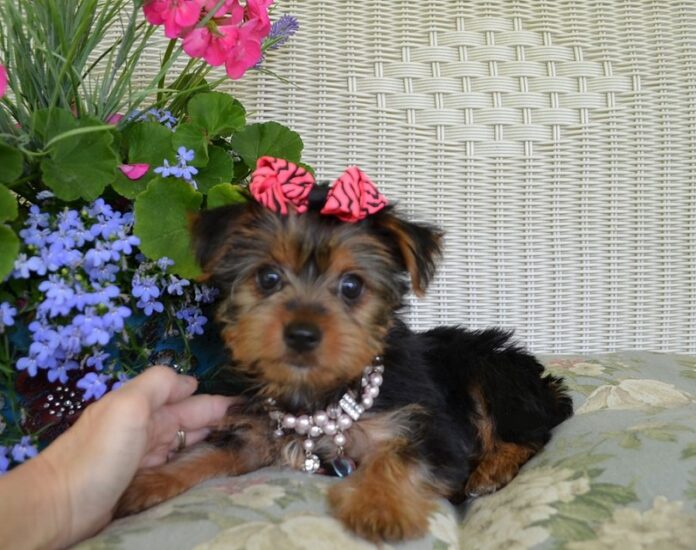 It is obvious that their small size makes them more delicate. This means that they require certain care, and you need to be gentle when you feed and clean them. Their delicate nature makes them similar to babies, thus they tend to be frail until they receive their first vaccinations.
In order to prevent disease, it is important to keep them warm and away from crowded places, like dog parks. Feeding is also a bit different. As the belly is relatively tiny, you need to feed them small amounts of food every few hours. With proper care, a toy dog can live between 10 to 12 years.
It is obvious that their small size makes them more delicate. This means that they require certain care, and you need to be gentle when you feed and clean them. Their delicate nature makes them similar to babies, thus they tend to be frail until they receive their first vaccinations.
In order to prevent disease, it is important to keep them warm and away from crowded places, like dog parks. Feeding is also a bit different. As the belly is relatively tiny, you need to feed them small amounts of food every few hours. With proper care, a toy dog can live between 10 to 12 years.
 Chihuahuas are small dogs with big hearts. They can be fierce watchdogs as they are always eager to be your bodyguard. A thing you need to know about this breed is that showroom dogs weigh around 6 pounds while those that are kept as pets usually get to weigh around 10 pounds.
When it comes to socializing with other people, Chihuahuas are a bit shy, especially if they are not used to meeting new faces. They can turn from timid to passive-aggressive within minutes, thus it is a good idea to get accustomed to friends and family from a young age.
These pets are fast learners, so several training sessions of no more than 15 minutes daily should be sufficient. They are also very loyal and turn all their attention toward the person who they acknowledge as a leader. As a result, they tend to be overprotective. However, this behavior, though cute, must not be encouraged in order to avoid future accidents.
Chihuahuas can be quite powerful and seem not to acknowledge their small size. Consequently, they tend to start conflicts with larger dogs so, to prevent such a confrontation, it is always better to keep the dog close to you when you leave home.
Since you can’t always carry them around in your purse, it’s best to have a dog leash with a retractable design – this way you can pull them back before something bad happens. Just be gentle with handling the leash – they are so small!
Also, keep in mind that their huge love for their owner can make them aggressive with small children.
Chihuahuas are small dogs with big hearts. They can be fierce watchdogs as they are always eager to be your bodyguard. A thing you need to know about this breed is that showroom dogs weigh around 6 pounds while those that are kept as pets usually get to weigh around 10 pounds.
When it comes to socializing with other people, Chihuahuas are a bit shy, especially if they are not used to meeting new faces. They can turn from timid to passive-aggressive within minutes, thus it is a good idea to get accustomed to friends and family from a young age.
These pets are fast learners, so several training sessions of no more than 15 minutes daily should be sufficient. They are also very loyal and turn all their attention toward the person who they acknowledge as a leader. As a result, they tend to be overprotective. However, this behavior, though cute, must not be encouraged in order to avoid future accidents.
Chihuahuas can be quite powerful and seem not to acknowledge their small size. Consequently, they tend to start conflicts with larger dogs so, to prevent such a confrontation, it is always better to keep the dog close to you when you leave home.
Since you can’t always carry them around in your purse, it’s best to have a dog leash with a retractable design – this way you can pull them back before something bad happens. Just be gentle with handling the leash – they are so small!
Also, keep in mind that their huge love for their owner can make them aggressive with small children.
 Maltese are the perfect watchdogs. They are always alert and will let you know if there is somebody at the door before you hear a knock. The average pet can weigh between 3 to 10 pounds. Though they tend to be very active, their small size makes them feel comfortable even in a flat. These are loving dogs and get along well with people.
However, they are not very keen on interacting with other animals, and they sometimes see other pets as threats. If they are not socialized with children from an early age, they can become aggressive. The good news is that they are fast learners and love to see their owners happy.
If you like competitions, you need to know that Maltese are very agile and eager to perform tricks. Just like in the case of Chihuahuas, these pets do not seem to be aware of their small size. They are excitable and find no limitations when they want to achieve something.
Furthermore, they can even challenge a dog that is larger than them. As a result, you must always use a harness when you go for a walk, or to the dog park. Though training can help you with this problem, it is better to keep a close eye on your pet when you are outside, especially when there are other dogs or children around, in order to prevent accidents.
Maltese are the perfect watchdogs. They are always alert and will let you know if there is somebody at the door before you hear a knock. The average pet can weigh between 3 to 10 pounds. Though they tend to be very active, their small size makes them feel comfortable even in a flat. These are loving dogs and get along well with people.
However, they are not very keen on interacting with other animals, and they sometimes see other pets as threats. If they are not socialized with children from an early age, they can become aggressive. The good news is that they are fast learners and love to see their owners happy.
If you like competitions, you need to know that Maltese are very agile and eager to perform tricks. Just like in the case of Chihuahuas, these pets do not seem to be aware of their small size. They are excitable and find no limitations when they want to achieve something.
Furthermore, they can even challenge a dog that is larger than them. As a result, you must always use a harness when you go for a walk, or to the dog park. Though training can help you with this problem, it is better to keep a close eye on your pet when you are outside, especially when there are other dogs or children around, in order to prevent accidents.
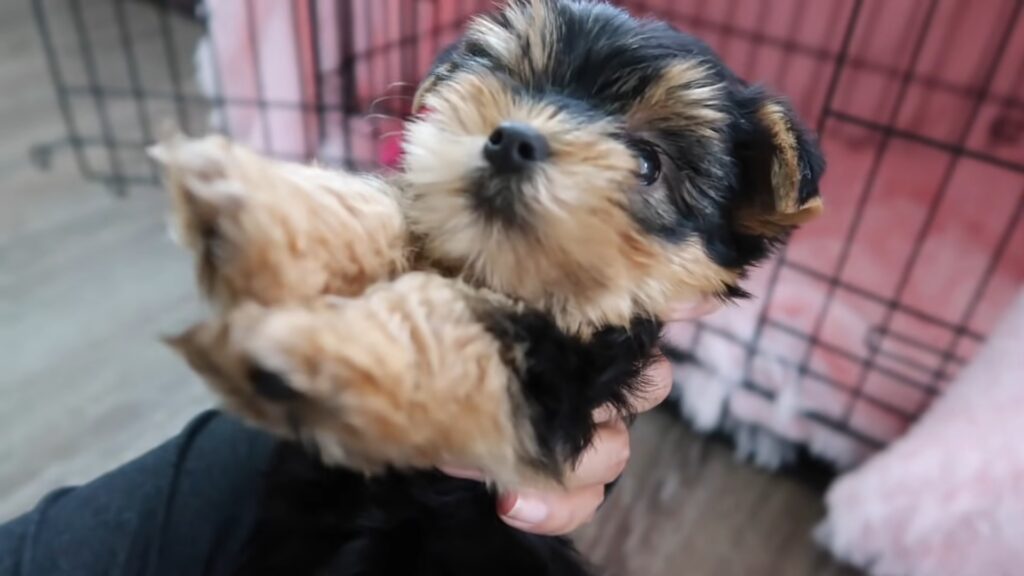 Yorkies are great companions, but also reliable watchdogs. They are always attentive to spot if somebody is at the door and responds with barking. This breed weighs only 7 pounds or less, so it is perfect for people who live in a house or a flat. They are very social and enjoy interacting with other people.
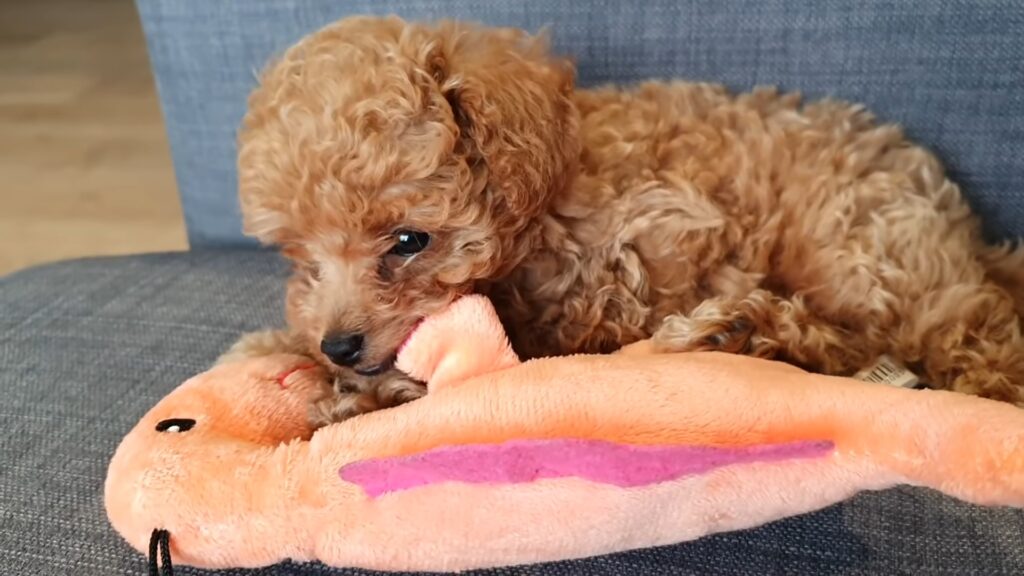 Toy poodles will not only love you but will also protect you. They can be great alarms if there is somebody at the door, or a cat crossing your yard. They do not weigh more than 9 pounds and are quite lazy, thus they are the perfect companion for people who live in an apartment. Poodles are very smart, but also cautious. As a result, they need to know a person before being friendly.
 Pomeranians are loyal and active companions. Though they weigh no more than 7 pounds, they have a strong personality, and this makes them fearless watchdogs. They are simply adorable and would do anything for the family members. As they are very curious, it is a good idea to keep sensitive household items away from them.
 Shih-Tzu are great watchdogs and are always alert, especially if they hear somebody near the house. They are cute and small and can weigh up to 16 pounds. They can live in an apartment with no problem, as long as they are taken for daily walks and exercises. They are friendly dogs, as long as they are socialized from an early age.

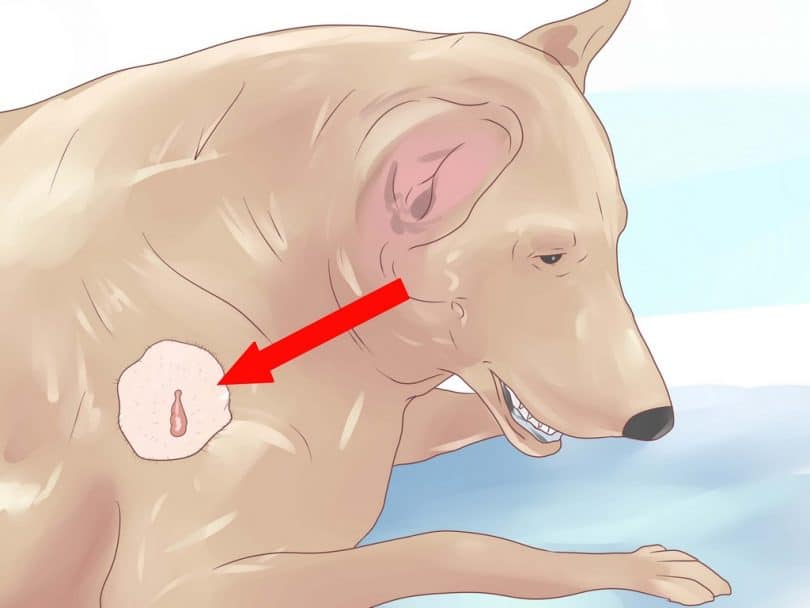 You can usually tell the difference between a life-threatening disease and a merely irritating growth by carefully examining the area. Skin cancer will appear as a lesion that has a watery discharge; it will also be painful for your pet at the slightest touch. The lesion may also change in size, texture, and color.
Skin tags, on the other hand, tend to have an extremely flexible base which allows for the upper part of the growth to be moved around with your finger and won’t cause pain unless it is inflamed or infected. A good rule of thumb, however, is “When in doubt, ask your veterinarian.” If your vet cannot tell the difference from a spot check, he or she will perform a biopsy to rule out any malignancy.
You can usually tell the difference between a life-threatening disease and a merely irritating growth by carefully examining the area. Skin cancer will appear as a lesion that has a watery discharge; it will also be painful for your pet at the slightest touch. The lesion may also change in size, texture, and color.
Skin tags, on the other hand, tend to have an extremely flexible base which allows for the upper part of the growth to be moved around with your finger and won’t cause pain unless it is inflamed or infected. A good rule of thumb, however, is “When in doubt, ask your veterinarian.” If your vet cannot tell the difference from a spot check, he or she will perform a biopsy to rule out any malignancy.
 Proper food and routine visits to the vet can go a long way in eliminating diet as a factor.
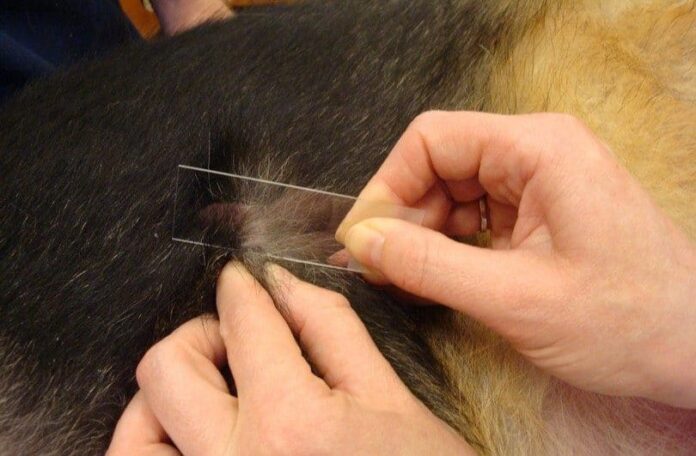 If your vet informs you that the tag is not a threat, you should still continue to monitor it for changes. It is rare, but some of them, especially ones that form around the lips and nose, can become cancerous. So watch for any changes in color or size. Also, you should pay attention to how your dog treats the growth. If he continually scratches or bites at it, it may be causing him discomfort.
Tags that have been cut or abraded can become inflamed or even infected if not treated immediately. As stated earlier, these formations aren’t typically a threat to your pet’s health, but sometimes the best way to deal with them is to get rid of them.
Large tags can pose a problem either because of their size, their location, or a combination of both. Dogs may scratch or gnaw at them, or they could get caught on a chain link fence or other object that your pet likes to crawl through or beneath.
Torn tags can bleed profusely, and are prone to infection. Tags that form on the tail are highly vulnerable to damage. Take the time to examine these on a daily basis, and if they appear to be affecting your dog, you should consider having them removed.
If your vet informs you that the tag is not a threat, you should still continue to monitor it for changes. It is rare, but some of them, especially ones that form around the lips and nose, can become cancerous. So watch for any changes in color or size. Also, you should pay attention to how your dog treats the growth. If he continually scratches or bites at it, it may be causing him discomfort.
Tags that have been cut or abraded can become inflamed or even infected if not treated immediately. As stated earlier, these formations aren’t typically a threat to your pet’s health, but sometimes the best way to deal with them is to get rid of them.
Large tags can pose a problem either because of their size, their location, or a combination of both. Dogs may scratch or gnaw at them, or they could get caught on a chain link fence or other object that your pet likes to crawl through or beneath.
Torn tags can bleed profusely, and are prone to infection. Tags that form on the tail are highly vulnerable to damage. Take the time to examine these on a daily basis, and if they appear to be affecting your dog, you should consider having them removed.
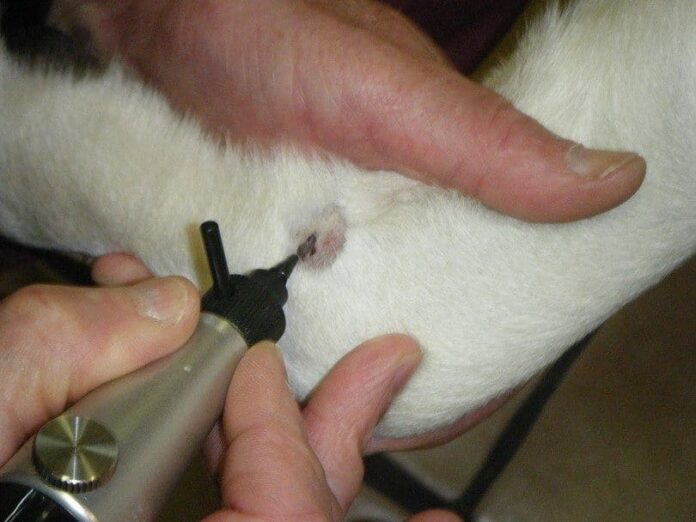 In this type of procedure, there is little cutting, so most vets will not sew the area shut. You will need to monitor the wound over the next week to ensure that the patient is healing as he should. Also, make sure that he doesn’t scratch the area as it heals, because that will slow healing, and even perhaps induce another tag. There will be a scar, of course, but it will fade in time.
 Tags should be monitored for damage or inflammation, and if found, it should be brought to your vet’s attention immediately. And remember, you have more than one option to have the tag removed, if necessary. So, now that you know what skin tags are and what you can do about them, you can be prepared the next time you find one.