Home Blog

Homemade Dog Ear Cleaner: Top 3 Recipes That Will Make Your Life Easier

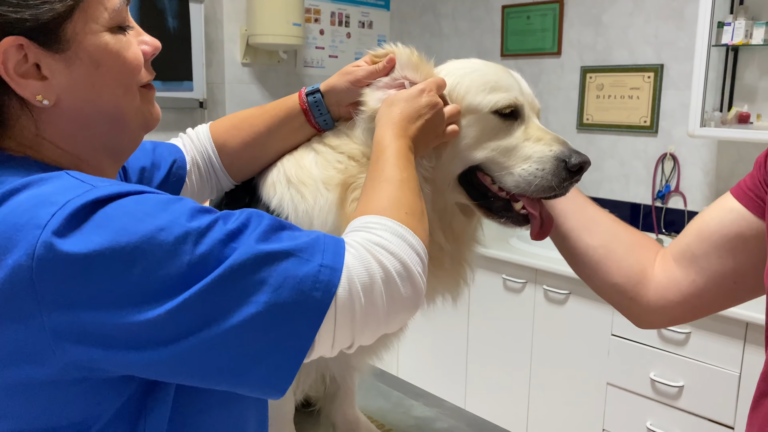
The ears of your dog can be really sensitive, thus you need to take time to examine them thoroughly in order to prevent infections. This means that you need to look for any signs of dirt, irritation, parasites and infection.

The good news is that this is a procedure that does not take long, and you can spot eventual issues before they become painful or lead to serious problems.

At this point, it is also important to consider a homemade dog ear cleaner to eliminate wax buildup or redness. If you include this in your weekly routine, you will keep your dog safe and healthy. You can learn more about this aspect in the following paragraphs.

However, keep in mind that, in case of a more serious condition, like otitis, a professional product is recommended. You can check this great ear treatment with hydrocortisone which is easy to apply and use at home.

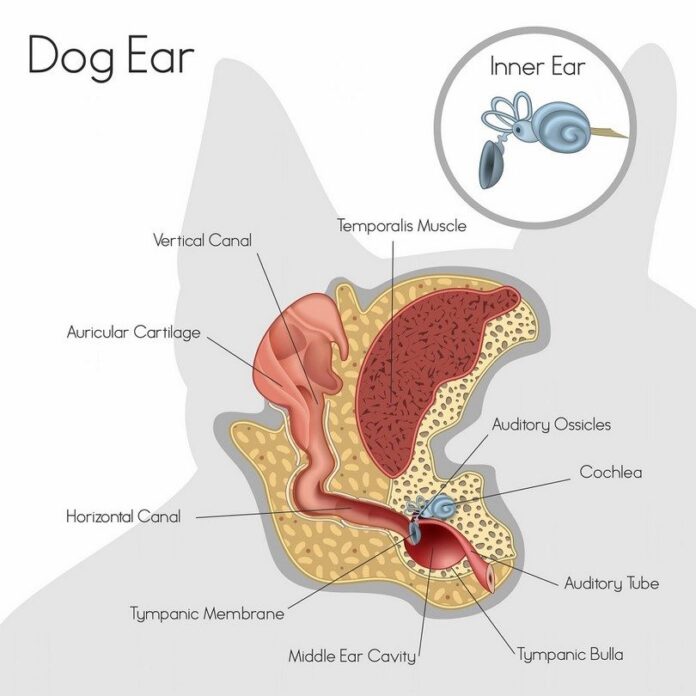
THE ANATOMY OF THE DOG’S EARS

If you take your dog’s ear to analyze it, you will see that it is twisted and curvy. This makes it the right place for bacteria and parasites to develop. As a result, it is mandatory to clean it in order to prevent eventual infections.
Dog ear

Debris tends to work its way up the canal and when it gets trapped it makes the dog feel itchy and uncomfortable.

It is also important to know that dogs that suffer from allergies are more vulnerable to develop problems with their ears. The same situation is valid for pets with floppy ears like poodles, cocker spaniel and bassets.

THE WEEKLY CARE

The ear check should become part of the grooming routine. If you notice that your dog tends to develop earwax, or it has excessive hair in its ears, you need to clean them more often. Here is how the weekly care should look:

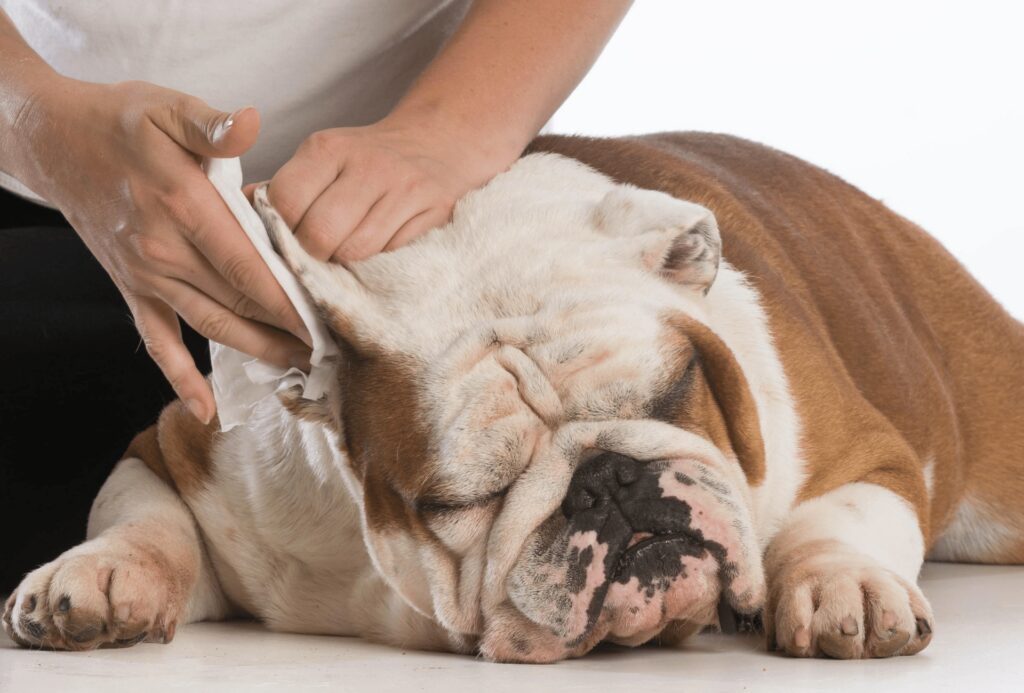
  • Whenever the ear looks dirty, you need to clean it with a cotton ball. Though there are various solutions available on the market, it is a good idea to opt for one that you can prepare at home. You will find tested recipes in the following sections of this article;
  • It is important to understand that the skin located inside the ear it is very delicate. By no means should you scrub intensively or use solutions that can cause rashes.
  • When you clean the dog’s ears you need to stick to the external parts. To be more exact, it is forbidden to stick anything in the ear canal as this can lead to serious problems. If you notice that the dirt does not go away, or it is too deep, you can go to the veterinarian and ask for future guidance.
  • In case the ear canal is filled with hair, you may need to groom it a bit. To be more exact, you can tweeze it out on a regular basis (every few weeks) so it does not get tangled. If you are not sure whether it is a good idea to trim the hair, you can ask the veterinarian for specialized advice.

SIGNS OF INFECTION

It is important to be able to spot signs that can indicate a possible infection in order to treat it from an early stage. If you detect such sings it’s important to have the right product to treat it before it makes any damage. Click here to can see a nice, easy-to-apply, natural product which can be of great help for both you and Fido.

You also need to be careful when you wash your dog to prevent water from entering the ear. The best solution in this situation is to use cotton before bath time.

Dog heaalth checklist

This is a great alternative even when you take your pet for a swim as it can prevent all sorts of diseases. However, you also need to be able to spot any danger signs. There are certain symptoms, as you can see below, that can point out an ear infection. In this case, it is advisable to contact the veterinarian immediately. Here is what you need to look for:

  • discharges from the ear;
  • unpleasant smell;
  • the interior of the ear turns red;
  • swelling and bumps;
  • the skin becomes crusty;
  • the hair from the ear starts to fall;
  • the ear wax becomes dark and it is similar to coffee grounds.

GETTING READY FOR EAR CLEANING

Most dogs do not like to have their ears cleaned. As a result, they tend to move a lot and want to play. However, this is a healthy routine, thus you need to get your dog accustomed to it. Though it may take a while until your pet will fully accepts the ear grooming process, it will be easier if you start it from an early age.

How to clean a dogs ears

On the other hand, it does not mean that you can give up if your dog is already an adult that would do anything to escape cleaning. In order to get it ready, consider the following tips:

  • make this activity look positive;
  • have the right tools with you;
  • put everything you wish to use within reach;
  • follow the ear grooming rules.

If this is the first time you plan to clean your dog’s ears, make sure that you allow it to get accustomed to the procedure. Do not force it to do something it does not want to because this will turn it into a squirmy pooch. It is a good idea to turn this activity into a fun one, but at the same time to teach it to stay still.

The easiest way to do it is to give Fido treats every time it cooperates and listens to your commands. You should check out these treats as they are pretty special, and if you get Fido to associate them with ear cleaning, you’ll have an easier time. Additional rewarding should include kisses and belly rubs. As ear cleaning tends to be a complex procedure, it is important to have the right tools with you.

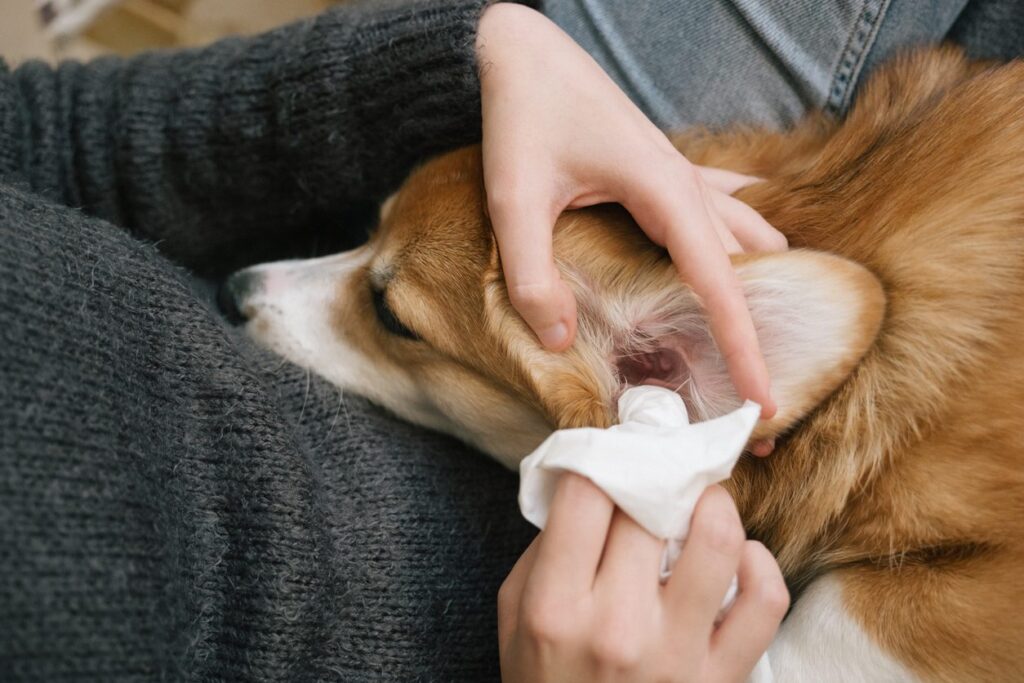
To be more exact, the kit should include cotton balls, gloves (if you decide to clean them by hand), and homemade ear products. However, if this is the first time for you as well, you might want to play it safe and use commercial products – they are delivered in an easy-to-use package which makes everything easier to handle.
dog ear cleaning

It is important to understand that once you start cleaning your dog’s ears, there is no way to stop, otherwise it will become agitated and not very cooperative. As a result, make sure that you have everything you need close to you.

However, make sure that the products are at a decent length away from the dog, otherwise it may start chewing them to relieve the stress. Also remember to take a step at a time, and to clean the ear in the correct order. If you are not precisely sure how it’s done, check out these rules:

  1. Clean the outside, and only when you are done you can work your way in.
  2. Do not try to push the cotton ball more than it goes and stop when you feel resistance.
  3. Wet a cotton ball and start cleaning the part of the ear that you can see.
  4. Wet a different cotton ball and start cleaning the inner ear.
  5. Repeat the procedure at least once a week.

3 USEFUL RECIPES

VINEGAR + BORIC ACID + ALCOHOL

INGREDIENTS
Vinegar 2 ounces
Boric acid 1/2 teaspoon
Alcohol Few drops

This recipe is very easy to prepare and helps you clean your dog’s ears fast. All you need to do is to mix the vinegar with the boric acid and add the rubbing alcohol after. If you wish to make it even more sterile, you can add some extra drops of povidone-iodine.

It is important to shake them firmly to mix them together. However, it is mandatory to remember that povidone-iodine has an intense smell and can leave strains, so if your dog’s fur is white you can omit it.

Vinegar Boric Acid Alcohol

This recipe is perfect to use after you take the dog for a swim in a river or sea. After you are done grooming the ear, you need to wipe it with a clean cotton ball or washcloth.

VINEGAR + WATER

INGREDIENTS
Vinegar 1/3 cup
Water 2/3 cup

If you fear that alcohol can be too harsh on your dog’s ears, you can try a milder variant that implies vinegar and water. This mixture is also appropriate for dogs with dry skin. It is easy to prepare, and it has great cleaning properties. It is recommended to opt for apple cider vinegar, but any variant works.

The water should be lukewarm, so this is a recipe that needs to be mixed every time you clean your dog’s ears. It is advisable to soak a cotton ball and to wipe gently the visible parts of the dog’s ear. Do not push the cotton ball too much as it can cause damages. For breads with large years, a soft cloth can be used instead of a cotton ball as you can cover a larger surface easier.

ALMOND / OLIVE / MINERAL OIL

INGREDIENTS
Almond / olive / mineral oil Few drops

This is a homemade recipe that requires a single ingredient, and it is perfect for wax buildup. Some dogs tend to develop more wax than others, and it can lead to buildups that can affect your pet’s hearing. In this case, it is a good idea to add a couple of drops of almond, olive or mineral oils as it can loosen the wax and help you remove it with ease.

You need to apply the oil on the visible part of the ear and allow the dog to shake its head in order to spread it. You need to wait for a couple of minutes then you can clean the oil and wax with a clean cotton ball or cloth.

RECIPES FOR IRRITATED EARS
dog ear aloe vera

Allergies can cause scratching, and this leads to mild ear irritations. In this case, you need to assure proper care. A great idea of a homemade recipe includes the following three ingredients: white vinegar, hydrogen peroxide and alcohol.

It is recommended to mix only as much as you need for one cleaning session, and prepare more when you see other signs of irritations. In this case, you need to add half hydrogen peroxide, half white vinegar and just one drop of alcohol. If you see that the irritation persists you can ask your veterinarian for a medicated flush that has antibiotic properties and add it when you are done cleaning the ear.

Another great way to calm ear irritations is Aloe Vera gel. All that you need to do is to warm the gel in hot water until it becomes liquid. You can add a tablespoon of this ingredient in each ear, and the effects are immediate. Just like in the case of almond oil, you need to leave it for a couple of minutes before you wipe it with a cloth.

Besides soothing red ears, Aloe Vera also has cleaning properties and can eliminate wax. According to how serious is the problem, you will need to repeat this procedure several times. However, if you see that the dog does not start to feel better you need to go to the veterinarian immediately.

Now, if after you went through these recipes, you’re still not sure if Fido would like it, it’s best to discuss it with your vet. Also, if you’re interested in purchasing ready-to-use products, here is a great selection for you.

THINGS TO AVOID

It is mandatory to be gentle when you clean your dog’s ears. This means that intense scrubbing or pushing the cotton ball too deep is strictly forbidden. If you believe that you are not patient enough to get your pet accustomed to this procedure it is advisable to allow a specialist to do it. Here are other things that you need to avoid when you groom the sensitive ears:

  • you must not allow water to get inside the canal as this can lead to the formation of fungus and bacteria that can lead to infections;
  • avoid using a syringe to introduce the homemade cleaning product as you risk pushing the liquid too far and harm your pet;
  • by no means should you go deeper than half an inch inside the ear canal as this is very dangerous.

IN CONCLUSION

As it can be seen, it is not that difficult to keep your dog’s ears clean. You simply need to accustom it to this procedure, and everything will be fine. Remember to follow the cleaning rules and never push the cotton ball too deep. Though there are various products on the market that can help you eliminate dirt or wax it is better to opt for homemade ones.

Dog ear clean

They are gentle to the sensitive skin and do not cause allergies. Furthermore, you only need two or three ingredients to prepare the mixture. It is mandatory to keep your dog safe from infections, and it will live a long and happy life.


Dog Tracking Chip: Unnecessary Expense or Life Saver?

0

Dog tracking chip devices are quite useful in finding lost or stolen pets. And the data is there to support it. Statistics show that over 10 million pets are lost annually; nearly 90% of them are never going to be reunited with their owners – they will become truly homeless and even euthanized in shelters.

The results of the National lost and found pets research survey, conducted by The American Society for the Prevention of Cruelty to Animals (ASPCA), revealed that approximately 93% of all dogs that have been reported lost over the past five years have been happily reunited with their owners, and more than 15% of them – thanks to a dog tracking chip either implanted or installed on the collar of the pet.

The above information clearly shows how likely is it that your dog gets lost and how important is to act responsibly and be prepared in case the unexpected happens. On the other hand, popular as animal tracking technology has become, and in case of chip implantation – safe as the procedure is, many dog owners still have many concerns and are quite reluctant to opt for neither micro chipping their pet, nor attaching a dog tracker on its collar.

Some of the challenges that pet owners face are quite reasonable, while some are based on lack of awareness about the seriousness of the problem and misinformation. In the following lines, we have tried to address the most frequent questions pet owners have regarding proper dog identification and tracking.

Lost dog poster nailed to a lightpost

What is a GPS microchip for dogs?

In the 21st century, location services and identification systems are literally everywhere. Most of us are so used to having GPS navigation in their smart phone or smart wristwatch that we almost do not think about the fact that almost every web based application “knows” who we are and what our whereabouts are. Contrasting with this hi-tech mentality, many of us are still genuinely confused when it comes to the issue of their dog’s identification and the available options for pet location monitoring and tracking.

Garmin DC 50, GPS Dog Transmitter

It seems that the most common misconception is that the microchip your pet’s vet implanted under the skin of your beloved dog is actually a GPS microchip device for dogs that can help you locate your pet in case it gets lost. In fact, microchips for dogs and GPS tracking devices are two different options. Each has advantages and disadvantages; however both systems may come extremely handy in case your dog gets lost or stolen.

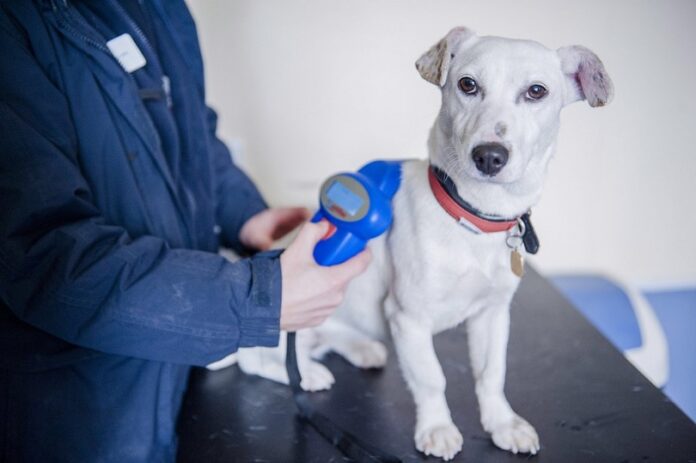
Microchip implants are approximately the size of a grain of rice and are implanted under the skin of the animal. These implants are in fact passive radio frequency devices – they do not have their own power supply and do not transmit continuous signal.

While a microchip actually contains a lot of useful information (unique ID of the chip, breed, description, vaccination schedule, owners contact details, vet’s contact details, etc.), it can only be read by a special scanner, once a lost or stolen dog has been found and brought to a shelter or to the authorities responsible for handling stray animals in the country.

GPS microchips for dogs are larger devices that are worn externally, usually on the collar of the dog. They have their own, internal battery and work via the Global Positioning System (GPS) just like a car GPS system works – they send continuous signal to the global satellite system that defines the exact coordinates of the device, and therefore – of the dog wearing the device.

In addition to providing the exact location, modern dog GPS trackers offer supplementary features – message and email alerts for extreme temperatures, information about activity levels, health monitoring and so on.

Which is the best option – implanted or external GPS chip?

Having read all of the above, it is natural to start asking yourself which is the best choice for proper dog identification and tracking. If dog ID microchip implantation is mandatory in your country, it is very likely that you have already micro chipped your little friend. In that case, all you need to decide is whether to buy a GPS tracking device as well.

If your dog hasn’t been micro chipped yet, it is recommended that you do that whether or not you are buying an external GPS chip for dogs. Both options have advantages and disadvantages and that is why a combination of implanted ID chip and a GPS tracking device can provide extra safety and security for your dog.

Microchiped dog

A real advantage of implanting a microchip under the skin of your pet is that the chip provides permanent identification that cannot be removed. In case your dog is lost, once found and brought to a shelter, a veterinarian clinic or the authorities responsible for stray animals in your country, the information in the microchip will be read and you will be contacted. On the other hand, there are several serious drawbacks associated with microchip implants for dogs:

  • A microchip implant will not provide any information about the whereabouts of your pet
  • Not all vets and stray animal shelters have microchip scanners; microchip scanners in the same country many not be unified.
  • International standards regarding the way information is encoded on microchips do not exist, so if your dog gets lost and found abroad, a chance exists that the microchip scanners used by the authorities in that country cannot read the microchip you had implanted in your dog.

GPS tracking devices manufactured as stand alone collars or designed to be attached to an existing dog’s collar, transmit real time information about the exact location of the pet. Most devices come with a smart phone application that displays the location of the tracking device on a map and provide you with directions how to get there. Basically, GPS trackers will provide the location of your pet at any given time, as long as the device is on and still attached to the pet’s collar. The most significant drawbacks of GPS trackers are:

  • The larger size of most GPS tracking systems makes them unsuitable for all dog breeds.
  • They may fall off or be removed on purpose (in case the dog has been stolen)
  • Since they are battery powered, GPS signal will be send until the battery runs down
  • GPS chips for dogs work only in areas with good GPS coverage, and sometimes require cell-phone network coverage as well.

What to consider before getting a microchip?

There are several very important things any dog owner must consider prior to getting a microchip implant or GPS chip for their four-legged companion.

Many pet owners are truly hesitant when it comes to implanting an ID microchip under the skin of their dog. Very often they doubt the safety of the procedure and worry about possible side effects that may be dangerous for their beloved friend. The truth is that microchip implantation only sounds serious and scary – the procedure is not more complicated than a simple vaccine shot.

A microchip ID implant is as large as a grain of rice and comes preloaded in a special syringe. The only difference between a vaccine injection and microchip implantation is that the later is done using a slightly bigger needle. Just as with any other medical procedure certain health risks exist – hemorrhage, chip migration and infection, however these are very rare side effects and the risk is insignificant if the shot is made by a qualified vet.

Dogs microchips

Regardless of the general safety of the procedure, here is what you need to check in advance:

  • Make sure you are taking your dog to a qualified vet. Complications from microchip implantation often arise if the chip has not been injected correctly and/or in the right spot
  • Microchip implants utilize radio frequencies. In order for a scanner to read the information stored in particular chip, it needs to be set at the same frequency as the chip. Check the type of scanners used in the stray animal shelters in your area, or look for more universal microchips.
  • In case you plan to travel abroad and take your little pal with you, check what is the microchip system used in the destination country. European countries not only use different microchip frequencies but have dog microchips implanted in different area of the dog’s body.

Buying a GPS chip for dogs may also be a difficult task, even if you have unlimited budget. These are the most important things to consider:

  • The technology utilized by dog tracking devices is different. Older dog tracking collars use radio technology which provides rapid response once you are in range; the drawback of this technology is that you need to be in that specific range in order to pinpoint the position of your dog. Newer dog tracking systems use GPS technology. It offers improved accuracy, and the most accurate one is the Wide Area Augmentation System GPS (WAAS-GPS).
    However, GPS trackers may perform poorly in areas with little open sky view and most of them depend on cell phone network coverage as well. Typically, GPS trackers that do not rely on cell phone coverage are more expensive yet they offer a real advantage of sending the signal from the GPS chip on the dog’s collar directly to a hand held unit.
  • Tracking devices depend on internal power supply. It is of utmost importance to select a dog tracker with pro-grade battery that can offer longer battery life. On the other hand, battery life depends on the specific settings of the device – if the GPS transmits signals to “check in” often, the battery life will be shorter. Radio trackers generally have longer battery life compared to dog trackers featuring GPS chips.
  • Size, weight and durability. Modern dog trackers are not very bulky. However, certain models may still be too big for smaller dog breeds. Make sure the size and weight of the dog tracker are adequate for the size and strength of your dog and that the tracker will not cause any discomfort or limitations of your dog’s movements. Go for durable, hit-resistant and waterproof devices.
  • Many GPS chip trackers come with additional features such as text message and email alerts, health status reporting, activity levels monitoring, weather alerts, extreme conditions alerts, integrated maps and directions, history, statistics, etc. Usually, these supplementary extras also add to the overall cost of the device well as to the subscription you may need to pay on a monthly basis. Carefully evaluate each additional feature and consider whether it could be really useful or not.
  • Look for well-known, established companies – if the provider of your dog’s tracking device goes out of business, the device becomes useless.

Which are the most reliable GPS microchips available on the market?

GPS tracking devices for dogs are rapidly gaining popularity. Nowadays, companies offer a large variety of dog trackers and dog owners can choose between numerous models, an array of exciting features, various shapes, colors and sizes.

Tagg Pet GPS Plus - Dog and Cat Tracker Collar Attachment

The sheer variety makes selecting the most appropriate GPS microchip for your dog an overwhelming task. To make your search a bit easier, we have compiled a list of the top 5 dog tracking systems.

  • Track your pet location and monitor its activity with Tag GPS Plus. The complete tracking system costs just under $100 and there is $9.85 monthly fee. Some of the advantages of Tag GPS Plus include long battery life of up to 10 days – longer compared to the battery life of the majority of similar devices, and minimum rechargeable time (approximately an hour).
    Besides standard GPS tracking, Tag GPS Plus comes with several useful applications for Android and iPhones such as maps and directions, text and email alerts, activity and health monitors.
  • Although Trackimo is not particularly designed for dogs, it is the preferred choice of many dog owners. The device offers highly accurate GPS location service along with several other great features – worldwide coverage, text, email and app alerts for location, sudden movement or impact, and a SOS button.
    Trackimo is very suitable for small dog breeds such as Chihuahuas – it is very light-weight and measures only 45 mm x 18 mm x 40 mm. For $139,99 you will get a fully equipped GPS microchip unit, 12 month activation and 10 months free text alerts. Additionally, the monthly fee is only $5 and there is no need to sign up a contract.
  • Garmin is a company with long history in GPS positioning and tracking devices. They offer a range of dog gadgets designed to assist in dog training and tracking. The Astro® 320 with T5 GPS chip device is a pro-grade tracking system originally designed for sporting dogs. It can track the location of up to 10 dogs at up to 9 miles radius while providing advanced mapping with optional BirdsEye satellite imagery and TOPO maps.
    A feature that might be extremely important in case your dog gets lost is the Rescue mode. This mode, when turned on, automatically preserves and extends battery life, providing you with more time to find your dog. Although Garmin dog trackers are more expensive compared to other GPS trackers for dogs (prices range from $449,90 to $749,99), these are highly durable, professional devices that will provide you with extra piece of mind.
  • Another reliable GPS chip pet locator is PocketFinder GPS. It is a portable GPS device that can be attached to your dog’s collar. It is less than 2 inches wide and weighs just 1.4 ounces which makes it suitable for smaller dog breeds. The cost of the GPS unit is $134,95 and there is a monthly service charge of $12,95.
  • RoamEO™ Pet Monitor System is a great choice for dog owners who are interested in buying a well built and functional GPS chip tracking device without any additional features.
    RoamEO™ Pet Monitor System offers accurate and quick GPS location of up to 2 dogs and is designed for outdoor use. The pack includes RoamEO Receiver and Collar, two Batteries and a Charger. Although it is slightly more expensive compared to similar systems ($179.00), there are no activation, subscription or service fees to use RoamEO™ Pet Monitor System – it is fully configured at the factory and can be used right out o the box.

Most dogs enjoy running, exploring new territories, or just goofing around. The sad news is that no matter how well trained your dog is it may easily become disoriented and get lost. Even dogs that are always kept inside the house can get lost – a family member may accidentally leave the front door open, the dog may slip out through a hole in the fence, or during a natural disaster. Of course, any dog may get stolen.

Once lost or stolen, your dog is pretty helpless and it is up to you – its guardian, find it. New technology has a lot to offer when adequate identification and tracking for you pet is required. A GPS chip device attached to its collar will allow you to constantly monitor the location of your little friend and track it down in case it gets lost. A microchip implant will provide your dog with proper identification which could mean the difference between life and euthanasia in case your dog is lost and later brought to a dog shelter.

Safe dog at home

The huge variety of GPS tracking chips for dogs currently available at the market allows dog owners to select the device that best suits their budget and needs.

While no device can guarantee the absolute safety of your little companion, modern identification and tracking systems greatly reduce the risk of loosing your pet, and increase the chance that your darling pet will be brought safely back home in case it gets lost.

Do Female Dogs Get Periods: A Short Guide to Female Dogs Heat Cycle

All mammals go through a period of what is called estrus, which is the equivalent of the human female period. In asking do female dogs get periods, the answer is yes.

However, it’s not the same as what a human woman experiences. Many owners never consider this when they get a female dog, and they can end up with ruined carpets and unexpected litters. So what is there to know?

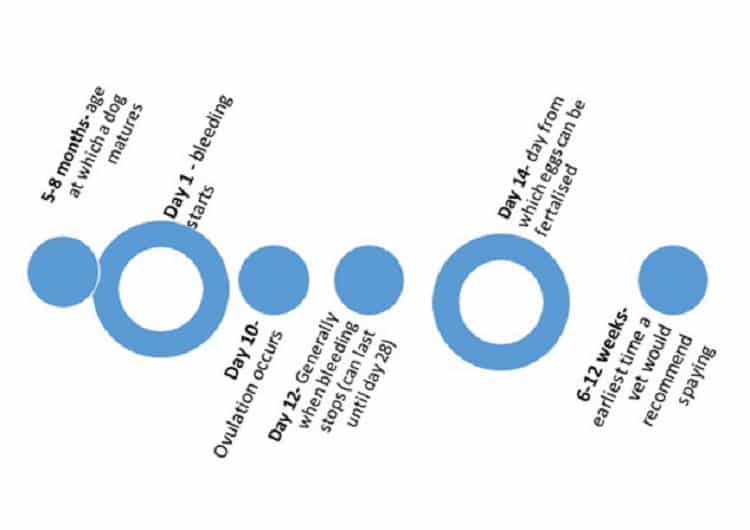
A female dog will have her first estrus cycle when they reach puberty. It is the stage of the reproductive cycle where the dog is capable of becoming pregnant when there is a male dog to engage in reproduction.

This period of estrus is also called “being in heat” or “in season.” On average, most dogs reach this stage at about six months of age, but this can vary according to the breed. Smaller dogs tend to have their first cycles at an earlier age.

How often does it occur? Most female dogs tend to go into heat at least twice per year, roughly every six months.

This interval can also vary depending on the breed: small dogs are capable of having a cycle at least three times a year, while giant breeds can have one once a year. During their first estrus, it is normal for a dog’s cycle to be irregular, and this can take up to two years to form a regular cycle.

Canine estrus cycle

How long does it last? This can also vary depending on the dog, but typically, estrus can last between two to three weeks. The most common sign before it occurs is a swollen vulva, and then there will be some vaginal discharge. Estrus is complete when the discharge completely disappears and the vulva returns to normal size.

Signs to look for

Sometimes the swelling of the vulva is not always obvious. In some cases, the vaginal discharge will occur first. This is what most dog owners will notice, especially if the estrus occurs while the dog is in the house.

Even rarer is when the discharge occurs several days after estrus has already begun. The amount of estrus that occurs varies from dog to dog, and even this can change within the dog: sometimes there will be a small amount of discharge, while others will experience heavy bleeding.

For dogs with dark coats, this discharge may not be visible at all, not until you’ve seen stains on your carpets and floors.

Over time, the vaginal discharge will change in color and appearance. It can be quite bloody at first and then changes to watery, pink discharge as the cycle progresses, usually seven to ten days into the cycle.

A female dog in heat will typically urinate more frequently or may start to develop marking behaviour. This is because during the estrus cycle, the urine contains hormones that signal the dog’s reproductive state so that potential males can find her and engage in reproduction.

This smell can travel a great distance, which is why it is never a good idea to leave your dog unattended outside when she is in heat.

Spraying and Neutering

When the vaginal discharge becomes watery, that is the time that the dog ovulates. This is when the dog is most fertile, and is most receptive to breeding.

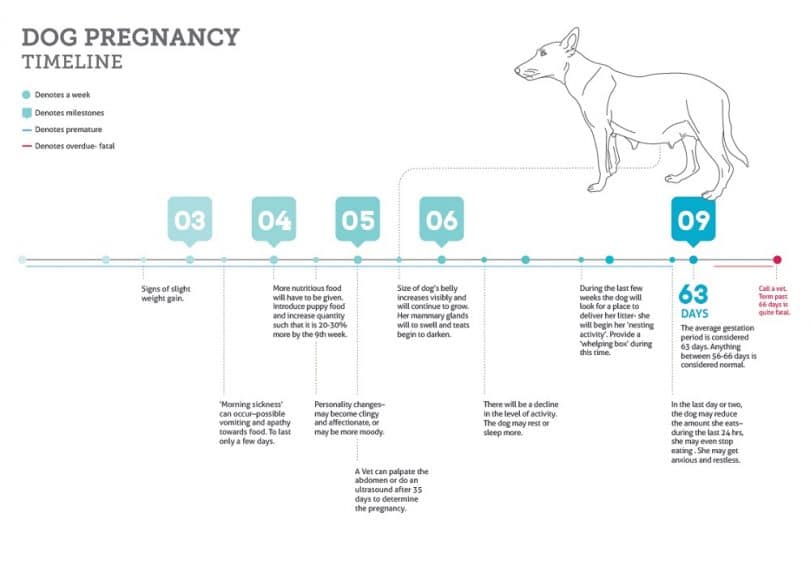
However, the sperm of a male dog can survive within the vaginal tract for up to a week, so pregnancy can occur even if reproduction takes place before this stage of estrus. When pregnancy does occur, it lasts for about nine weeks. Pregnancy can be detected by palpating the uterus at about 28 to 32 days.

The best way to avoid your dog becoming pregnant, especially if you don’t have the time and/or resources to take care of a litter, is to spay your dog.

It is typically recommended that the dog be spayed before her first estrus cycle, as allowing it to occur increases her chances of becoming pregnant. It can be difficult to predict when the first cycle will occur, so most veterinarians opt to conduct the surgery when the dog is roughly six to seven months old.

There are myths saying that dogs should be allowed to have their first estrus or to have a litter of puppies before spaying because this will make them friendlier. However, this is entirely false, and having a litter will not change the dog’s disposition.

In fact, having a litter at a young age can be quite detrimental on a young dog. It’s best to spay as soon as possible. Unlike humans, dogs do not experience menopause, which is defined as the halting of monthly cycles.

Since dogs do not have a monthly cycle, then they cannot experience this condition. They can even become pregnant at old age, but this can create complications that can jeopardize the health of the dog.

Complications that occur during Estrus

When your dog is in heat, you may believe that the worst that can happen is having to clean your floors. However, there are other complications that can occur.

Dog pregnancy timeline

Many of these can be avoided if you get your dog spayed.

  • Pregnancy: if you’re not financially prepared to take care of a litter of puppies, then a pregnant dog will certainly be a financial burden. This can also be more difficult for senior dogs who have underlying conditions that can make the pregnancy life-threatening.
  • False pregnancy: this can occur at any age in a dog, whether she has mated or not. This is when progesterone is secreted by the corpus luteum and then does not regress when estrus should be over. Instead, the dog starts to show signs of pregnancy, such as nesting behaviour, mothering behaviour and milk production. This condition usually resolves itself within two to three weeks, and treatment may need to be provided in order to relieve discomfort.
  • Pyometra: this is the accumulation of pus in the uterine cavity. Elevations in progesterone can cause this to occur; it causes the lining to become thick and lush in preparation for pregnancy. When pregnancy doesn’t occur, bacteria are free to enter the uterus and cause infections. If left untreated, the condition can become lethal. Medical therapy may be recommended, but the best treatment is to spay.
  • Mammary cancer: this is common in dogs that have not been spayed. It can occur in any of the mammary glands, or as multiple cancers in the glands and surrounding lymph nodes.

If you notice that your dog has become suddenly lethargic, is drinking more water than usual and doesn’t want to eat, then it is time to take her to the vet. This is even more important for unspayed senior dogs, as it could be a sign of pyometra, and it can result in death if left untreated.

What to do when your dog is in heat

There are some vitals steps that you should take if your dog is ever in heat.

Dog-cycle

These suggestions will not only help to keep you safe, but will make your dog’s life more comfortable, especially if you choose not to spay your dog.

  • Never let your dog go outside alone. When your dog is in heat, male dogs can smell it from miles away and will come running to investigate. If your dog does need to go outside, go with her, as it can be unpredictable when a male dog may show up. Watching from inside may not give you enough time to stop the act before it starts. Keeping your dog on a leash is also recommended so that you can keep her away from male dogs.
  • Don’t engage in off-leash walks. It makes it easier for other male dogs to find you if you’re walking around the neighborhood. Providing walks while she is in heat is definitely recommended, but it’s important to be prepared if strange dogs wander up. Even if your dog has good recall, a dog will always follow its natural instincts, and is more likely to consider mating over appeasing your need for obedience.
  • Provide extra attention to your dog when she is heat. There are not only physical changes, but mental chances as well. Provide play, brush your dog, take her on a walk, and give her more attention than usual. This will help to keep your dog more calm and will help her to get through estrus with more confidence.
  • Avoid any training or taking your dog to dog shows. Any events where other dogs will be involved are definitely not recommended. The scent will agitate male dogs, and they will disrupt everything that is going on around them.
    Dog owners are very serious about these events, as they’ve worked so hard for a long time, and to have everything ruined by a dog in heat can be frustrating. If you do attend these events and estrus occurs unexpectedly, remove your dog from the premises immediately. The event coordinators may even be able to provide you with a refund.
  • Provide a balance between exercise and rest. Different dogs react differently when they go into heat. Some may experience fatigue all day, while others become restless. Taking careful observation of your dog’s behavior can provide you with the right clues that you need to take appropriate and immediate action. What’s most important is to keep your dog comfortable.
    If your dog is tired, let her sleep, but if she’s feeling restless, there are plenty of things you can do to help her calm down again. Provide lots of exercise to wear her out, whether it’s long walks or a good game of fetch. When you just don’t have the energy, provide a lot of chew toys and treats for her to take her frustration out on. Puzzle toys filled with treats can also keep her busy, and provides her with some mental stimulation as a distraction.
  • Hide the trail back home from male dogs. They can easily track the scent back to your home, and you could end up with a yard of male dogs the next day, waiting for your female dog to come outside. The best way to break up the scent is to drive your dog to the park or their favourite walking spot, and then to drive back home. That way, male dogs won’t be able to track the scent all the way back to your home.
  • Add menthol to the end of her tail. Menthol is a strong, natural oil that won’t hurt your dog’s skin in any way. It can do a great job of masking the scent of your female dog’s estrus. It can help for male dogs that are at a distance, but if they get too close, this method will no longer work. Menthol is also good for keeping fleas away from your dog, so you can kill two birds with one stone.
  • Using doggie pants can certainly help to not only keep the scent at bay, but it will also keep your floors and carpets clean. The only downside to this is that they won’t prevent a male dog from mounting your dog, so care should still be exercised when you take your dog outside.

Talking with your vet can help to learn some ideas of what you can do when your dog is in heat.

Even if it’s not a serious illness, your veterinarian can be a fountain of information for helping to keep your dog comfortable and prevent her from becoming pregnant. You can even discuss the options of spaying your dog, and when the right time should be.

Happy dog

Female dogs going into heat can be a trying time for everyone involved, and then some. It can be something of a hassle to take care of your dog doing these trying times, and it can put your dog at risk for conditions that can jeopardize your life.

If you have no intention of breeding your dog and to cut back on the overpopulation of dogs in shelters, it’s always best that you consider spaying as the best option for making your dog’s life a lot easier.

Maltese Shih Tzu – Breed Characteristics

0

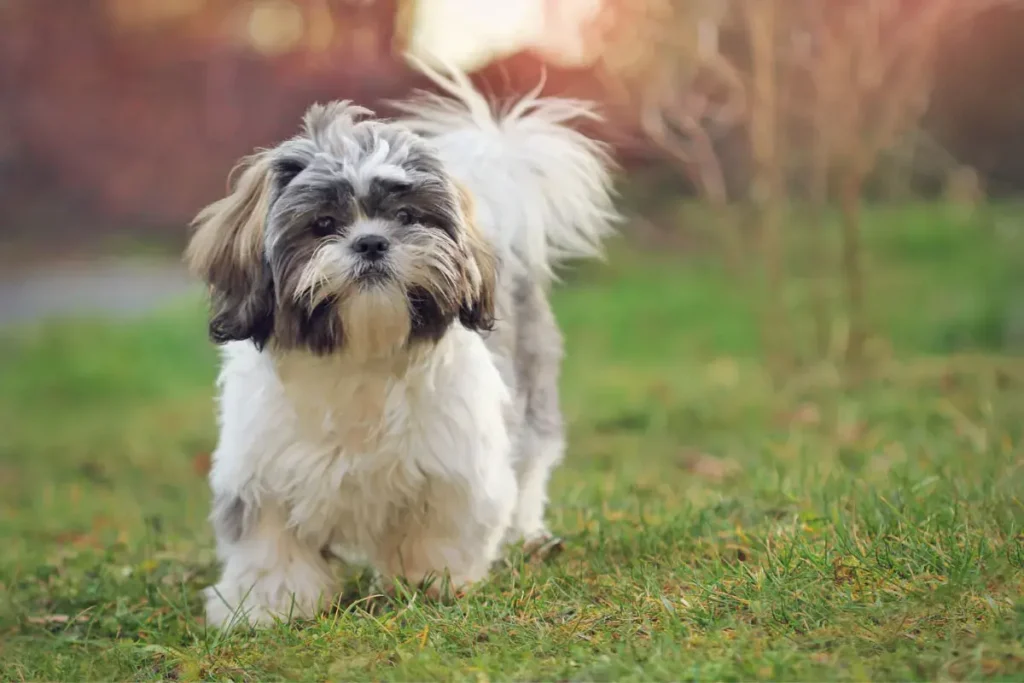
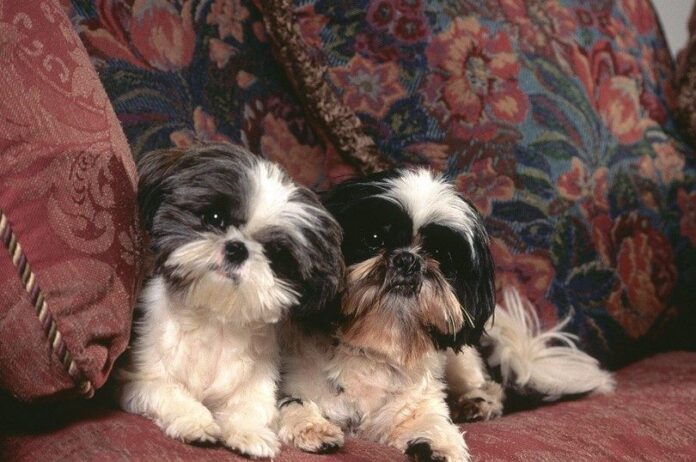
The Maltese Shih Tzu, also known as the Mal-Shi, Malti zu, or the Malt-Tzu, is a hybrid dog of small size that is a cross between the Maltese and the Shih Tzu.

This dog belongs to the so-called designer dogs which have been created in order to have a specific look and to rule out any possible genetic diseases that can be found in the original pure breeds.

However, this hybrid dog has not been accepted by any official kennel club and it seems there is little interest in developing it into a real breed.

The Mal-Shi is still a very cute and friendly dog that deserves to be talked about. In this article we are going to take a look at this small but very unique and interesting hybrid dog and see what makes him so outstanding.

Breed Characteristics

Breed Characteristics


Dog Breed Group: Hybrid Dogs
Height: Generally 10 inches tall at the shoulder
Weight: Generally 6 to 12 pounds
Life Span: 12 to 14 years


When it comes to adaptability, the Maltese Shih Tzu is considered an easily adaptable dog because he is great for apartment living. Due to his small size, he would not mind even smaller apartments. He can be a great companion for the elderly or anyone who does not like harsh training and exercises.

Additionally, this dog is great for novice owners because he is not complicated at all.  He loves pleasing the owner and he is not difficult to train. All you need to do is socialize and train him on time and, of course, love him, and he will be a great friend and loyal companion.

The Maltese Shih Tzu does not like being lonely because he can be self-destructive and depressed. This is a companion dog and he would not tolerate being abandoned.

However, this dog is very sensitive when it comes to cold and hot weather. He does not tolerate either, and you will have to be careful during the summers and winters. Never leave him outside for long or he might die!

Maltese Shih Tzu

When it comes to friendliness, the Maltese Shih Tzu is a great companion and friend and he is always affectionate towards his family members. He can be great with children as well, but he is not suitable for toddlers and small kids because he would not tolerate being pulled at roughly, he will most likely defend himself if he is treated poorly!

That means that he is not really patient and you should be aware of it. When it comes to other dogs and strangers, he can be shy and suspicious, so make sure that you have socialized him from an early age. Taking him to dog parks and teaching him to behave properly will save you both from trouble.

When it comes to health and grooming, the great thing about the Maltese Shih Tzu is that he almost does not shed at all! However, that does not mean that you won’t have to groom him regularly. He also does not drool and his size is perfect for traveling and apartment living.

However, grooming this dog is not considered easy and his general health is kind of poor as well, which is probably the result of cross breeding which resulted in a flat face and small windpipe. This hybrid is also known for suffering from malformed knee joints which leads up to arthritis.

Speaking of trainability, the Maltese Shih Tzu is a really easy to train dog. He is moderately intelligent and he likes to play and please his owner so if you start from an early age, you should not have any problems with his obedience.

Maltese Shih Tzu Mix

However, because of his unique heritage, this dog does have a potential for mouthiness and prey drive. That means that you should never keep him off leash in unfamiliar and wild areas, otherwise he might go after small animals and moving objects he finds interesting.

He also loves to bark, which is a known trait in small dogs, so be aware of the fact that it is something you might never be able to teach him not to do. His wanderlust potential is minimal.

When it comes to exercise needs, the Maltese Shih Tzu does not require harsh training, mostly because of his small size, but also because he tires easily because of his unique physical traits – flat face and small windpipe. The intensity of the games should be low, just enough to keep him engaged and healthy. He is more or less a playful dog and his energy level is moderate as well.

Main Highlights

  • The Maltese Shih Tzu is a hybrid or designer dog, meaning that he is a cross between a Maltese and a Shih Tzu. The purpose of cross breeding is to rule out diseases and create a new breed with unique looks.
  • This dog breed is more or less energetic and playful even though it is small. He simply loves playing but his exercises should not be rough!
  • Be aware of the fact that the Maltese Shih Tzu simply loves barking and training him from an early age might never stop it. That actually makes him a great watchdog.
  • This breed does not shed, but he still requires regular grooming.
  • The Maltese Shih Tzu is an excellent companion because he adapts easily to apartment living and he is great for the elderly.
  • This hybrid does not like being alone or neglected so you should never abandon him, he might become destructive.
  • The Maltese Shih Tzu is not really patient with small children and strangers, so you should socialize him on time.
  • This breed is not really healthy – mostly because of his flat face and small windpipe. That is why they do not tolerate harsh weather.
  • Never buy a Maltese Shih Tzu puppy from illegal or suspicious breeders, especially puppy mills! Otherwise you might end up with a sick puppy and just contribute to the illegal trade of dogs!

Breed History

The Malti zu was created in the 90s in the United States. The reason for creating this hybrid was to make a non-shedding companion dog with cute looks. This dog is considered one of the most popular hybrids in Australia and North America, even though it has not been accepted as an official breed.

Additionally, most of the Malti zus are the offspring of the first generation, which means that there are not many of them out there.

However, there have also been some consequences regarding this hybrid’s health. Having in mind his mixed heritage, he has a flat nose and small windpipe, which results in common respiratory problems and intolerance to harsh weather.

Size

The Malti zu is a dog breed of small size. The males and females are almost the same and they are usually 10 inches tall and weigh 6 to 12 pounds. The life expectancy is around 12 years.

Personality and Character

The Malti zu is a dog that is friendly, playful, loyal, affectionate and adaptable. His energy level is moderate but he can be very active and outgoing, even though there are some that can be laid-back and quite quiet. He loves his family and he is fiercely loyal to his owner. His temperament is considered well-rounded and nice, never vicious or malicious.

However, due to his mixed heritage, he can prove to be suspicious and shy towards strangers and sometimes even nervous around small pets. Make sure to socialize him with other people and animals so he can be friendlier. All in all, he is a great companion dog and a friend for life.

Health and Potential Problems

Maltese Shih Tzu Health

The Malti zu is not considered a healthy dog, mostly because of his cross breeding which resulted in a flat face and small windpipe; here are some conditions that affect this hybrid more than usual:

  • Patellar Luxation, also known as slipped stifles or malformed knee joints, is a common condition that affects a dog’s kneecaps and produces internal friction that can also cause arthritis. It can cause severe pain as well, and the severe cases include crippling. However, the pet can lead a normal life if the proper medication is provided but they are not encouraged to breed.
  • White Shaker Syndrome is a condition that usually affects young to middle-aged dogs. It is interesting to note that this condition has been seen in the pure breeds that were used for the creation of this breed and it is common for hybrids in general. The dog shakes for the whole day and he can also be unable to walk. The treatment includes corticosteroids for three to six months.
  • Other: hip dysplasia, elbow dysplasia, hypothyroidism, von Willebrand’s disease, respiratory problems, eye problems.

Care Features

The Mal-Shi requires the fulfillment of his basic needs just like any other dog – he needs his teeth brushed at least two to three times per week in order to prevent and gum diseases and teeth decay.

He also needs his nails trimmed at least once per month. When you notice them clicking on the floor, then you will know it is time to trim them so the dog does not hurt himself. Besides this, you need to bathe him at least once per month and you need to groom him when it is needed. You must brush his coat and walk him daily. Besides walking, you need to play with him and engage him both physically and mentally on a daily basis.

This dog is small so he does not require much, but you must love him and never neglect him. You need to check his body after each walk so you do not miss an infection or injury. You will notice that the Mal-Shi is an easily adaptable dog that can adapt his habits according to yours, so as long as you are there for him, you won’t have any problems.
Feeding Schedule

When it comes to the feeding schedule, the Mal-Shi is a small dog, therefore he does not require much — 1/4 to 1/2 cup of high-quality per dog. It would be for the best to mix dry and canned food but it all depends on your dog’s age, general health and activity level. This breed is active and playful, and they are usually like that at home as well, but you should not overfeed them.

Make sure to include all the best when you buy food – vitamins, vegetables, proteins and the meat of high quality. If the food is great, the health will be okay as well. The Mal-Shi can become easily dehydrated during the summer so make sure to enable your dog access to fresh water all the time.

Coat, Color and Grooming

Maltese Shih Tzu coat

Speaking of coats, the Mal-Shi’s coat is long, soft and silky. Sometimes it is wavy but never curly. The major color is white, but some of them can have tan markings or even have a combination of other colors, such as brown and white or black and brown and white.

The Mal-Shi’s coat needs daily brushing, especially if he spends much time outside. In order to prevent mats and tangles you need to brush and comb it on a daily basis. The grooming is more difficult and you might need to hire a professional groomer when it is needed. Bathing needs to be regular as well, so you can keep his coat shiny and clean and prevent further tangling.

Children And Other Pets Compatibility

This dog hybrid is a friendly one, and as we already said, he loves being around his family and friends. Due to his mixed heritage, he can be suspicious towards strangers and unfamiliar dogs and sometimes he might even go after small animals.

When it comes to children, he is not suitable for toddlers and really small children due to his not really patient nature, but he can go along well with older kids as long as they behave properly.

Make sure to train and socialize your Mal-Shi from an early age by positive reinforcement and taking him to dog parks. This will help him get over his shyness and suspicious nature and he will become even friendlier.

To sum up the article, we have covered the most important characteristics of a dog breed called the Maltese Shih Tzu, also known as the Mal-Shi, Malti zu, and Malt-Tzu, the hybrid dog breed from the United States. You are now familiar with this small dog’s physical traits, health issues, grooming problems, and personality quirks.

Even though the Malt-Tzu has not been accepted by any official kennel clubs that does not mean that he does not deserve as much love as any other pure breed. He is unique due to his cross breeding, but he is still an affectionate companion who would love his owner to the end of his life. This dog is super cute, smart, pretty, friendly and adaptable. Show him love and care and he will do the same.

Maximizing Dog Health: The Strategic Use of Relief Veterinary Experts

0

As a responsible pet owner, ensuring your furry friend’s health and wellness is undoubtedly a top priority. However, taking care of a dog requires more than just providing food, water, and shelter. It entails being attentive to their physical and emotional needs, as well as being proactive in preventing issues from arising.

To enhance your dog’s well-being, regular veterinary check-ups are essential. However, sometimes clinics face veterinarian shortages, posing challenges in providing consistent care. To address this, many clinics in the USA turn to veterinary relief services offered by specialized veterinary staffing solutions.

These services are vital in maintaining uninterrupted, high-quality care for your pet. Relief veterinarians not only fill the gaps when regular vets are unavailable, but they also bring additional expertise and support, ensuring your pet receives comprehensive and timely healthcare.

Relief Vets

This collaborative approach between your regular veterinarian and relief vets ensures your dog’s health is always a top priority.

Relief veterinarians can support your dog’s needs in various aspects of dog care, including routine check-ups, vaccinations, and treatment of various health issues. They can also provide advice on proper nutrition and exercise tailored to your dog’s specific needs, promoting optimal canine health and wellness.

Ultimately, engaging relief veterinary experts can be a strategic move in promoting your furry friend’s health, ensuring they receive the best possible care. By taking proactive measures and prioritizing your dog’s well-being, you can help them live a happy life.
Proactive Measures for Canine Wellbeing: Preventive Care, Nutrition, and Exercise

Proactive Measures for Canine Wellbeing: Preventive Care, Nutrition, and Exercise

Pet health is a top priority for any pet owner. To ensure your furry companion’s long-term health, it’s essential to take proactive measures. Preventive care, proper nutrition, and regular exercise are key to maintaining your dog’s optimal health and mitigating problems.

Preventive Care For Dogs

This plays a vital role in promoting canine wellness. Regular check-ups with your veterinarian help catch any potential issues early on, making them easier to manage. Vaccinations and parasite-prevention measures also aid in keeping your pet healthy and happy.

Dog Nutrition

A healthy dog diet is a cornerstone of pet nutrition. What you feed your dog plays a significant role in their overall health.

A balanced and appropriate diet for their age, breed, and activity level can help prevent problems. It’s essential to feed your furry friend high-quality dog food and avoid table scraps that can be harmful to their health.

Dog Exercise

Dog Exercise

This is necessary for maintaining your pet’s physical and mental health. Daily exercise helps promote good circulation, healthy digestion and manage weight.

Different breeds have various exercise requirements, so ensure you choose an activity that suits your dog’s needs. It’s also necessary to adjust your dog’s exercise routine as they ages.

Preventive Veterinary Care

Preventive veterinary care plays a crucial role in promoting your pet’s long-term health. Regular check-ups with your veterinarian help ensure your dog’s health and make it easier to manage any potential health problems.

It’s best to get your pet to the vet for check-ups at least once a year, or as recommended by your veterinarian.

By proactively caring for your pet’s health, you can help prevent problems and promote canine wellness. Preventive care, proper nutrition, exercise, and regular check-ups with your veterinarian are essential ingredients for your dog’s long-term health and happiness.

Nurturing Your Dog’s Wellness: Grooming, Natural Remedies, and Pet Insurance

Nurturing Your Dog's Wellness: Grooming, Natural Remedies, and Pet Insurance

To truly care for your furry friend’s health, grooming should be a regular routine. This involves bathing, brushing, and trimming your dog’s coat to maintain cleanliness and prevent tangling.

Regular grooming also allows you to check for any abnormalities on your dog’s skin or coat that may require attention from a veterinarian.

Healthy Diet

A healthy diet with essential nutrients is a cornerstone for natural dog health and well-being. Feeding a well-balanced, high-quality dog food and limiting treats can help regulate your dog’s weight and digestive system.

Consult your veterinarian for guidance on creating the right diet plan for your pet’s specific needs.

Natural Remedies for Dogs

There are several natural remedies for dogs that can help maintain their health. Herbal supplements, such as chamomile and ginger, can help with digestive issues, while essential oils like lavender can aid in calming anxiety.

However, it’s important to use these remedies under the guidance of a veterinarian, as some natural ingredients can be toxic to dogs.

Pet Insurance for Dogs

As with any member of your family, unforeseen health issues can occur with your dog. Pet insurance for dogs can provide peace of mind by covering unexpected medical expenses.

It’s important to do your research and choose a plan that best fits your pet’s needs and your budget. With pet insurance, you have access to comprehensive and ongoing pet health care, ensuring your dog’s wellness and happiness for the long term.

Conclusion

In conclusion, the strategic use of relief veterinary experts, combined with proactive measures in preventive care, nutrition, exercise, and grooming, forms a comprehensive approach to maximizing your dog’s health and well-being.

Relief veterinarians offer invaluable support to your regular vet, ensuring that your pet receives consistent and specialized care. Emphasizing preventive care through regular check-ups, vaccinations, and parasite control is crucial in mitigating potential health issues.

A balanced diet tailored to your dog’s specific needs and regular exercise are fundamental in maintaining their physical and mental health. Grooming not only contributes to your dog’s cleanliness and appearance but also offers an opportunity to monitor their overall health.

Enhance Your Dog's Wellness

Moreover, exploring natural remedies under veterinary guidance and considering pet insurance are additional strategies to enhance your pet’s wellness.

Natural remedies, when used appropriately, can offer gentle support for various health conditions, while pet insurance ensures that your dog has access to necessary medical care without financial constraints.

By integrating these elements into your pet care routine, you contribute significantly to your dog’s longevity, happiness, and quality of life.
Remember, a healthy dog is a happy dog, and your efforts in nurturing their wellness will lead to rewarding and joyful companionship.

Top 10 Healthiest Homemade Dog Food Recipes – Easy & Vet Approved

0

Pet owners and vets are divided in two very distinct camps when it comes to homemade dog food recipes.

There are the naysayers who consider that food prepared at home lacks certain very important nutrients and minerals and there are the ones who consider dogs should eat homemade food.

The food you prepare at home has the main advantage of being fresh, delicious and prepared with ingredients you actually know.

If you’re not sure which side to take, here are a few reasons that could help you understand the benefits of creating homemade dog food recipes.

These are all based on professional and individual observations according to the type of food that was provided for the dog. We will talk about the benefits of homemade meals and their effects on your dog’s health.

Homemade veg for dogs

Let us take a look at the pros and cons of using these two types of pet foods.

  • Commercial dog foods are prepared using processing methods that destroy nutrients in the ingredients. One of these processes is by subjecting ingredients to extremely high heat to kill all the possible harmful bacteria and microorganisms that may be present in the raw food. Processing plants make use of industry grade heating equipment which are designed to kill the smallest microorganisms in the ingredient.
    The problem with this method is that most food nutrients are susceptible to excessively high temperatures. These include antioxidants, vitamins, and even protein content which can be rendered non-biologically available when their overall structure has been rearranged through the process of heating.
    Some of the vitamins that can be easily destroyed are Folate and Vitamin C. Other processes that contribute to the loss of nutrients are boiling in large amounts of water, exposure to light and air, and contact with some types of metals.
  • Commercial dog foods make use of non-human grade food ingredients. If you are going to look at the product’s label at the back, you will notice some ingredients such as fish or meat meals which actually include parts of an animal which you won’t eat yourself.
    For example, they contain organ meats such as hooves, feathers, entrails, brain, and other animal by-products. The worst thing about these ingredients is that the FDA actually allows animals that have died by other causes, such as ailments and diseases, to be included in dog foods. A lot of people think that since they are just dogs, they can be fed anything.
    Well, looking at the state of health of pets that are fed only processed dog food, one can say that this is not the case. Another interesting ingredient that you may find in pet food is propylene glycol. This ingredient is used to maintain moisture in wet types of dog food although it is a chemical used in car anti-freeze.
  • Commercial pet foods usually contain artificial preservatives and other unhealthy additives. In order to prolong shelf-life and create an interesting “look” on their products, pet food companies will make use of artificial flavors and coloring as well as preservatives which are harmful for your pets.
    These companies often defend its usage by saying that they only come in minimal amounts which do not have any significant effect on your pet’s health.But the truth is that the slow accumulation of these toxins will eventually lead to serious damage on your dog’s kidneys, liver, and heart. If you think that the natural antioxidants contained in the packaging will help counter these additives, just think that these antioxidants are also slowly destroyed by these chemicals and by the initial processing methods.

On the other hand, homemade meals will provide you with the following:

  • Homemade pet food contains the freshest and healthiest ingredients. When making homemade meals, you will have to visit the local market or grocer where you can find locally raised vegetables and meat products. This means a higher nutritional content since they have not been stored for months and they have not travelled hundreds of miles to slowly lose their nutrients during the long transit.
    Aside from that, shopping for local produce gives you the opportunity to look for organically raised meats, vegetables, and fruits which are truly healthier for your pet. This way, you can be assured that your pet is not eating antibiotic, steroid and hormone-laden foods.
  • Homemade pet foods are less likely to lose nutrients by cooking methods. Since the food is cooked in small batches, they are cooked in less heat and water and so they also lose lesser nutrients during the cooking process. Compared to commercial food preparation, home cooking also makes use of lesser heat whereas industrial grade commercial cooking use extremely high temperatures.
    There is also lesser stand-by time for the food before it is served to your pet so nutrients which are lost through light or air-exposure are better preserved.
    If you are also going to judge by the look and texture of homemade versus commercially bought dog food, you will notice the difference – commercial dog food does not resemble any normal food at all.
  • Homemade dog food does not contain preservatives. This is perhaps one of the most valuable health aspects of making your pet’s food at home. The only way you can lengthen the shelf life of homemade food is by storing it in the freezer, which does not pose any serious health risks for your pet unless you serve the food frozen. You will definitely give a large chance for your pet to gain better health if you serve foods that are not contaminated with these toxic chemicals.

Different types of homemade dog food recipes

There are different ways to prepare your pet’s homemade meals but generally, they are classified into two types: cooked and raw meals. There are advantages and disadvantages in both types but they are definitely a better option compared to store-bought pet foods.

Cooked pet foods can be prepared using the same methods that you use to cook your own meals: baking, frying, steaming, boiling, and grilling to name a few. In case of raw foods, they are the easiest to prepare.

Just clean your ingredients by washing them with water and then combine. You can also opt to cook the ingredients briefly in high heat in order to kill any germs or bacteria that are present in the surface of the food. Let us take a look at some of the advantages and disadvantages of these two types of homemade pet foods.

Cooked dog food – Cooking does a lot of things to your pet’s food. First, it makes certain nutrients more readily available for your dog. Dogs do not have enzymes that break down carbohydrate in their mouths so cooking them makes it easier for your pet to digest them. Vitamin A in carrots and tomatoes has been shown to become bio-available through the cooking process.

Cooked dog food

Another benefit of cooking food is that it kills germs and bacteria which may be present in the meat or vegetable. This is not a major problem with dogs though as they have stronger digestive acids which can kill these microorganisms and even digest bones and other tough materials.

It is only recommended for those who cannot bear to think of giving raw food to their pets or if their pets are not used to eating raw meat.

Raw dog food – Supporters of this type of pet food also have several bases in doing so. First, not cooking food helps to retain its essential nutrients such as enzymes, antioxidants, vitamins, and minerals. It also helps to maintain the natural moisture content of food which allows dogs to digest it much easier compared to cooked ones.

One of the best examples is meat bones. Cooking bones dehydrates them and makes them susceptible to splintering when chewed. Raw bones, on the other hand, are more pliable and digestible for dogs.  They also retain their nutritional components better than cooked ones. This is also true in cooking vegetables or fruits.

To prepare raw dog food, you just need to toss the ingredients together and serve. This is highly recommended for those who cannot find the time to prepare their pet’s meals.

Main ingredients of a healthy dog meal

When preparing your pet’s dinner, it is important to consider its nutritional needs. Remember that their dietary needs are different than yours.

Dogs require a larger amount of calcium every day compared to humans and they also need more protein than carbohydrates.

Many times, pet owners think that vegetarian meals are the best for their pets since it provides a lot of health benefits in humans. The problem is that a dog’s digestive system is made for a carnivorous diet instead of an herbivorous one.

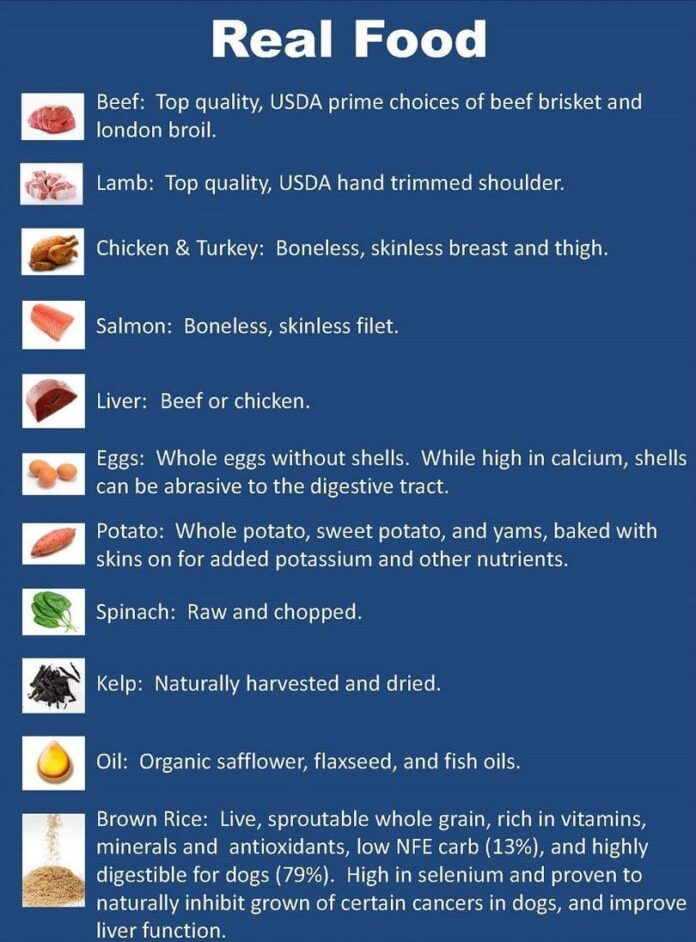
Real food for dogs

If you are going to study it, you will see that they have shorter intestines and they also lack in digestive enzymes suited for carbohydrates.

Animal protein

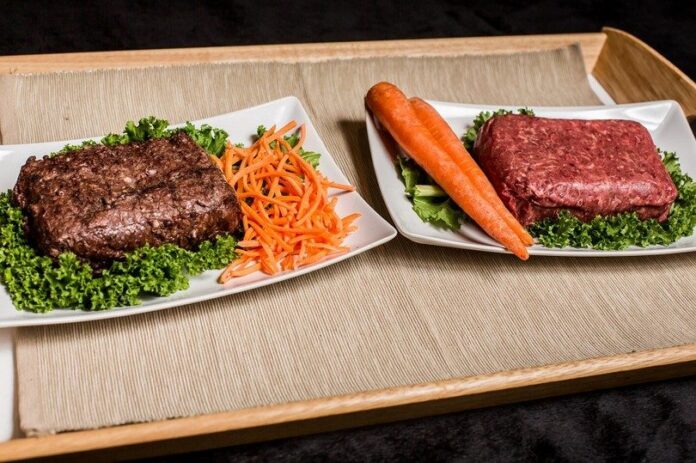
Since a dog is carnivorous, their main diet should consist in animal meat or protein. If you’re going to take a look at their diet while in the wild, you’ll realize that they eat the whole carcasses of their prey.

The recommended protein requirements are often based on daily percentages. Some diets require 75% meat while others only prescribe 50% of the overall meal. Dogs require a lot of protein for their overall growth and development.

Low protein diets often lead to musculoskeletal problems and degeneration of mental abilities in dogs. Sources of animal protein can range from beef, eggs, turkey, chicken, venison, lamb, wild game, bison, buffalo, and rabbits. Pork is not recommended for dogs since they contain a specific type of parasite which can produce adverse health effects in dogs.

Vegetables

This is the second most important ingredient in a dog’s diet where they derive essential micronutrients such as vitamins, minerals, phytonutrients, and enzymes. Pet owners are cautioned against using a large amount of vegetables since they lead to the formation of oxalates which eventually develops into kidney stones.

Some of the veggies that you can use in your dog’s diet include cabbage, celery, zucchini, squash, carrots, broccoli, and parsley. Eggplants, peppers, onions, beans, mushrooms, and garlic are not recommended due to their known adverse effects on dogs. You also need to cook them until soft or put them in a blender or food processor before feeding so that your dog can digest them easily.

Fruits, grains and starchy vegetables

These last ingredients are a good source of carbohydrates which dogs need for energy. They also provide vitamins and minerals which are essential for their biological functions. Take note not to give a lot of these foods to dogs since they can lead to diarrhea due to a large amount of fructose or it can cause unnecessary weight gain due to excess carbohydrates.

You also need to be careful about the type of grain that you feed your dog; make sure that they are not allergic to it. Stay away from grains that are commonly genetically modified such as corn and wheat. Some of the best that you can give are potatoes, sweet potatoes, carrots, couscous, and brown rice.

Fats and oils

Fats can be easily gotten from meat products and as for oil, you will have to find the healthier types. These two ingredients are what keeps your pet’s coat shiny and glossy and they also help provide some isolation from the cold. Chicken fat, in moderate amounts, is a good source of linoleic acid and fish oil is a high in omega-3 and omega-6 fatty acids.

You can use cod liver oil, olive oil, canola, and other healthy types of oil except for nut oils if your dog is allergic to them. You can add a teaspoon or two of these oils per meal either by cooking or mixing them in.

Supplements

Although this is not considered to be natural food, supplements help to provide additional nutrients which may not be gotten from whole foods. To make sure your pet is getting the nutrients they need, it is recommended to provide them with supplements such as calcium, phosphorus, magnesium, zinc, taurine, and vitamins.

Some recommend human supplements such as Centrum to be given at least once each day or you can buy supplements specifically made for dogs.

10 best homemade dog food recipes for your pet

To help you prepare your own homemade dog food recipes, we found some of the healthiest and most delicious ones. We have incorporated both cooked and raw recipes to help you choose or even try them out if you’re curious. The recommended meal servings per day, for a dog, will depend upon his breed, size, age, and health condition.

A puppy and lactating dog will require more calories as well as an adult dog. An average adult dog will need from 2 to 3% of his overall weight as a total daily meal serving. So if you have a 30-pound dog, that means he will need about 0.6 to 0.9 pound of dog food each day. The quantity can be increases if your dog is engaging in demanding or endurance activities.

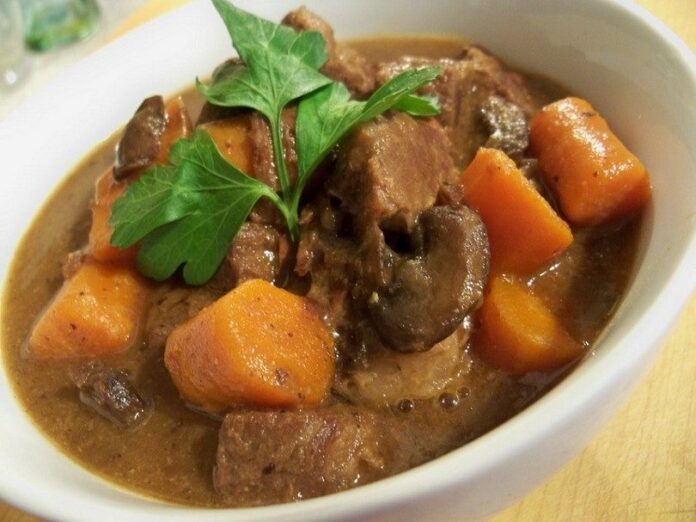
1. Doggie beef stew

For this yummy recipe, you’ll need the following ingredients:

  • 1 lb beef stew meat
  • 1 small potato
  • 1 small sweet potato
  • ½ cup carrots, chopped
  • ½ cup water
  • ½ cup white flour
  • 1 tbsp canola or olive oil

How to actually prepare it: Remove the skin from the potato and sweet potato and cut them into chunks. Bake the pieces in the oven for 8 minutes or until almost done. Next, heat the oil in a frying pan and sauté the beef stew pieces until they are cooked. Remove the beef and add water and flour slowly into the pan.

Doggie beef stew

Continue stirring until the gravy gets thick and then add the beef, carrots, and potatoes. Keep it on the fire for 10 more minutes and it’s done. Your four legged companion will definitely be satisfied!

Turkey and vegetable dinner

To create this appealing recipe, the following ingredients are necessary:

  • 1 pound turkey meat
  • 1 cup cooked brown or white rice
  • ½ cup green beans
  • ½ cup carrots
  • ¼ cup water
  • 1 to 2 tbsp vegetable oil

The cooking procedure is quite simple: you only need to chop the turkey meat into pieces of desired size and stir-fry in oil until done. Add water, green beans, and carrots and cook for about 5 to 10 minutes. The final step is to mix in cooked rice and serve when the temperature is just right.

2. Doggie meat loaf

It sounds great, right? We’re sure your furry friend will also agree; just watch his reactions as the smell becomes greater and greater. Let’s start with the ingredients:

  • 3 cups of your preferred type of meat
  • 2 whole eggs
  • ½ cup of grated or finely chopped vegetables
  • ½ cup cottage cheese
  • ½ cup rolled oats

Pre-heat the oven to 350 F and mix all the ingredients thoroughly in a bowl.

Doggie meat loaf

After this place them into a loaf pan and put the pan in the oven for about 35 to 40 minutes. When it’s done, simply slice into desired serving sizes.

3. Fish patty dinner

For this delicious recipe you’re going to need:

  • 1 can of Salmon
  • 1 medium-sized carrot
  • 1 potato
  • 1 egg
  • 1 stalk of celery
  • 3 tbsp flour
  • Oil for frying

Cooking the recipe goes something like this: chop up the potatoes, celery, and carrot into bite-size pieces. Drain the salmon and mix it with flour and egg. The next step is to form the salmon into small patties and fry them in oil until they’re golden brown. After the patties are done, remove them from oil, and stir-fry vegetables for about 5 to 8 minutes. The patties are served with a side of vegetables.

4. Chicken casserole

The ingredients are easy to gather and the recipe tastes amazing (according to other dogs that have tried it). You will need:

  • 2 chicken breasts
  • 1 cup chopped vegetables (carrots, green beans, potatoes, broccoli)
  • ¼ cup rolled oats
  • 2 cups chicken broth
  • Oil for frying

Start by chopping the chicken breasts into bite size pieces and sauté them in oil until cooked.

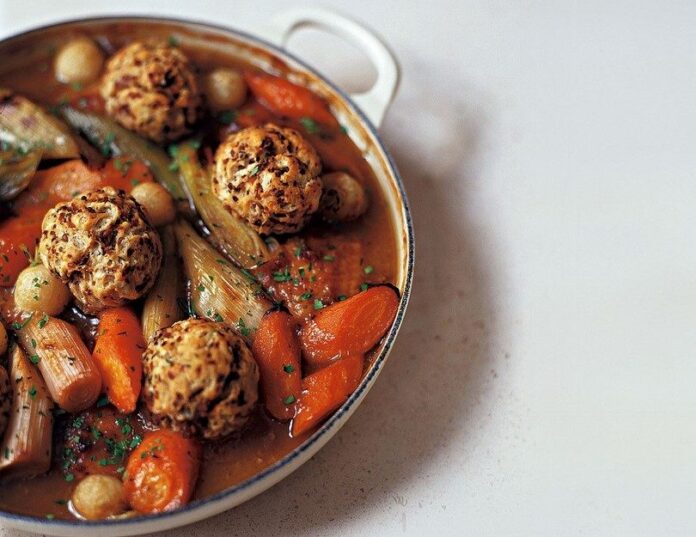
Chicken casserole

Add the chicken broth, rolled oats, and chopped vegetables in the pan and simmer from 10 to 15 minutes. Simple and absolutely delicious!

5. Sample raw dog food

For this you’ll need:

  • 1 ½ cups of raw meat either beef, turkey, chicken, buffalo, venison, or lamb
  • 1 cup mixed vegetables such as carrots, romaine lettuce, squash, and Brussel sprouts
  • 1 tbsp cod liver oil
  • 1 tablet supplement, powdered
  • 2 tbsp bone meal or other similar calcium supplement

Chop up the raw meat into desired size pieces (you can use a grinder to get a finer mixture). Put all the vegetables in a blender or processor and blend until smooth. Next, take a large bowl and mix all ingredients together. Serve it to your furry friend and wait for impressions.

6. Basic dog food recipe

This is the kind of food you make when you can’t think of anything special for dinner or lunch. You’ll need the following:

  • 1 cup ground meat
  • ¼ cup liver either chicken or beef
  • ½ cup cooked rice
  • ¼ cup vegetables
  • 1 hard-boiled egg
  • 1 tbsp fish oil

Cook the ground meat until you don’t see any more pink. Mix in the liver, chopped boiled egg and vegetables and stir-fry until vegetables are done. Add the fish oil and rice and it’s ready to serve. Simple and efficient when the culinary inspiration is missing.

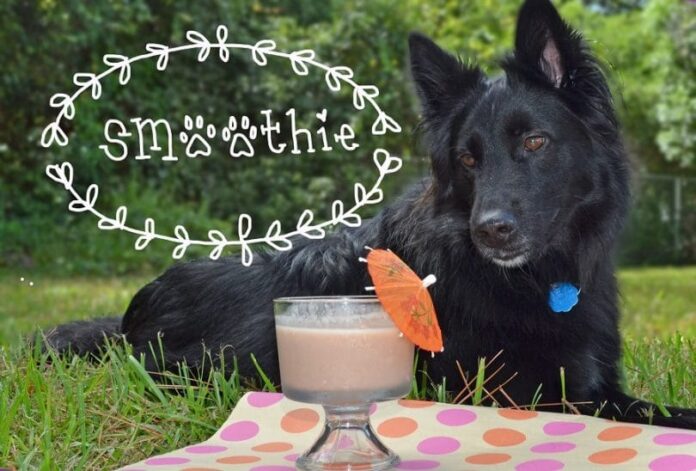
7. Homemade veggie smoothie

Note: This should only be served every other few days as dogs cannot thrive on a purely raw vegetable diet.

Homemade veggie smoothie

This delicious idea can be considered a small treat that you offer when your dog has behaved extremely well. You’ll need the following:

  • ¼ cup of combined carrots, squash, zucchini, green beans, spinach, collards
  • ¼ cup apples, peaches, pears, bananas
  • ¼ cup fruit juice except for grape juice
  • 4 tbsp yogurt
  • 1 tbsp cream cheese

The procedure is super simple. Just combine all the ingredients in a blender and blend until smooth.

8. Raw fish dinner

We know it’s not too appealing for us (except if you like sushi) but for dogs this is quite tasty. The following ingredients are necessary:

  • 2 pounds fish fillets
  • 1 can pink Salmon
  • 2 eggs
  • 4 tbsp parsley
  • 2 tbsp oregano
  • 1 tbsp bone meal
  • ½ cup cooked rice

Combine all the ingredients in a blender (except for the cooked rice). The next step is to add the rice (of course) and then serve under the form of tennis size balls.

9. Basic dog biscuits

Note: This should be used as a treat and not as a meal itself. Use it to reward your dog during training or when you are out in the park, playing.

This recipe requires the following ingredients:

  • 2 ½ cups wheat or oat flour
  • ½ cup chicken or beef stock
  • 1 egg
  • ½ cup bacon bits, cheese, or dehydrated chicken pieces

Start by pre-heating the oven at 350 F and continue by combining together the flour, stock, egg, and bacon bits (or chicken pieces).

Basic dog biscuits

Roll and form into dough. Flatten to a half-inch thickness and cut into desired shapes. Apply a small amount of grease into a cookie sheet and place in the cut-out dough. Bake for 25 to 30 minutes.

10. Doggie fruit dessert

Reminder: Never use grapes, raisins, macadamia nuts, or chocolate when making dessert for dogs.

We added this recipe as a bonus to this top 10 recipes. It’s delicious and your dog will be extremely happy (so double bonus!). Necessary ingredients:

  • ¼ cup applesauce
  • ¼ cup yogurt
  • ½ cup blueberries
  • ¼ cup strawberries
  • ¼ cup diced apples
  • 1 tbsp Brewer’s yeast (optional)

Combine all the ingredients in a blender and blend until smooth. That’s it!

smoothie for dogs

As you can see, homemade recipes are not that difficult to make and we all know that your pet’s health should never be compromised by low quality ingredients as well as by added preservatives and additives.

There is a better way to ensure that your dog is getting the nutrition that they need by preparing their foods yourself.

You can choose from cooked meals which you can prepare with fresh ingredients or, if you don’t have the time, you can go for raw meals. Remember to add in vitamins and minerals through daily supplements or by adding bone meal to their food.

The easiest way to prepare your pet’s meals is to incorporate ingredients that you are using for your own meals. This way, your pet will enjoy the same nutrients that you enjoy without giving you added stress for meal planning.

Enlarged Heart in Dogs: Dilated Cardiomyopathy Explained

A dog fills our hearts with joy and asks for nothing in return. However, we are the ones who should take care of its heart, especially in case there is something wrong with it. Since a dog cannot describe its symptoms, only its owner can observe it and try to identify what is not right or what has changed in its behavior.

When it comes to heart diseases, enlarged heart in dogs is among the most possible conditions that may occur. An informed dog owner can easily learn to recognize the occurrence of dilated cardiomyopathy in his or her dog and act in a timely manner before the affection aggravates or evolves in any way.

As heart is for humans, so is for dogs. It is the most important muscle from their bodies, the core that keeps them alive and which can become life threatening if it starts malfunctioning. Heart diseases in dogs are most often caused by the malfunction of the valve or the heart muscle, also called myocardium.

If your dog suffers from a heart disease, its body retains more salt than needed and more water as well. This affection is also called hydro-saline retention, characterized by situations when fluid can accumulate in a dog’s lungs or abdomen resulting in shortness of breath and abdominal pain. If a pooch’s heart does not work like a well-oiled engine, then its blood circulation is slowed down and leads to fatigue, weakness and other symptoms.

Alike humans, the types of heart diseases in dogs can be hereditary or they can occur at some point in their lives. Most often, a heart disease occurs because of different reasons, affecting older dogs preponderantly. This article on how to take care of senior dogs can help you a lot, so check it out.

Dog-heart-diagram

There are 2 types of heart diseases in dogs that are most met. The first type is when a dog’s heart valves lose their ability to properly close, causing abnormal blood flow. The second type manifests when a dog’s heart muscles become thin and weak, being unable to sustain its function in a normal way. These are general affections that include the case when a dog’s heart is enlarged.

Dilated cardiomyopathy is a cardiovascular disease, potentially fatal, characterized by the dilatation of the heart, both of its left and right sides. However, the coronary vessels and atrioventricular valves do not show changes, but there is a myocardial dysfunction present mainly in the systole. In other words, if your dog has a big heart in the most literally way possible, that is rather a bad thing than a positive one. A dog with such affection has a bigger heart and as it gets even bigger, its heart muscles get thinner and consequently its heart gets weaker.

Therefore, its heart has a weaker ability to push the blood throughout its body.

According to a study made by specialists, this type of heart disease occurs in dogs aged between 4 and 11 years. They are mostly males than females and they belong to dog breeds such as Doberman, Boxer, German Dog, Afghan, and Cocker, among others. Their respiratory, excretory, and circulatory systems started to malfunction, thus determining veterinarians to take further tests and establish a correct diagnosis, which was dilated cardiomyopathy.

Besides the clinical exam, there are numerous tests that must be done in order to establish for sure the affection that generates the symptoms present in certain dogs that may or may not be predisposed to developing heart diseases.

Symptoms of Dilated Cardiomyopathy

A responsible and informed dog owner can easily observe the symptoms of heart disease in his or her dog. A sick dog should start breathing faster and to coughing heavily. Of course, a proper consultation by a specialist can reveal a lot more, such as pulmonary edema, weight loss, lethargy, tachycardia or fibrillation, hepatomegaly, increased capillary refill time and so on. Out of all the complications that can occur, the most important complication is pulmonary edema, which means there is water in the dog’s lungs.

Edema occurs in a dog’s lungs because its blood stagnates more than usual in a place where it can be absorbed, namely the place where oxygen passes into the blood. When that happens, a dog can barely breathe and it has the feeling of suffocation.

Dog-trying-to-get-more-oxigen

In some cases, heart failure develops suddenly, for example after a viral infection, or progressively. Progressively developed symptoms of heart failure may include weakness, fatigue, dyspnea that means difficulty in breathing, wheezing that refers to the whistling noise made by the passage of air through narrowed airways, shortness of breath, dry and irritating cough, swelling especially in the legs, dizziness, fainting, rapid weight gain caused by water retention, increased urination at night, abdominal swelling, tenderness or pain that can result from fluid retention in the body.

In addition, the symptoms present in case of a sudden heart failure are severe shortness of breath, fast or irregular heartbeat, mucous expectoration that can be pink. If a dog is not getting treatment, things can get complicated and generate pulmonary edema, hypoxia, cardiogenic shock, death, infective endocarditis, thromboembolism, venous thrombosis, cardiac cirrhosis, supraventricular and ventricular arrhythmias, which are abnormal heart rhythms that can cause loss of consciousness or sudden death.

Diagnosing Dilated Cardiomyopathy in Dogs

The detection of this disease is made by a veterinarian with the help of a chest radiographic examination, an electrocardiogram, and a Doppler echocardiogram or a simple one. The latter technique helps the doctor examine a dog’s heart from the morphological point of view, but also to determine the speed and direction of its blood flow. These tests are mandatory to rule out other diseases and determine the impact of the current one on the canine patient in question.

Tests may also include a complete medical history and a physical examination of the dog’s heart and lungs with a stethoscope. Heart murmurs, abnormal heart sounds, and irregular heart rhythms may indicate an existing problem in the heart.

Diagnosing

Among the other possible tests are measuring a dog’s blood pressure, verifying the hematocrit levels or asking for a complete blood count. These tests may be needed in order to identify a possible state of anemia or other diseases such as infections or inflammations. In addition, the vet may request biochemical tests, which are particularly important in case of thromboembolism or other complications in other organs. Testing the thyroid hormone to exclude hyperthyroidism might also be necessary, just as a urinalysis to assess kidney function.

The coronary angiogram and coronary catheterization assumes the insertion of a thin tube through a flexible artery or vein to the heart, to measure the pressure in the heart chambers and to take blood samples. A dye can be injected to see if the arteries that supply the heart, called the coronary arteries, are blocked as the heart pumps blood or not.

As a last option, the specialist can ask for a myocardial biopsy, which involves taking a sample of the heart tissue and examine it for signs of infection, metabolic diseases or tumor. This procedure is usually reserved for patients with acute heart failure that are unresponsive to treatment.

Treatment for Dilated Cardiomyopathy in Dogs

A treatment for heart diseases in dogs may include a diet low in sodium, moderate exercising and the administration of drugs. Medications are used to strengthen heart contractions, eliminate fluid retention and dilate the blood vessels so blood can flow more easily through a pooch’s veins.

With the supervision of a veterinarian, some dogs can fully recover and resume their old habits, being as cheerful and as playful as they were before getting sick. However, these are rare cases and they might only apply for when heart enlargement is detected right after it starts and things don’t get complicated.

Besides salt retention and water retention in the body of a dog, another cause of heart disease can be obesity. The solution for that situation consists in a low fat diet recommended by a veterinarian, not taken from other sources. It is important for a dog’s food to taste good, because otherwise it will not eat it and it will lose weight by making itself starve, fact which can lead to the development of other nutritional diseases. Those problems might not be as serious as heart diseases are, but they cause trouble and they are unwanted in every imaginable way.

In general, the doctor prescribes medications that contain combinations of drugs, which help in the process of eliminating fluids, pumping blood better throughout the body and dilating blood vessels as well. Patients also receive salt restriction, certain inhibitors, diuretics and digitalis. In some situations, vets might also prescribe anticoagulants.

You should never give more or less drugs to your dog unless the vet recommends it. Taking a decision regarding your dog’s health should be limited to its lifestyle, not to its medication. Try not to overlook its dietary needs and give it treats thinking that makes it happy because it will not.

Treatment for Dilated Cardiomyopathy in Dogs

As soon as you bring your dog back home from the veterinary clinic, you should keep stress factors at minimum. A stressed dog will have to breathe faster and that will make its heart pump faster. Also, you should avoid strenuous activities and exercises in order to not overburden its heart.

Be extra careful to aspects like increased respiratory rate, shortness of breath, increased respiratory effort, profound anemia, lethargy and collapse. The medication recommended by the veterinarian should be given exactly. In case you notice something going wrong, take your doggy back to the vet before it is too late.

Preventing Dilated Cardiomyopathy in Dogs

Many types of heart diseases can be prevented or detected early in case of most dogs. There are certain things you can do for your dog in order to avoid heart diseases. Regular checkups at the vet and exercises are just some examples, as well as paying attention to it, feeding it properly and so on. There are many essential aspects that ensure a long and happy life for your dog. Moreover, some of the advices might work on you as well.

The principles of living a healthy life are not so different from man to dog or the other way around:

  1. The first step you can take in order to prevent heart diseases is to learn more about all the health issues present in dogs belonging to the same dog breed as the one you own. All dog breeds have cases of specimens that got sick during their lives or that were born with a congenital heart disease. Certain dog breeds may be more predisposed to certain types of heart diseases, abnormalities such as muscle diseases or cardiomyopathies or those related to the enlargement of the heart chambers because of a weak muscle.
    Electrical irregularities found on electrocardiograms or congestive heart failures can be treated if they are detected early. Dog breeds such as Cockers, Boxers and Doberman Pinschers are more prone to getting a heart disease.
  2. Feed your dog with foods rich in the following 2 important nutrients: L-carnitine and taurine. Taurine is an amino acid that can prevent a possible calcium overload and that is found in the heart muscle. L-carnitine is a kind of protein that feeds the heart. A diet poor in these nutrients could lead to heart disease. L-carnitine is found in red meat in high concentrations and in lower concentrations in vegetables and cereals. In addition, Omega-3 oils, cheese, eggs and meat contain large amounts of taurine. Find out more in our piece regarding the best nutrition for your dog.
  3. Use natural supplements to prevent heart disease in behalf of your dog. The Hawthorn plant can lower cholesterol, strengthens the heart and regulates blood pressure and heart rate. Gingko biloba, dandelion, parsley, ginseng, ginger and chili are very good for the heart and can be added to foods or given as supplements.
  4. Make sure to prevent Lyme disease, which can cause heart problems, by removing ticks and fleas. The Lyme disease is transmitted directly from ticks. Check to see if your dog has ticks on the surface of its body. There are collars, pills and ointments available to prevent ticks.
  5. Exercise with your canine pet for the health of its heart, but also for the health of your heart. Keep your dog in an ideal shape by exercising diversely, such as walking, running, playing and swimming.
  6. Carefully and closely watch your dog in order to notice a possible shortness of breath or other breathing problems during exercising sessions and during sleep as well. If it starts to cough, note how often it does that and what is it doing while and after coughing. Dogs that cough during the night may have congestive heart problems.
    Coughing during meals may be a sign of esophageal obstruction. Heart disease can cause coughing during exercise or excitement. Take your dog for a routine examination whenever you think it is necessary and keep accurate records that can help the veterinarian in the process of setting a diagnosis.
  7. Administer medication in order to prevent heartworm. A monthly supplement or an ointment that can be applied would be great. Heartworm, which is transmitted to dogs by mosquitoes, is debilitating and fatal if it is left undiagnosed. An annual blood test should also be performed for early detection and treatment if necessary.

Constructive Conclusions for Healthy Dogs

As seen, the administration of a successful treatment in case of heart disease depends on many factors. However, the early detection of dilated cardiomyopathy and other heart diseases in dogs is by far the most important one of them. Following strict indications, you can help your dog live longer and have a more comfortable life if it happens to get sick.

Besides watching your dog’s health, you can do plenty of other things that will keep your dog happy and in top shape. For example, make sure your canine friend is exercising enough and it follows a balanced diet. An obese dog may have various difficulties when it comes to staying healthy. If you want to know how much exercise your dog needs, read our article on the subject. You being concerned for your dog’s health and it being under veterinary supervision can prevent the occurrence of heart diseases throughout its life.

Exercise-for-your-dog

Unfortunately, there are cases when dogs are simply born with a certain type of heart disease and you cannot do anything to prevent it. Those cases should not upset you because you can still do plenty for your dog to feel comfortable and live happily without putting too much pressure on it.

Usually, the cases when a dog’s heart gets bigger are not innate, but you never know what disease could affect your beloved animal. Regardless of what it really is, try to stay as informed as possible and avoid making mistakes. Spare your dog from noise, agitation, stressful situations, and other factors that might disturb its day-by-day routine.

Best Indoor Dogs: Top Breeds That Adapt Well to Small Living Spaces

0

Small indoor dogs may be small, but they make up for their small bodies with playfulness and great personalities. Celebrities have turned these small fluffy balls into popular fashion accessories, however, they are not toys. These dogs can be great companions to your children and you. There are many small dog breeds and each one has different needs, temperaments, and personalities.
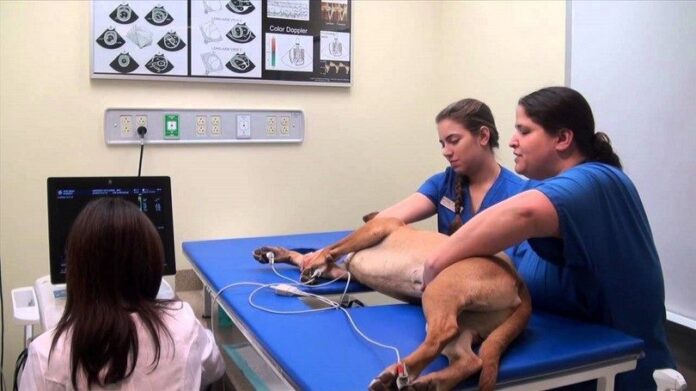
Choosing the perfect breed for you may be difficult and depends on many factors, primarily on the dog’s energy level and exercise routine. This means that dogs with lower energy levels would require less exercise than the bigger dogs that need frequent outdoor activities like walking or jogging.

However, you should keep in mind that even though these types of dogs are small and their energy levels are low, they still need to exercise or they can become depressed and overweight, which you would never want to happen. This also means that due to their small stature they may be more sensitive to certain diseases. Be it a small or big dog, they need love, friendship, and constant care all the time.

Dog-for-indoors-homes

If the dog is of small indoor breed that does not mean that you can leave him alone in the apartment for hours. This article will provide you with a guide to some of the best indoor dogs, their needs and characteristics.

Maltese

The Maltese dog is probably one of the most popular companion dog breeds in the world. The Maltese dog is also one of the most ancient breeds and with a history that can be traced to the early cultures of Greece and Rome. However, the exact origin is still unknown, and this cute dog is known as the ‘ancient dog of Malta’ and the ‘Roman Ladies’ Dog’.

The Maltese dog has a glamorous, silky, long and white coat which looks noble and elegant; however, the looks can be really deceiving because this little white doggy can be fierce and fearless. He is used not only as a companion, but also as a therapy dog and competitor in dog sports such as obedience, rally and tracking. Most importantly, the Maltese simply love to be with his people.

When it comes to their size, the weight is up to 10 pounds (4.5 kg) and the height is up to 12 inches at the shoulder (30 cm). You should avoid the so called ‘tea cup’ Maltese that weight less than 4 pounds at maturity because that means that such dogs are more prone to genetic disorders and higher health risk in general. Their life span is up to 15 years.

Maltese

When it comes to their personality, they are known for having a lively personality and they take well to training and positive reinforcements since they love to be around people. They also respond well to food rewards, praise and play. They are fearless in the presence of other dogs and people and their cuteness and sweetness enables them to always get their way, even if the masters have no intention of spoiling them. This means that they are also irresistible.

The puppies are often curious, playful and willing to approach people and be cuddled by them. You should always choose the puppy that is cheerful and playful, not the one that is hiding in the corner. They need early socialization in order to become comfortable with people and the environment in general.

Maltese do not have the undercoat, which means that they do not shed much, or not at all. However, you should comb and brush it regularly in order to keep it shiny and healthy. They also need to have their nails trimmed regularly and the hair that grows in their ears should be removed too. You should also know that you must brush their teeth regularly in order to remove the bacteria and tartar.

Clean the eyes of your Maltese with warm water to prevent tear stains and you should also wash his beard after the meal. You do not want his silky white coat to be dirty. If you happen to notice that your doggie’s nose is becoming pink, then you should take him outside more often because he is not getting enough sunshine.

Maltese do not get along well with small children or babies, simply because they can easily hurt the dog during a game by dropping him or holding him too tightly. That is why many Maltese breeders do not sell the Maltese puppies to families with small children.  They would do much better in a home with quiet and older children or just adults.

They can also get along well with other dogs and cats, but only if you socialize with them from an early age. Their fierceness can be seen in the fact that they are unaware of their tiny size and they are ready to take on a dog that is ten times their size.

Pomeranian

The Pomeranian is another good indoor dog breed that was named after the Pomerania area in Central Europe (the modern-day Germany and Poland). They descended from the large sled dog breeds and they are also known as “the little dogs who think they can”.

When it comes to their size, the weight is up to 7 pounds (3.5 kg) and the height is up to 11 inches at the shoulder (28 cm). Their life span is up to 16 years. Nowadays the Pomeranians come in any color or pattern you can imagine, and that includes white, black, brown, reddish, spotted; plus combinations of those colors.

The most common colors are brown, black or cream and white. The Pomeranian’s coat is thick, stand-out and double with a soft, thick and fluffy undercoat. The frill around Pom’s neck makes him look even more proud.

When it comes to their personality, they are extroverted, small and vivacious. They love meeting new people and they get along with other animals, however, you must socialize them from an early age. Do not let them challenge bigger dogs because they are never aware of their small size. They are also very curious and inquisitive so they make excellent watch dogs that would bark at any stranger.

However, you should teach them to stop barking at your command, otherwise they will continue barking all day long and you will go crazy. You will see that they are very loyal to their family and they are very suspicious of strangers.

You should pay attention to your Pom so he does not get exposed to high heat and humidity or else he can have heat stroke. Watch your Pom closely when you are taking him for a walk. This breed should never be kept outside – they are too sensitive but that also means that they make a great choice for an indoor companion.

Pomeranian Dog

Do not forget that their small size makes them an easy prey to owls, eagles, coyotes and other wild animals. That is why you must never leave them alone outside, especially if you live in the countryside or in the area where some of the predatory animals can be found. Additionally, their popularity makes them a frequent target for dognappers, which is another reason for you not to leave them alone outside.

Pomerians are very active indoor dogs and choosing a Pomerian is a great choice if you want a smaller pet that is not in need of longer walks and exercises. They are sensitive to heat so never take them out during the worst dog days. They love challenges and they can easily get bored or depressed if left alone for a long time, so make sure to give them lots of toys and training, however, their attention span is short so the training sessions should be short too.

Just like with Maltese, Pom is best suited for older children or adults. They are too tiny and fragile, and children can unintentionally hurt them.

Pekingese

The Peke is believed to be one of the oldest dogs ever and his origin can be traced 2,000 years ago in China, Beijing. He has been a companion to princes and members of the royal family. According to a Chinese legend, the Pekingese was made by Buddha who reduced a lion in size but let him retain his great heart and character in order for him to wed a marmoset. And that is why this breed is called today the ‘lion kind of imperial China’.

The Pekingese weight up to 14 pounds (6.4 kg) and the height is to 9 inches (23 cm). When it comes to their coat, the breed has all sorts of combinations. Most of them are gold, red, brown, black, white etc. Regardless of their coat color, the muzzle, nose, lips and eyes are always black. They also shed a lot, which means that you should comb and brush them frequently. A life span is 15 years.

The Pekingese has a strong stand-up character and he may look fluffy and small, but he really is a lion at heart. He is stubborn, confident, loyal and protective. He is suspicious of strangers and a protector of his master. Since he is so much stubborn, you must train him with firm consistency so he does not end up barking all day long or simply refusing to listen to you. Like with other dogs, you must socialize him from an early age so he can get used to other people, dogs, animals in general, the environment etc.

Pekingese

The Pekingese almost always snore, even loudly, because they have short noses. They do not tolerate heat well and they are difficult to break. They also tend to be one-person dogs and they will get attached to one person who takes care of him the most.

They make amazing apartment dogs and they can be happy in an apartment. They love to explore and wander off. They also like to go for walks, however, do not forget that their tiny legs are not suitable for tiresome exercises and they can have heat stroke. They should never live outdoors. If you are looking for a loyal, devoted and unique friend, then this breed may be for you. The Pekingese needs a friend who is able to understand his needs and unique personality and he will for sure return your love and affection.

Yorkshire Terrier

The Yorkshire terrier aka Yorkie originates from the 19th century in Yorkshire, England and he was used primarily as a dog for rat-baiting.

The Yorkshire terriers weight up to 6 pounds (2.7 kg) and the height is up to 9 inches (23 cm). When it comes to their coat, it must be glossy, fine, perfectly straight, and silky. They have only one coat which means that they shed very little; however, you must comb and brush them regularly. It is interesting that all Yorkie puppies are born black; however, as they get older, due to hormonal changes they become lighter and their color is turned into a grayish color. A life span is 15 years.

Chihuahua-puppiy

When it comes to their personality, they are smart, self-assured, cheerful, spirited, mischievous, cuddly, perky, outgoing. Some of them can be shy while the others can be really too out-going and active. If you spoil them you will make your life very difficult because it is hard to correct bad habits later on. Your Yorkie can be a wonderful companion if you set limits and train him. However, remember that they are small and fragile (even if they act as much bigger dogs), and they should never be kept outside or forced to train too much.

And just like with other dogs, most dog breeders won’t sell them to families with small children. That is because kids can unintentionally hurt them, step on them or squeeze them too tight. They are fragile and that is why you must take care of them as if they were family members, which they are.

Chihuahua

The Chihuahua, or the smallest dog in the world, is a dog breed that originates from Mexico and it is named after one of its states. However, nobody is really sure about the exact origin. The most common theory is that Chihuahua is a descendent of the Techichi, a companion dog, but some even say that the Aztecs raised them as food.

The weight is never more than 6 pounds (2.7 kg), but the height may vary and it is usually between 9 and 9 inches (15 and 23 cm). When it comes to colors, they come in any color or pattern possible. When it comes to their coat, they can be smooth or long.

Chihuahua-puppiy

The Chihuahua is often said to be terrier-like, which means that it is very bold and confident even though it is the smallest dog in the world. Being the smallest has many cons though – they are the obvious prey to larger animals and predators, which means that you should never leave it alone in the public or in the countryside. They are the indoor dogs and they should never be left alone for a long time outside.

It is also very common for Chihuahuas to bond to only one person even though they are willing to make friend to other people and animals. They are usually reserved and suspicious; they can be timid if you do not socialize them from an early age.

Other Good Indoor Dog Breeds Worth Checking Out:

  • Affenpinscher
  • Bichon Frise
  • Bolognese
  • Boston Terrier
  • Brussels Griffon
  • Cavalier King Charles Spaniel
  • Chinese Crested
  • Coton de Tulear
  • Dachshund (Miniature)
  • Havanese
  • Japanese Chin
  • Lhasa Apso
  • Lowchen
  • Maltese Shih Tzu
  • Maltipoo
  • Manchester Terrier
  • Miniature Pinscher
  • Papillon
  • Peekapoo
  • Poodle (Toy & Miniature)
  • Pug
  • Rat Terrier (Toy & Miniature)
  • Shiba Inu
  • Shih Tzu
  • Silky Terrier
  • Toy Fox Terrier
  • Yorkipoo

To sum up, there are many indoor dogs, and every breed has its unique characteristics, pros and cons. Most of good indoor dogs are of small size and that makes them perfect companions for apartments and small houses. They are also easy to take traveling with you, having in mind that you do it with care.

It is also very interesting that even though most of these indoor breeds are tiny, they make it up for it in their temperament and heart. They are loyal, protective and devoted. They will love the family or the person they are with and they will ask for your attention and return affection.

HDB-Approved-dog-breads

The most important thing to remember is that you must be able to provide for the dog’s needs, take him for walks etc because even though he is small, that does not mean that his needs should be ignored. They differ from other dogs in lower energy levels which make them the perfect friends at home and they must not be kept outdoors. All in all, they are still as important as any other breed.

Brindle Dog Breeds: Top 12 Most Popular Mentions

0

Brindle dog breeds are those dogs that have a coloring pattern on their coat. This pattern is often described as “tiger-striped” because it resembles the dark black stripes on tigers.

These kinds of markings are not only associated with dogs, because they can appear on other animals as well, such as: cattle, horses and guinea pigs.

The main characteristic of these markings is that they are irregular and darker than the base color of the dog’s coat. When it comes to dogs in particular, dogs with these markings are also called “trundle” and they can be confused with tricolor dogs. However, if you look closely you can notice the difference.

What is the reason for this? It is still uncertain and the researchers are looking for the source of the mutation that creates this kind of coat coloring.

However, it has been proved that the brindle comes in various types among dogs and that some dog breeds are more prone to having this gene than others.

It has also been noted that brindle is more prevalent in dog breeds with short coats rather than with long ones. However, if you’re thinking on getting such a breed, we put together a list of the breeds that are more likely to have a brindle coat.

BOSTON TERRIER #1

boston terrier brindle
Source: Pinterest

The Boston Terrier breed originated in the United States and its members belong to the non-sporting group. Actually, Boston Terriers have been one of the most popular dog breeds in the USA in the past couple of years.

The usual colors are black, seal with white markings, but also brindle (sometimes the coat can consists of all three variations). However, the brindle type is very beautiful and cherished.

When it comes to the Boston Terrier’s appearance, he is a small dog with pointed ears, small flat muzzle and usually cropped tail. His coat is very short and it is not in need of much grooming. When it comes to his temperament, he is a fierce little thing. Always loyal and protective of his owner, it seems that he does not realize how small he is compared to other dogs.

He can be very stubborn, but also curious, intelligent and affectionate. His friendly and easy-going personality even around strangers is his much known trait and that is why he is very popular among the majority of owners.

He also does not mind living indoors due to his small size. According to the American Kennel Club, this dog ranked as the 23rd most popular pure-breed in the USA in 2012 and 2013.

TREEING TENNESSEE BRINDLE #2

Treeing Tennessee
Source: hepper.com

The Treeing Tennessee Brindle is a dog breed accepted by the American Kennel Club. The existence of this breed became apparent in the 1960s, when Reverend Earl Phillips noticed a dog with tiger straps being the dominant one in hunting and treeing action. Today this dog is preserved as the one with the brindle coat – the only one that is acceptable in this breed.

When it comes to his appearance, the dog does not weigh more than 23 kg and he is not taller than 61 cm. Even though his appearance may not be unique and outstanding, this dog is a very capable and brave companion.

His job is to hunt down and tree an animal until the owner comes to get it. Another breed’s standard is that he has an unusual bark during the hunt which has been described as “crying”. The dog breed also has a strong sense of smell and fast thinking.

STAFFORDSHIRE BULL TERRIER #3

staffordshire bull terrier brindle
Source: dailypaws.com

The Staffordshire Bull Terrier is a dog breed of medium size that originated in England. Even though this dog was originally bred for the purpose of bull baiting, bear baiting and other blood sports, today he is one very loyal and gentle family dog, if trained and socialized properly of course.

When it comes to his coat, brindle is one of the acceptable colors. He looks very lovely with the stripes on the darker coat which is short and doesn’t require too much brushing. The Staffordshire Bull Terrier has a powerful build and a strong muzzle and jaw.

His stocky and muscular physique makes him a scary dog, but he can be very gentle indeed. However, this breed has been known as too affectionate, which means that they can get too friendly with strangers, even dognappers.

People should understand that the owners are the ones who are responsible for their dogs’ bad and aggressive behavior when they try to exploit their desire to please humans and turn them into profit.

BOXER #4

boxer brindle
Source: youtube.com

The Boxer is a dog breed of medium size and short coat that comes from Germany. This dog breed is known for its powerful physique and very strong bite. The Boxer comes in brindle (with or without white markings), fawn, black, white and mahogany. It has been noted that the Boxer currently holds the 8th place at the most popular dog breeds list in the USA.

When it comes to his personality, the Boxer is a loyal, family, affectionate and brave dog. He is also very active, bright and energetic dog breed that thrives in a home filled with love and care. This breed is also known for being very good with children because of their patient temperament.

He responds well to positive reinforcement training and should be trained from an early age in order to prevent any stubborn and headstrong traits. The Boxer may not go well with adult dogs, especially those of the same sex unless socialized properly since being a puppy. They are also very instinctive guardians and love being near their owners.

CARDIGAN WELSH CORGI #5

Cardigan Welsh Corgi
Source: pinterest.com

The Cardigan Welsh Corgi is a dog breed of small to medium size from Wales. This Corgi is different from the Pembroke Welsh Corgi and it is also one of the oldest herding dog breed in the world.

The Cardigan Welsh Corgi comes in a variety of colors, and one of them is also brindle, which can be with or without white markings. Corgi is a wonderful, playful and loyal companion and he needs regular physical and mental training and exercise, even though he can be kept in an apartment as well.

The Corgi resembles a fox with his huge ears, long slim body and short cute legs. This breed is rarer than the Pembroke Corgi and it is not very easy to find it. In the old times it was used as a herding dog and then as a working dog in dog agility trials, obedience, showmanship, fly ball and tracking events.

DACHSHUND #6

Dachshund Brindle
Source: hcb.cat

The Dachshund is a dog breed of small size that belongs to the short-legged, long-bodied, and hound-type dog breed group. The country of origin is Germany and the dog is famous for its unique appearance and sense of smell.

His original role was to hunt animals such as rabbits, but even deer and prairie dogs. When it comes to his coat, he comes in a variety of colors and one of them is brindle. The others include black, grey, brown and the mix of all together. The Dachshund can also be long coated, but only the short coat ones can be bindle.

The Dachshund is a very playful, affectionate and energetic dog breed. He can be very stubborn from time to time, but with an affectionate and careful owner he can learn to be obedient. He is a non-sporting dog breed due to his short legs but that does not mean that he cannot be fast or that he should not exercise regularly.

However, this breed has shown signs of aggression towards unfamiliar people and dogs so they should be trained from an early age, but that can prove to be a real challenge, especially to those who do not have much patience.

GREAT DANE #7

Great Dane Brindle
Source: wikimedia.com

The Great Dane is a dog breed of large size that originated in Germany. His original purpose was to hunt big animals and the appearance was a bit different than it is today. The other names include the German Mastiff and the Gentle Giant.

This dog is among the tallest dogs in the world as he can reach 76 cm or 30 in. Even though this breed’s size is frightening and intimating, his nature is exactly the opposite – gentle, easy-going, friendly and passive.

When it comes to his coat, it is always short and it can come in a variety of colors and markings, one of them being brindle. Other coat colors include: fawn, black, harlequin, mantle, and blue. As with every other breed, the Great Dane should be trained from an early age, but he is recommended as a great candidate for families with children.

AKITA #8

Akita
Source: pinterest.com

The Akita is a dog breed of large size that originated in Japan – it is also the national dog of Japan. There are two varieties of the same breed (considered to be completely different breeds in Japan) – the first one comes in only one color while the American Akita comes in all colors, including brindle.

Most people are familiar with this breed from the famous Japanese film about a famous dog Hachiko who could not forget his owner even after his death.

When it comes to his appearance, the dog has fluffy short and thick coat, curvy tail and big ears. The muzzle is long and protruded and the legs are muscular with large paws.

Akita is a large, powerful and willful dog which needs a really strong and confident owner; otherwise he can become aggressive, not only to other dogs but people as well. It has been stated that Akita in general do not tolerate dogs of the same sex unless socialized properly. All in all, this breed is definitely not for the beginners.

CURSINU #9

Source: twitter.com

The Cursinu is a dog breed of medium to big size that originated in Corsica (France). The origin of this breed goes to the 16th century but it became popular once again in the 20th century.

The Cursinu is used for various working events and there are no specific health issues that have been noted. The breed can reach 23 in or 58 cm and the males are always bigger than the females.

When it comes to the coat, it can be black, fringed, fawn and brindled, which is not rare at all.  Speaking of his temperament, due to his size, he has been used as a herding dog, but also as a hunting dog whose job was to hunt down boar, deer and rabbits. He can be very pleasant and a nice companion if trained and socialized properly.

BULL TERRIER #10

Miniature Bull terrier

The Bull Terrier is a dog breed of medium size that belongs to the terrier group. The miniature variety of this breed is called the Miniature Bull Terrier and the country of origin is England.

This dog has a very recognizable appearance – his head is ‘egg-shaped’ and the skull appears to be almost completely flat. This trait makes him stand out and it definitely add to the reputation. They come in a variety of colors and brindle is not the unusual one for this breed.

When it comes to his temperament, the Bull Terrier is a stubborn and independent dog. If his owner is not a dominant person, he may become too much to handle. However, if he is trained properly and loved, there is no reason to fear any aggression from him.

The same applies to socialization – if he is socialized from an early age, he will get along with other animals and dogs. This breed has recently even been compared to the Golden Retrievers, because of their fun-loving and affectionate temperament, especially towards children.

AMERICAN PIT BULL TERRIER #11

American Pit Bull Terrier

The American Pit Bull Terrier (APBT) is a dog breed of medium size that originated in the United States. This breed belongs to the molosser and terrier group. He is very similar to Staffordshire Bull Terrier, however, the American Pit Bull Terrier is larger by 8 inches or 20 cm and also heavier by 16 kg or 35 pounds.

The coat is short and it is not unusual for it to be brindled. When it comes to his physique, this dog has a muscular and powerful built, with even more powerful jaw and built.

The breed is also one of the most shunned and criticized by the media because of their history as the attack dogs and illegal guardians. This has resulted in its being banned from more than 10 countries in the world. However, people should be aware of the fact that if trained properly, this breed can be very loyal and gentle to the children.

AMERICAN BULLDOG #12

American Bulldog Brindle
Source: dog-learn.com

The American Bulldog is a dog breed of large size that can be found in various colors, one among them brindle as well. The country of origin is the United States. The people who were responsible for breeding and introducing this breed are John D. Johnson (Bully) and Alan Scott (Standard).

This breed can reach 54 kg or 120 lbs and the height of 65 cm or 26 in. He has a very powerful, stocky and muscular built. The head is big, rounded with small ears, small ears and powerful bite.

The dog has the short coat always and even though it does not require black, red, brown, fawn, and all shades of brindle much brushing, it still needs to be groomed. When it comes to the colors of the coat, they include: black, red, brown, fawn, and all shades of brindle, which means that it can be even lighter markings on a darker coat, and they can look beautiful.

The American Bulldog has a bad reputation which follows most pit bull breeds; however, people should know that this dog can be a loving and affectionate companion.

Just like any other dog, he needs training, socialization from an early age, love and affection, and only then will he learn to be patient and socialized with the others. His physique may be frightening, but he can have a very gentle heart and personality.

Read Also: Maltese Shih Tzu – Everything you Need to Know

IN CONCLUSION

To sum up, we have covered 12 most popular brindle dog breeds. They are all breeds with short coats since brindle is more prevalent in them than in dogs with long coats. The tiger straps are regarded as really beautiful and they are accepted as the official coat color in many breeds.

The dogs that have this kind of coat are not any different from other dogs with the usual colored coats. It just happens that some breeds, especially the short coated ones, are more prone to having the gene which is responsible for this outcome.

The grooming and brushing should be the same and the brindle only makes them stand out more and look unique, which is also something to cherish and appreciate.

8 Best Dog Breeds for First-Time Owners

0

Embarking on the journey of dog ownership is both a meaningful and rewarding endeavor. It promises memorable experiences, loyal companionship, and a lifetime of learning. It’s important to note that this isn’t just about bringing home a pet; you welcome a new family member.

Therefore, the significance of choosing the right breed cannot be overstated, especially for those new to the world of canine care. Let’s delve into the essential factors that warrant thoughtful consideration.

1. Critical Considerations for Novice Owners

Critical Considerations for Novice Owners

Temperament is Paramount

Every dog breed has its own unique personality. If you’re new to the whole dog-owning scene, it’s a good idea to lean towards species known for being calm and even-keeled. Those breeds are easier to handle, especially as you get the hang of things.

The Importance of Size

A dog’s size is more than just how much room they occupy. It really affects your daily routine, how you exercise, and even what you spend on food. So, ensuring the breed’s size fits well with your living space and how you live your life is super important.

Assessing Energy Levels

While certain dogs are content with leisurely activities, others are inherently more vivacious. Choosing a breed whose energy level aligns with your personal and household dynamics is imperative.

An active individual might resonate with a spirited breed. In contrast, those with a more relaxed lifestyle may lean towards more placid dogs.

Grooming Responsibilities

Every breed comes with specific grooming prerequisites. Some might necessitate regular brushing sessions, while others demand more intricate grooming routines. A clear understanding of these requirements ensures your dog’s well-being and aesthetic upkeep.

Navigating Health and Longevity

While it can be tough to acknowledge, some breeds have inherent health issues. By familiarizing yourself with these potential health challenges and understanding a breed’s typical lifespan, you’ll be better equipped for the long-haul journey with your pet.

A Deep Dive into Suitable Breeds

1. Shih Tzu

Although they might be petite, the Shih Tzu more than makes up for it with its vibrant and expansive personality. These little dogs radiate abundant love and affection, making every moment with them a joy.

Their exercise requirements strike a balanced note, neither too demanding nor too minimal, making them manageable for most owners. Moreover, their kind-hearted and amiable nature ensures that they blend seamlessly into families, fostering bonds that last a lifetime.

For those venturing into dog ownership for the first time, the Shih Tzu emerges as a fantastic choice, continually ranking among the most popular breeds to consider.

2. Bernese Mountain Dog

Bernese Mountain Dog

Anchored in serenity and profound affection, the Bernese Mountain Dog represents a gentle giant in the canine world. These majestic dogs’ expansive hearts perfectly mirror their impressive physical stature.

For those searching for Bernese Mountain Dog puppies for sale, it’s essential to evaluate the space they’ll need as they grow and to be aware of specific health parameters. While irresistibly adorable, these puppies grow into large dogs that require ample space and dedicated care.

3. Cavalier King Charles Spaniel

This breed has a knack for adaptability and is super gentle, too. Always aiming to please, you’ll find it’s got this versatile personality.

Whether you’re looking for an active playmate or a chill companion, it fits the bill. No wonder it stays on the top picks for many folks, especially those new to dog ownership.

4. Papillon

Papillon

The Papillon, bursting with dynamic energy and a sharp intellect, has an undeniable allure that consistently draws attention. This breed is quick-witted and impressively agile, making training sessions both productive and enjoyable.

Its compact size is also practical for various living situations, from apartments to larger homes. All these attributes, combined with its charming appearance and temperament, render the Papillon a popular choice, especially for individuals venturing into dog ownership for the first time.

5. Labrador Retriever

Labrador Retriever

The Labrador Retriever, often called the “Lab,” is widely recognized for its remarkable versatility. Whether it’s an active outdoor setting or a cozy indoor space, this breed showcases its ability to adapt seamlessly to diverse environments.

With a warm, welcoming demeanor, Labs are known for their generosity, often displaying a genuine fondness for humans and other animals. Their innate adaptability, keen intelligence, and eagerness to please ensure they respond well to training and socialization.

For these reasons and their dependable and friendly nature, Labrador Retrievers stand out as an exceptional breed, particularly recommended for those venturing into dog ownership for the first time.

6. Boxer

Boxers are a breed that radiates boundless energy and unwavering commitment to their owners. Their loyalty is steadfast, never faltering, even in challenging situations. Alongside this, their innate protective instincts make them vigilant guardians of homes.

Their combination of affection, resilience, and watchfulness makes them outstanding pets. It positions them as unparalleled family companions, ensuring safety while providing unconditional love and companionship.

7. Poodle (Miniature and Standard)

The Poodle is a breed that masterfully blends sheer elegance with sharp intelligence. Renowned for its hypoallergenic coat, it offers a solution for those with allergies, making it a household favorite.

Additionally, its evident enthusiasm for learning and adaptability to training techniques make it an attractive option for families and individuals. Given these attributes, it’s no surprise that the Poodle consistently ranks as a top choice among dog enthusiasts and potential pet owners.

8. Bichon Frise

Bichon Frise

With its fluffy white coat and sparkling eyes, the Bichon Frise exudes a playful aura that instantly endears it to many. Renowned for its spirited antics and unwavering companionship, this breed brings joy and liveliness to any household.

One of its practical advantages is its minimal shedding tendencies, making it easier for homeowners to manage, especially in indoor environments. Furthermore, the Bichon’s inherently amiable demeanor, characterized by its friendliness and lack of aggression, instills confidence in novices.

These combined qualities, both in temperament and maintenance, position the Bichon Frise as a top choice for first-time dog owners.

Strategies for Initial Weeks of Ownership

Embarking on the journey of dog ownership, especially during the initial phase, often presents a mix of raw excitement and unforeseen challenges. As one steps into this new role, it becomes paramount to arm oneself with foundational training methodologies.

A solid understanding of these can significantly ease the transition, ensuring the dog and owner develop a harmonious relationship.

Furthermore, diving deeper into the nuances of canine care, such as understanding the suitable dietary regimes tailored to the breed, the crucial phase of early socialization to ensure well-adjusted behavior, and recognizing the significance of regular veterinary check-ups for optimal health, is indispensable.

Final Words

The unique, symbiotic bond formed between a dog and its owner is truly unmatched. As you embark on this fulfilling journey, nurturing patience, fostering adaptability, and radiating boundless love are essential.

Choosing the right breed will not only complement your lifestyle but will also enhance it profoundly.